



On August 30th, the International Puma Day is commemorated, with the objective of raising awareness about the role of this charismatic species native to America.
It is the second largest feline on the continent, after the jaguar, and due to its agility and hunting abilities, it can adapt to different altitudes and all kinds of habitats, from the jungle to the steppe.
Puma Day: where is it in Argentina
In Argentina, the puma is present in much of the territory and stands out for being a top predator. That is, a carnivorous animal found at the top of the food chain and regulates ecosystems.
In South America, its main native prey is the guanaco. By hunting it, as detailed by WCS Argentina, it controls the size of their populations. On the other hand, the remains of their prey are food for the Andean condor and other scavenger birds.
Historically, the puma has been a source of conflict for livestock activities, since in areas with low wild prey density, the most common and abundant prey is livestock. Mainly sheep and goats. This leads to retaliations against pumas, such as poisoning or hunting with traps or firearms.

The importance of puma conservation
“The healthy conservation of habitat and the native wildlife community contribute to the puma not having to shift its food consumption towards livestock,” states Andrés Novaro, Terrestrial Conservation Director at WCS Argentina.
“At the same time, it is important to develop strategies that allow for harmonious coexistence between wildlife and livestock production,” he adds.
The organization celebrates 20 years in 2025 of research and tool development to promote coexistence between livestock and native carnivores, such as the puma, the Andean cat, and foxes, in the Patagonian steppe and montane regions.
WCS Argentina promotes the use of non-lethal methods to protect livestock and supports livestock families in their implementation.
For example, incorporating elements that dissuade carnivores from approaching, such as placing sound emitters and night lights in pens, or using livestock guardian dogs. All tools that together have proven to be effective solutions.
As a result, natural fibers obtained in livestock productions that apply these alternative techniques, such as merino wool or mohair, can obtain Wildlife Friendly® international certification with the endorsement of WCS Argentina. This benefit has increased their value in the textile industry by 15% to 20%.
Dogs that help puma survival
“In August, we delivered 4 new livestock guardian dogs in rural areas of Neuquén and Mendoza, in a project carried out with the support of Milkywire organization and Eukanuba company,” reported María José Bolgeri, Regenerative Management Manager at the organization.
“Based on research conducted by WCS Argentina, we identified these areas as key areas for wildlife conservation,” she emphasized. 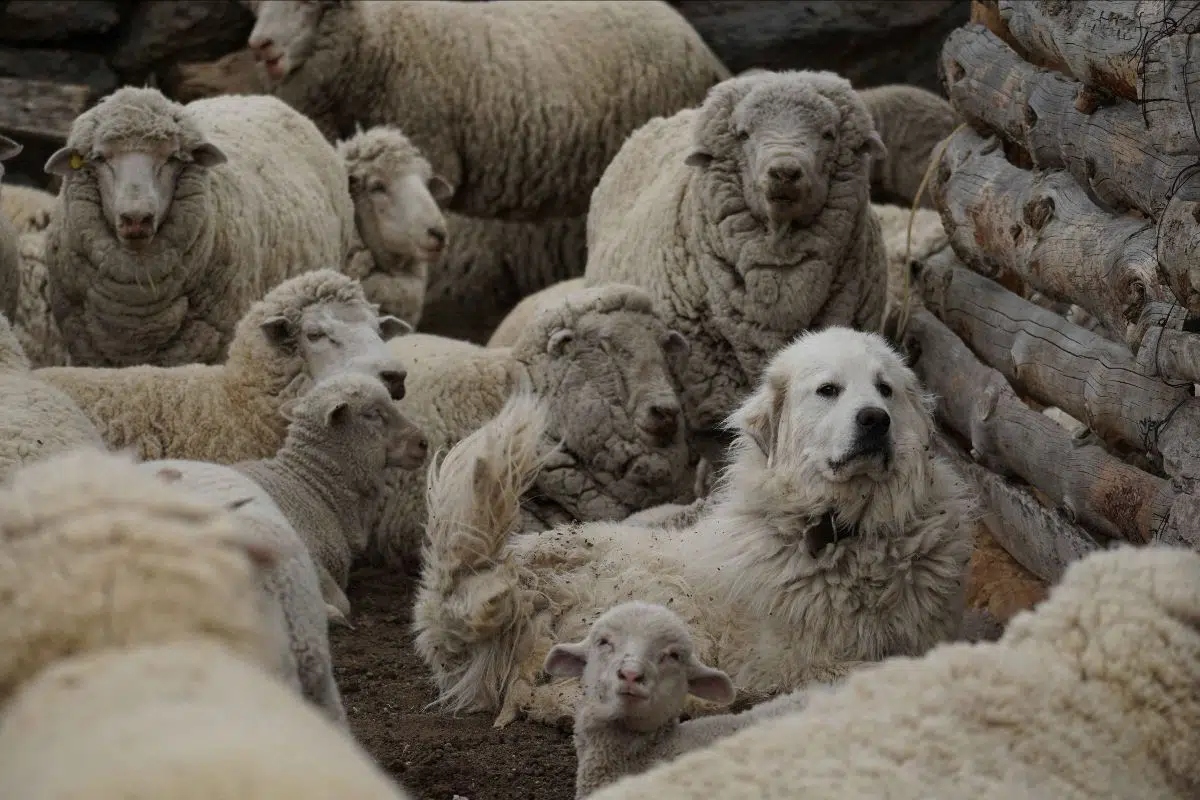 Techniques to protect livestock. (Photo: Ezequiel Infantino – WCS Argentina).
Through camera trap monitoring, in addition to pumas, in recent years WCS Argentina has recorded the presence of Andean cats, a critically endangered species, in the foothill areas of these provinces.
This indicates that in areas with livestock guardian dogs, livestock predation is avoided without driving the carnivores out of the ecosystem they are part of.
According to reports, the selected producers to receive these puppies are committed to carrying out regenerative livestock farming that is wildlife-friendly. They commit to not hunting, using traps, or applying poison to kill predators, as well as ensuring the well-being of the dogs.
“Frequent or excessive killing of sheep and goats by pumas can be economically devastating for farmers,” stated the organization.
How livestock guardian dogs work
According to research by WCS Argentina and the experiences of producers, the inclusion of livestock guardian dogs proves to be an effective method to prevent these situations.
They are specific breed dogs raised from a young age alongside livestock and with their presence, mark territory and deter carnivores.
Within this initiative, WCS Argentina manages a livestock guardian dog breeding program in Malargüe, Mendoza. They then provide them to producers interested in regenerative and wildlife-friendly livestock management.
From 2005 to the present day, the organization has introduced 88 livestock guardian dogs. Furthermore, over these 20 years, they have supported the work of government agencies and producer associations that introduced more than 150 of their own dogs.



