



According to official data, nine out of the ten most trafficked animals in Santa Fe are birds, many of them threatened or in danger of extinction.
The province not only concentrates capture and commerce hotspots, but also serves as a logistical corridor for the transfer of species from northern Argentina to Buenos Aires.
Endangered species: parrots, cardinals, and endangered capuchins
Among the most trafficked species are:
- Talking parrot
- Common parakeet
- Reinamora
- Yellow cardinal (in serious scarcity)
- Cinnamon capuchin
These birds are captured for their singing, colorful plumage, or commercial value, and many do not survive the transfer due to extreme overcrowding, stress, and lack of care.
Critical areas: from northern Santa Fe to the Rosario-Santa Fe corridor
Departments such as General Obligado, San Justo, and San Cristóbal concentrate the capture pressure.
Illegal breeding and stockpiling mainly occur in the northern province, while commerce intensifies in Rosario and the city of Santa Fe.
In many cases, the activity is sustained by cultural traditions related to bird ownership, although clandestine breeders and urban hoarders are also detected.
Controls on routes and citizen reports: key to stopping trafficking
Authorities receive individual reports and carry out checks on provincial and national routes, where unusual cases are detected:
- January 2022: 100 talking parrots in the trunk of a car on route 95
- November 2022: 48 parrot fledglings in poor conditions on the Rosario-Santa Fe highway
- September 2023: 139 birds hidden in a truck on route 34, including goldfinches, black-capped warblers, reinamoras, and cowbirds
These operations are carried out at critical points of animal transit, as Santa Fe is a strategic passage between capturing provinces and commercial centers.
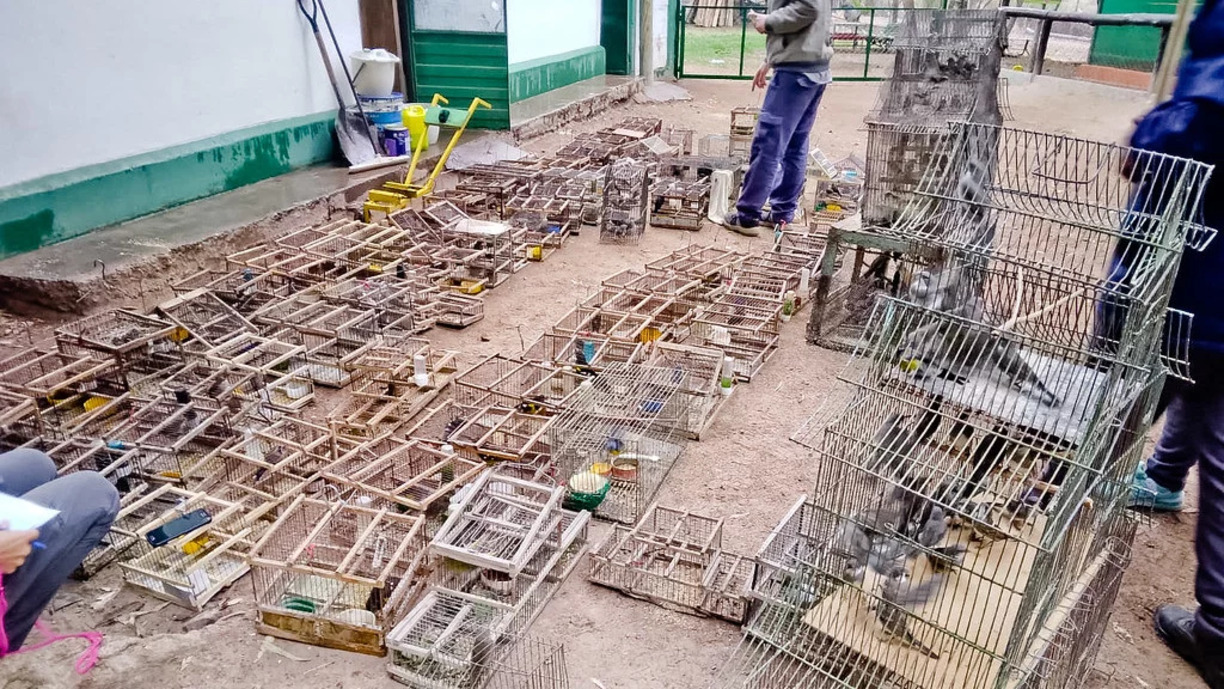
Rehabilitation at La Esmeralda: a complex and urgent task
The La Esmeralda Rescue Center, in Santa Fe, works on the rehabilitation of trafficked birds, especially during the fledgling season. According to veterinarian Mauro Pergazere, the process is demanding:
- Feeding every four hours
- Avoiding “imprinting” (pet behaviors)
- Regaining flight muscles
- Restoring diet and wild behavior
The mortality rate is high: only 10% of trafficked animals survive, and the level of stress during transport is crucial.
Social media and sales points: trafficking goes digital
Feed stores, veterinary clinics, and online platforms offer wildlife without authorization.
Despite restrictions, illegal commerce persists in physical stores and social media groups, where captured or unlicensed bred specimens are offered. A survey by Aves Argentinas detected the trafficking of 78 species in 36 locations in Santa Fe, between 2011 and 2024:
- 63 birds
- 7 mammals
- 6 reptiles
- 2 fish
- 15 species with some degree of national threat
Interjurisdictional coordination: a regional strategy to protect fauna
Wildlife trafficking does not respect provincial borders, thus requiring regional management.
Santa Fe collaborates with other provinces through the Ecif, and coordinates actions with the General Directorate of Sustainable Wildlife Management, the Judiciary, and security forces to carry out raids and joint operations.
An urgent call: do not buy wildlife
The loss of biodiversity alters ecosystems and perpetuates animal suffering.
The capture and commercialization of wild animals destroys ecological balances, decreases native populations, and encourages animal abuse.
“Nine out of ten trafficked animals die,” warns Pergazere. That’s why, from the Ministry of Environment and Aves Argentinas, they insist: do not buy wildlife.



