



In **Latin America**, an ancestral practice is regaining prominence in the face of current **environmental challenges**. **Permaculture**, understood as permanent agriculture, combines **traditional knowledge** with modern scientific knowledge to create **sustainable productive systems**. Its purpose is clear: to generate food without degrading **ecosystems** or depending on industrial practices that harm the land.
The model was born in the 1970s as an alternative to **intensive agriculture** and has since spread to various regions of the world. In Latin America, it gained strength in the last twenty years in response to the **social and ecological impacts** left by monocultures such as pineapple in Costa Rica or bananas in other tropical areas.
The premise of permaculture is simple yet powerful: replicate the logic of **ecosystems**. This means cultivating with **native species**, harnessing the energy of the sun and rain, and using renewable resources in a balanced manner. Instead of depleting the soil with agrochemicals, the aim is to strengthen it through **crop rotation** and **plant associations** that support each other.
The method is guided by twelve principles that promote observation, **responsible use of energy**, and the integration of diversity. By prioritizing closed production cycles, waste generation is reduced, and the resilience of agricultural systems in the face of **climate change** is improved.
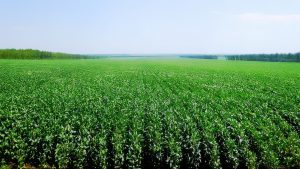
A tool that improves soil and food quality
**In countries like Mexico**, the practice found fertile ground thanks to the **recovery of indigenous knowledge**. The system of the “Three Sisters” — corn, legumes, and squash — is recognized as an emblematic example of permaculture for its ability to nourish the soil and ensure **dietary diversity**.
**Brazil, Chile, Ecuador, and Costa Rica** are also experimenting with this model, albeit on different scales. In some cases, well-established associations are being developed; in others, small projects are emerging as seeds of transformation in rural communities. They all share the same goal: to demonstrate that it is possible to produce without destroying.
Concrete examples include the use of greenhouses built with **recycled materials**, such as tires, or rainwater collection for irrigation. These simple yet effective solutions have inspired training programs aimed at expanding the practice to more countries in the region.
The future of **permaculture** depends on its ability to scale up without losing its essence. As the challenges of climate change and ecosystem degradation grow, this model emerges as a viable alternative to redefine agriculture and reconcile communities with **nature**.
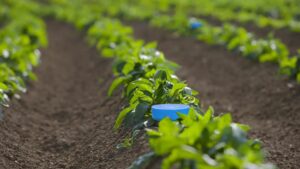
What is permaculture used for?
The utility of permaculture goes beyond **food production**. Its comprehensive approach makes it a tool for sustainable life design that encompasses **water management**, **energy**, **waste**, and the construction of environmentally adapted housing.
One of its main contributions is the regeneration of degraded soils. By imitating **natural processes**, it allows fertility to be restored to lands depleted by **industrial agriculture**. Additionally, it strengthens food security by promoting diversified crops that produce year-round and reduce dependence on a single **agricultural product**.
On a social level, permaculture fosters community cooperation. Its techniques are often implemented in collective projects, where people learn to cultivate, share knowledge, and create more just **local economies**. Thus, it becomes a bridge between **environmental conservation** and human well-being.



