



The trawling fishing is not a new problem for the ocean in the Argentine zone. “Under the surface of the South Atlantic, an invisible devastation occurs,” describe at the Sin Azul no hay Verde foundation.
Large ships deploy nets weighing tons and “sweep” the ocean floor like underwater bulldozers. Thus, everything they find, fish, corals, sponges, eggs, crustaceans, is trapped or destroyed. Behind, the landscape is left empty, a desert that takes decades, sometimes centuries, to recover.
In this sense, trawling fishing transforms ecosystems into underwater deserts, and Argentina is one of the countries that most use this destructive technique, leading the ranking in Latin America. In Buenos Aires, a meeting at the Museum of Modern Art of Buenos Aires (MAMBA) brought together scientists, environmentalists, and citizens to address the issue.
The Patagonian platform, one of the most productive ecosystems in the South Atlantic, concentrates much of the pressure. In that marine region, threats to dolphins and other mammals multiply, while essential habitats for the reproduction of commercial fish degrade.
Three destructive impacts that add up
According to specialists, trawling fishing combines three damages that make it unique in its level of destructiveness:
- Overfishing: extraction exceeds the natural recovery rate of populations.
- Incidental catch (bycatch): species that were not the target fall into the nets, many of them threatened.
- Habitat destruction: benthic ecosystems, highly diverse seabeds, are razed as if they were plowed fields.
“Despite the almost non-existent images of this devastation, international indicators and scientific research confirm it. The South Atlantic is under increasing stress that threatens its ability to sustain life,” warned the organization.
An invisible threat
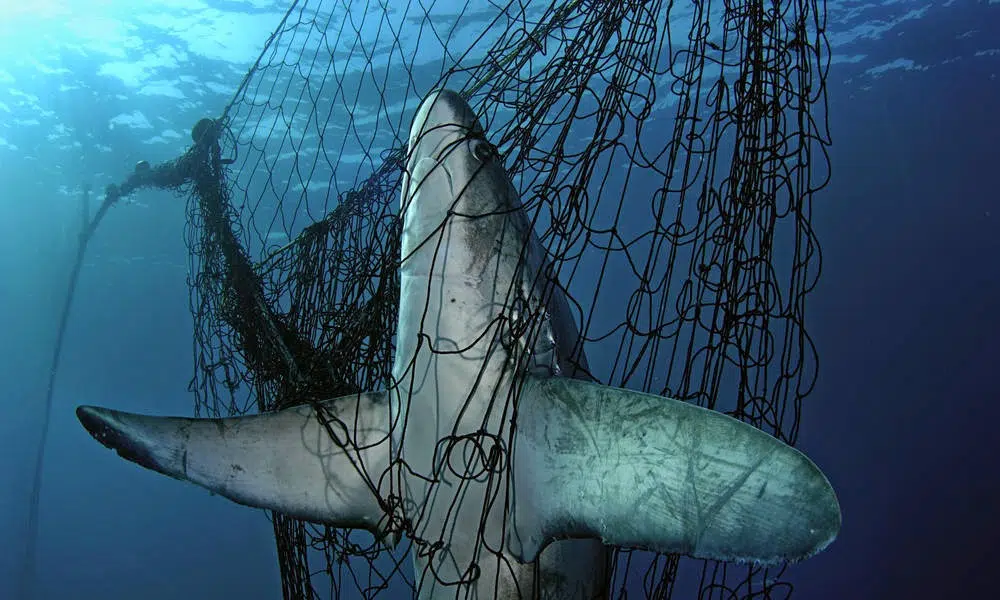
While deforested forests or retreating glaciers have a visual counterpart that alerts, trawling advances without witnesses. “Underwater, without cameras exposing it, a natural heritage of planetary scale erodes,” highlighted Juan Coustet, part of the coordination of Sin Azul no hay Verde.
“To this is added the uncertainty of official records: incomplete captures, misidentified species, missing data. A gap that prevents the construction of transparent and effective fishing policies,” he stressed.
Trawling fishing, a debate that is starting to open up
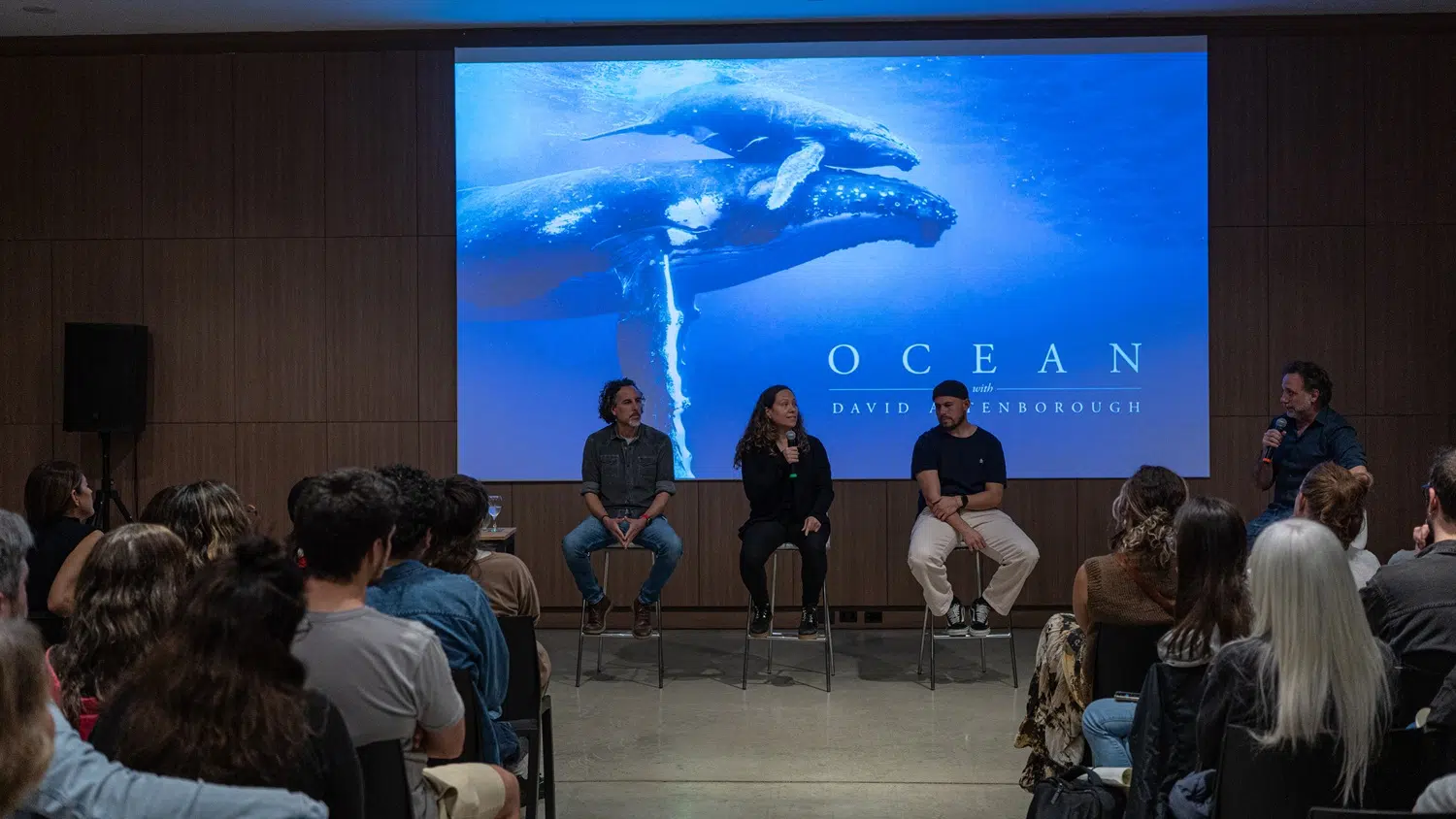
On September 11, MAMBA was the scene of an important event. Around 250 people, including scientists, NGO representatives, artists, and the general public, gathered to discuss trawling fishing and its consequences.
The event, led by the foundation Sin Azul no hay Verde, combined the screening of the documentary Ocean (narrated by David Attenborough) with panel discussions, marking a starting point. Shedding light on a topic that is rarely discussed in the public agenda.
The organizers’ intention was clear: to create a broader dialogue space among civil society, environmental organizations, and the scientific community to move towards policies that protect the sea.
“The event had a large turnout, it was a success. And I think it is extremely important because through these spaces, we manage to bring the sea to the city and raise awareness that a healthy ocean is essential for life,” summarized one of the speakers, Milko Schvartzman, an expert in illegal fishing.
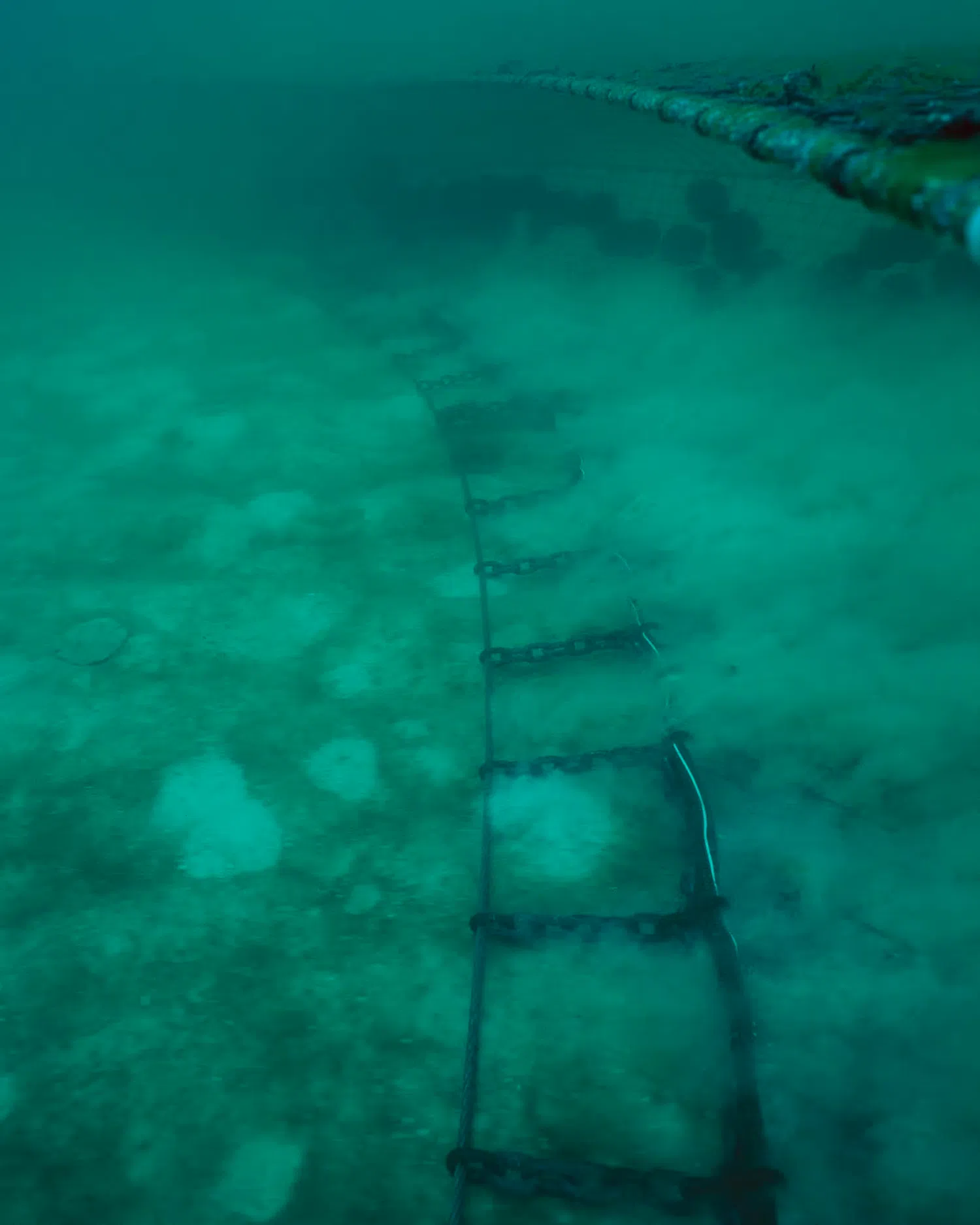 What trawling fishing consists of. (Photo: Sin Azul no hay Verde press).
On her part, Andrea Michelson, a biologist and consultant in Nature Conservation who also participated in the panel discussion, stated: “I found the event very interesting because it is crucial to convey to people the importance of protecting the ocean”.
“It is very necessary to show the risks and impacts that the sea suffers and the need for activities such as responsible fishing for us to have a healthy ocean,” she emphasized.



