



Located 370 kilometers from the capital of Neuquén, the town of Caviahue-Copahue emerges as one of the most unique destinations in Argentine Patagonia.
Its recent nomination for the Best Tourism Villages 2024, an initiative of the World Tourism Organization (UNWTO), recognizes its natural beauty, its cultural identity, and its commitment to a tourism model that respects the environment and local communities.
An oasis of geodiversity in the Copahue Provincial Park
Active volcanoes, acidic lakes, and ancient forests in a high-mountain environment.
Caviahue-Copahue is located within the Copahue Provincial Park Protected Natural Area, a territory of exceptional geodiversity. There stands the Copahue Volcano, an active stratovolcano with nine aligned craters, one of which contains an acidic lake with permanent fumarolic activity.
At its feet, Lake Caviahue, rich in sulfur and minerals, remains liquid even in winter, surrounded by pehuenes forests (araucarias), ancient and emblematic trees of the region.
Thermalism and medical tourism: well-being in healing waters
The Copahue Thermal Complex offers natural treatments with international recognition.
The Copahue hot springs are one of the main attractions of the town. The Thermal Complex features lagoons like Chancho, with sulfuric waters and healing mud, and Laguna Verde, with therapeutic properties.
This natural center promotes medical tourism, attracting visitors seeking physical and emotional well-being in a mountain environment.
 Caviahue-Copahue
Snow, adventure, and hiking in high-altitude landscapes
During the winter, from June to October, Caviahue becomes a white destination, ideal for skiing and snowboarding on Cerro Caviahue, renowned for the quality of its snow and the efficiency of its lifts.
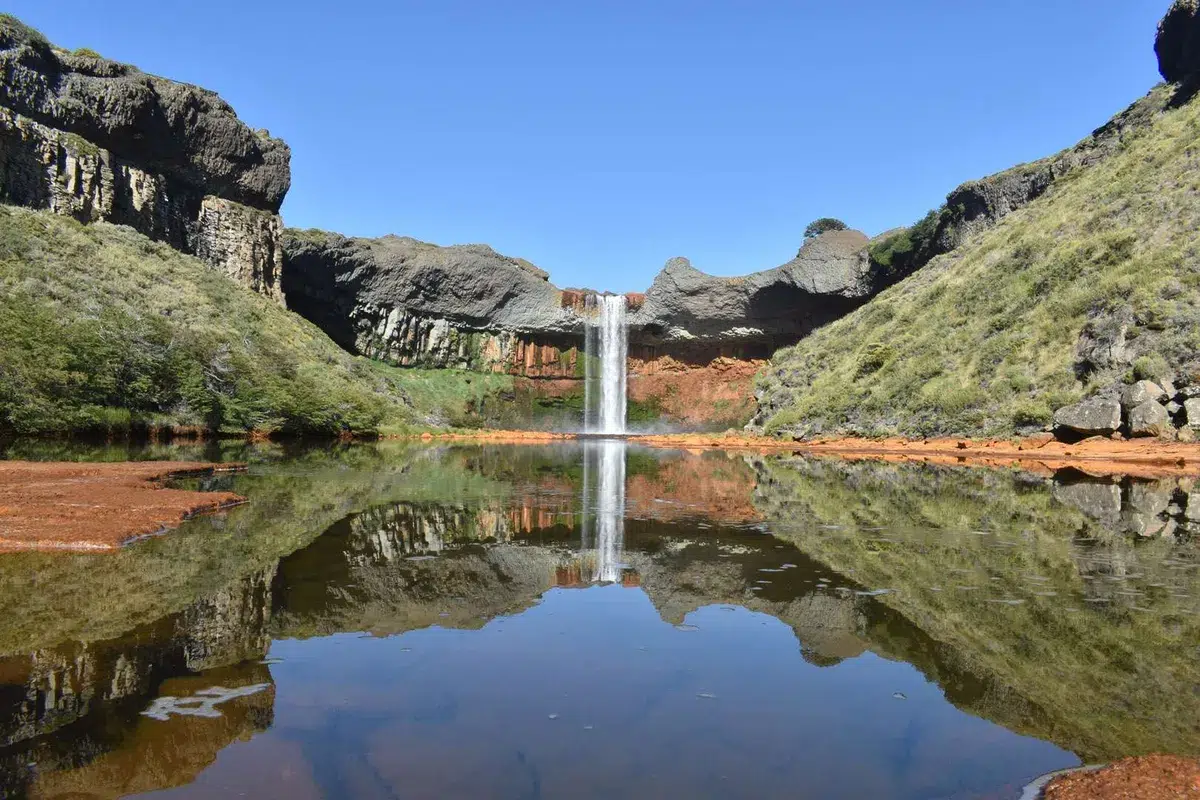
In summer, stand out the adventure routes in 4×4 vehicles to hidden lagoons and scenic trails such as the 7 Cascadas and Salto del Agrio, allowing to explore the ecological transition flora and fauna, with species like red foxes, pumas, and Andean birds.
Ancient culture and rural communities
In the surroundings of the town, Mapuche and Creole communities keep their traditions alive, such as transhumance, an ancient grazing practice that offers visitors a glimpse into local culture.
The toponymy of Caviahue (“sacred meeting place”) and Copahue (“place of sulfur”) comes from the Mapuche language, reflecting the spiritual connection with the territory.
The regional gastronomy stands out with the Patagonian kid, a typical dish of the area, and artisanal chocolate, complementing the visitor’s sensory experience.



