



San Luis reinforces its recycling model. During the months of June, July, and August, the treatment and recycling plant ‘El Jote’, located in Carpintería, managed to recover 121 thousand kilograms of recyclable materials, including cardboard, paper, metals, plastics, bottles, and bulk glass.
This result adds to an annual accumulated total of 340 thousand kilograms, consolidating the provincial commitment to efficient urban solid waste management.
Manual labor and technology: the heart of the recovery process
Specialized operators classify the waste for industrial reuse
The recovery process at ‘El Jote’ is based on manual classification on conveyor belts, where each operator focuses on a specific type of material. Once separated, the waste is pressed and baled using specialized machinery, allowing for its transport and reintegration into the production cycle.
“Each operator looks for a specific material and deposits it in a nozzle for processing,” explained Martín Mauvezin, plant manager.
Regional coverage and scrap recovery
At ‘El Jote’, waste from Villa de Merlo, Los Molles, Cortaderas, Villa Larca, Papagayos, Concarán, and Santa Rosa del Conlara is also processed.
During this period, 5,200 kilograms of light scrap and 6,280 kilograms of tinplate were recovered, materials that, after baling, are sent for industrial reuse.
Composting and final disposal of organic waste
Separation of vegetable and food remains to minimize environmental impact.
Organic waste such as fruits, vegetables, meats, and bread are directed to specific areas for composting or controlled final disposal. This way, accumulation in landfills is avoided, promoting the use of organic matter.
La Metropolitana: 28 tons of cardboard reintegrated into the industrial cycle
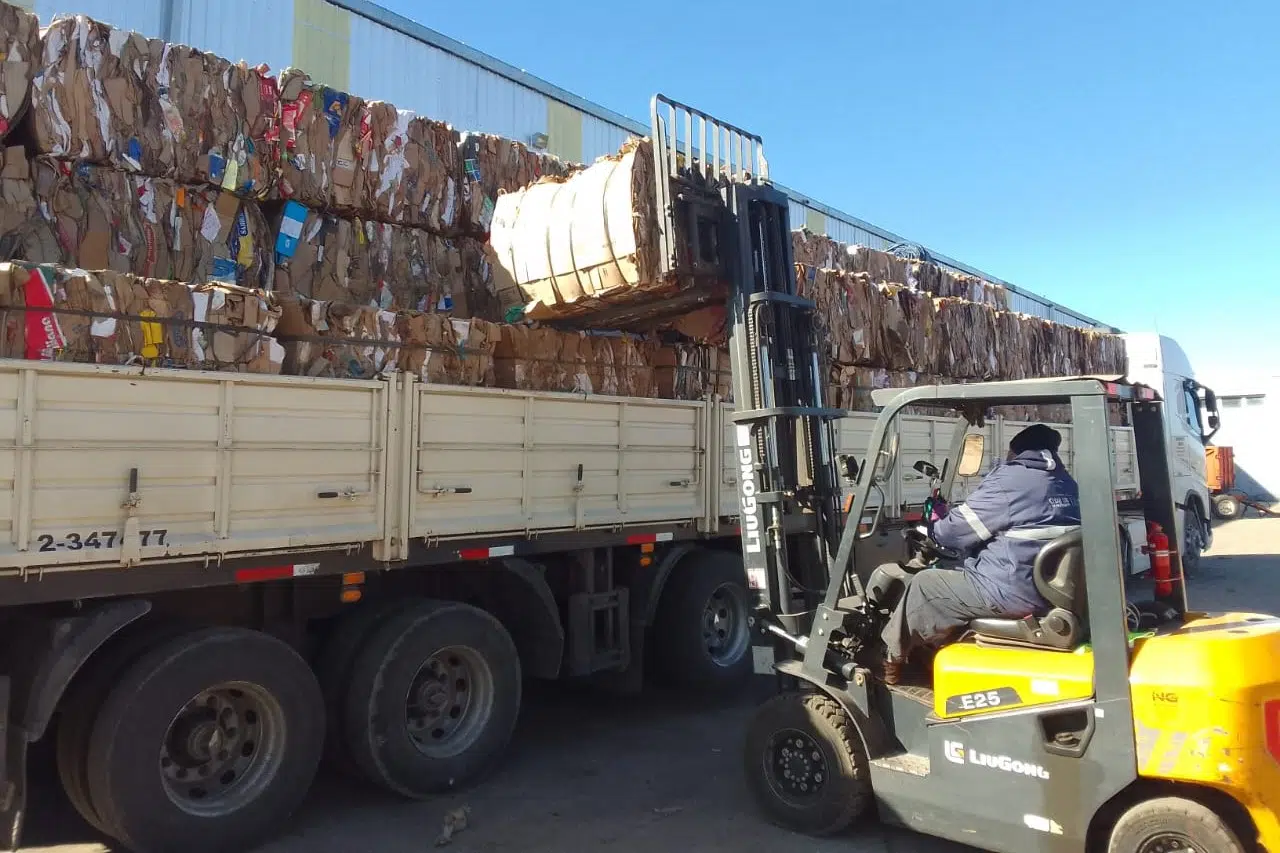
In parallel, the plant ‘La Metropolitana’, located in Donovan, managed to recover 28 tons of cardboard, which were sorted, baled, and dispatched for reintroduction into the industrial cycle.
This action reinforces the circular economy and reduces the environmental impact of waste.
A provincial model of sustainability and circular economy
The four plants in San Luis promote reuse and environmental care.
San Luis has four treatment plants that receive waste from different municipalities. Every day, operators classify materials such as cardboard, clear PET, colored PET, scrap, aluminum, tetrapak, polypropylene, and glass, preventing them from ending up in open-air landfills.
This model allows for reducing the exploitation of natural resources, decreasing greenhouse gas emissions, and preserving ecosystems, strengthening collaboration between communities, companies, and recyclers.



