



The latest report from the Global Wind Energy Council (GWEC) positions India as one of the most dynamic players in the global energy scenario. According to the document, the country could double its wind capacity, going from current 51 GW to 107 GW by 2030, with an even more ambitious goal of reaching 164 GW in the next decade.
Underutilized Potential and Structural Challenges
India has only tapped into 4.5% of its estimated wind capacity of 1,164 GW.
Despite having a wind potential exceeding 1,100 GW, India has developed only a fraction of it. To progress, GWEC recommends strengthening auctions, improving the grid infrastructure, and ensuring compliance with renewable energy purchase obligations.
These measures are crucial for wind energy to represent 20% of the renewable energy mix by 2025.
Economic Benefits: Cost Reduction and Job Creation
In addition to its environmental benefits, wind energy offers tangible economic advantages. The report estimates that its expansion would reduce generation costs by 10%, enhance grid stability, and optimize transmission capacity usage.
If India manages to deploy 15 GW annually, it could create 154,000 direct jobs, solidifying a robust and competitive industrial sector.
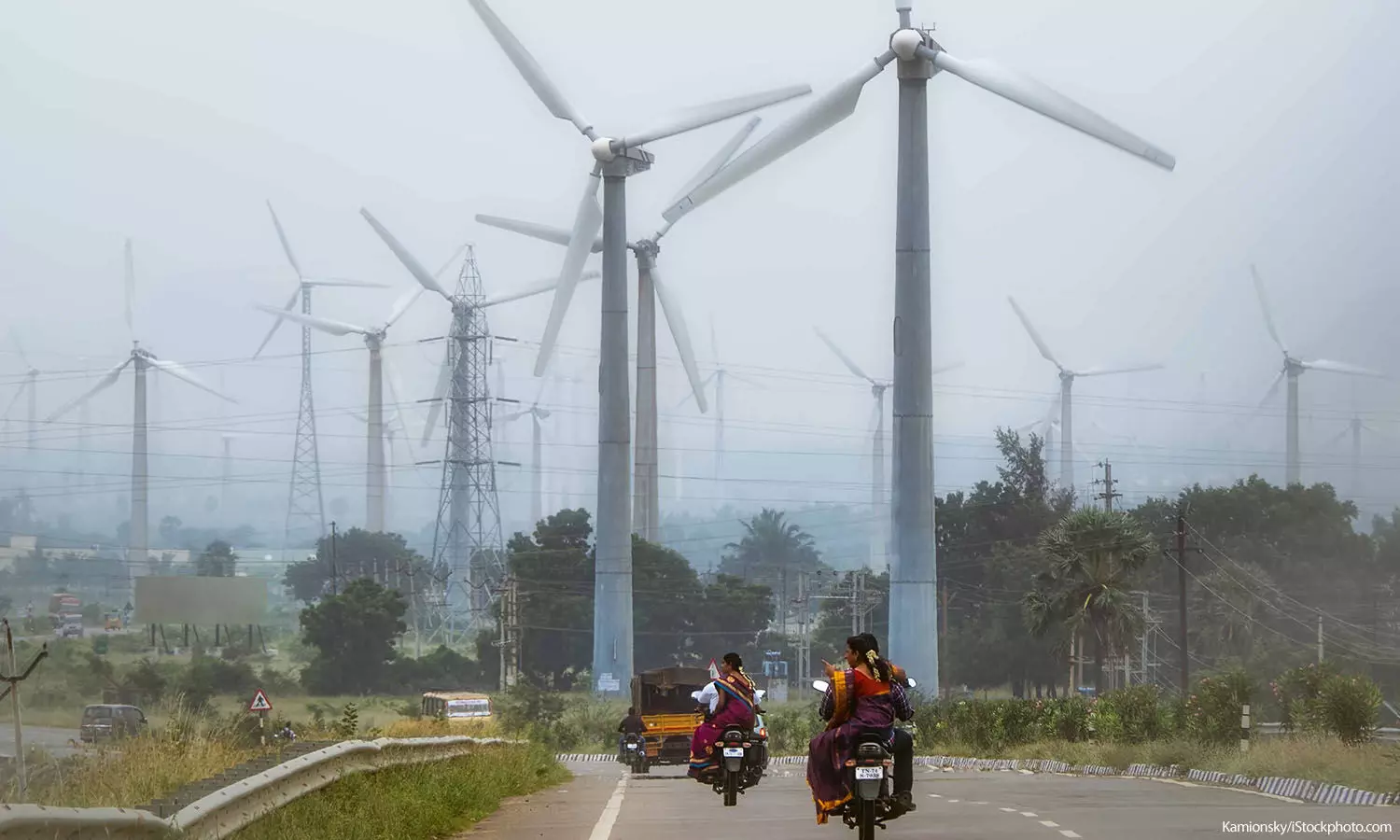 wind capacity[/caption>
Industrial Leadership: India as a Global Wind Manufacturing Hub
The country already produces 10% of the equipment demanded by the global market.
The manufacturing capacity has increased from 12 GW in 2022 to 20 GW in 2024, positioning India as the world’s third-largest wind equipment production hub.
According to GWEC, the country is poised to cover 10% of global demand by 2030, reinforcing its role as a strategic provider in the international energy transition.
Political Vision: Clean Energy as a Driver of Development
The government aims to install 500 GW of non-fossil capacity by 2030.
Minister Shri Pralhad Joshi emphasized that India is undertaking “one of the most ambitious energy transitions in the world”, with the goal of achieving 500 GW of non-fossil capacity by 2030, of which 100 GW will be wind. “We are not just building infrastructure; we are building the future,” he stated.
Solar-Wind Complementarity and Carbon Neutrality
The synergy between renewable sources will enable clean energy 24/7.
According to Girish Tanti, president of GWEC India, the complementarity between wind and solar will provide affordable and continuous energy, establishing the country as a global leader in sustainability.
Ben Backwell, CEO of GWEC, emphasized that surpassing 100 GW of wind capacity will be crucial to drive the economy and ensure accessible energy.

