



Researchers from the National University of the Northeast (UNNE) and the CONICET launched an innovative initiative of citizen science to map the distribution of a toxic tree in Argentina. This is the African tulip tree.
This ornamental tree, scientifically known as Spathodea campanulata, is an exotic species that poses a serious risk to bees and other local pollinators due to the toxic properties of its nectar and mucilage.
An exotic tree with negative impact
The African tulip tree is not just any species. It is classified by the International Union for Conservation of Nature as one of the 100 most harmful invasive species worldwide.
 What the African tulip tree looks like. (Photo: Wikipedia).[/caption>
Despite its beauty, its flowers contain substances that can be lethal to insects that seek its nectar, contributing to the global pollinator crisis.
After obtaining the first scientific data on its impact on the entomofauna, the research team, led by graduate Florencia Ayala, aims to expand their knowledge about the tree throughout the country.
The goal is to determine its exact location, flowering status at different times of the year, and its interaction with pollinating fauna.
How to participate in the collaborative mapping
Due to the complexity of a large-scale survey, scientists are seeking the help of society. The campaign is coordinated through the Instagram account @tulipaneroafricano, where citizens can collaborate by submitting their records.
Participation is simple: those who identify a specimen can fill out a brief Google form available on the account’s link.
Key information such as photographs, location, size, flowering status, presence of fruits, and interaction with insects is requested, including whether there are dead insects on its flowers or birds on the tree.
Towards a sustainable solution: the project’s objective
Specialist Adán Ávalos from IBONE highlighted that the presence of the tulip tree goes against the conservation efforts for pollinators in Argentina.
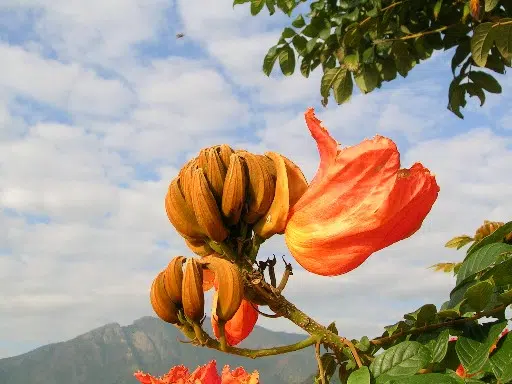 Why this tree is toxic. (Photo: Wikipedia).[/caption>
The information collected through this campaign is crucial to understand the extent of the problem and propose long-term solutions.
The ultimate goal of the project is not the immediate eradication of the trees, but to find management strategies that are viable in urban contexts and that allow mitigating the damage that this invasive species causes to pollinators, vital for the balance of our ecosystems.


