



In a joint operation by the Nation’s Subsecretariat of Environment and the Argentine Federal Police (PFA), over 200 luxury clothing items and accessories made from exotic animal skins and protected species were seized.
The raid took place in a residence in Villa Urquiza, Buenos Aires City, and represents a significant blow to wildlife trafficking.
This operation is the result of a thorough investigation led by the Fiscal Unit for the Investigation of Crimes against the Environment (Ufima).
Endangered species turned into luxury fashion: the operation in Villa Urquiza
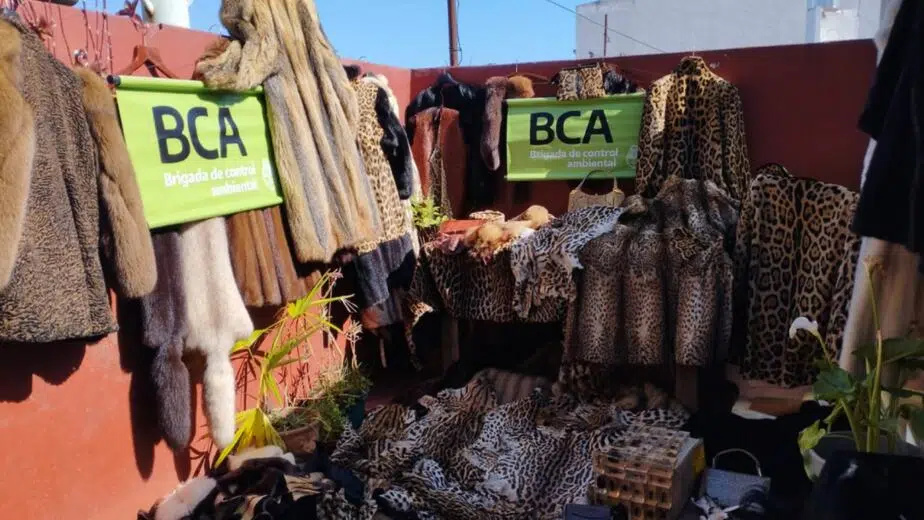 The operation in Villa Urquiza. (Photo: PFA).[/caption>
Among the seized items were skins, belts, coats, and handbags made from parts of 227 animals. The list of identified species includes:
- Jaguars: garments with complete skin and even heads of the animal.
- Ocelots and leopards: whole skins used in coats.
- Caimans: handbags with heads of these animals.
- Boas, otters, and minks.
- Exotic birds from Asia and Africa.
- Cobra and Himalayan tahr.
According to calculations by the Department of Environmental Crimes of the Argentine Federal Police (PFA), the value amounts to 600,000 dollars.
The discovery took place on Wednesday morning, after months of investigation by the PFA and the Environmental Control Brigade.
Wildlife trafficking: a serious crime against biodiversity
Animal skin trafficking is an environmental crime that threatens biodiversity and accelerates the extinction of unique species. The Subsecretariat of Environment reaffirmed the Argentine State’s commitment to fighting this illegal activity that threatens the country’s natural heritage.
 Wildlife trafficking: the most sought-after species.
More than 100 bird species, 20 reptiles, and 15 mammals in Argentina are affected by this trafficking, with around 20 species in threatened categories.
The trafficking is concentrated in regions with high biodiversity, and the captured specimens are transported to large cities with high demand for birds, reptiles, and mammals as pets.
It is worth noting that the wildlife trade is regulated and not prohibited. There are authorized breeding facilities for wildlife, controlled by environmental agencies. However, certain species are prohibited from trade and transit.


