



Traditional construction has historically been one of the major sources of greenhouse gas emissions. Throughout all its stages, the sector leaves an environmental footprint that needs to be reduced, which is why ecological construction materials become essential allies in the transition towards a more sustainable urban model.
Their impact goes beyond energy savings: these materials promote a new paradigm where architecture is conceived as part of the ecosystem and not as a threat to it. Manufactured with low energy consumption and designed to minimize waste, they help reduce emissions and conserve natural resources.
Recycled steel, bamboo, rammed earth, or fly ash concrete are examples of solutions that are already being adopted worldwide. These alternatives not only replace highly polluting inputs, but also promote sustainable local economies and more responsible supply chains.
Currently, the market for ecological construction is growing rapidly, driven by public policies and an increasingly socially conscious demand regarding the environmental impact of buildings. This evolution demonstrates that building with respect for the planet is possible and profitable.
Energy efficiency as a pillar of change
One of the most visible benefits of ecological materials is their ability to improve energy efficiency. Reflective roofs, natural insulation panels, and stabilized earth walls reduce the need for heating and cooling, thus decreasing electricity consumption and associated emissions.
Unlike conventional materials, which require high levels of energy for their manufacture, ecological materials have lower “embodied energy,” meaning less carbon emitted during their life cycle. This approach helps make constructions more environmentally lightweight and more durable over time.
Sustainable architecture also promotes healthier spaces. The use of paints without volatile compounds, certified woods, and natural insulators improves indoor air quality, benefiting both the environment and people.
Environmental and social benefits of sustainable constructions
Eco-friendly materials embody the principles of the circular economy, where nothing is wasted and everything can be reused or recycled. Recovered steel, reused wood, or biodegradable bioplastics reduce pressure on ecosystems, avoiding excessive logging and exploitation of virgin resources.
In rural or tropical areas, materials such as bamboo and compacted earth allow for constructions adapted to the local climate, reducing the use of imported materials. This strengthens community economies and promotes energy self-sufficiency.
Additionally, green architecture helps mitigate climate change. Every square meter built with sustainable materials represents fewer emissions released and more carbon captured, especially in the case of structural wood, which acts as a natural sink.
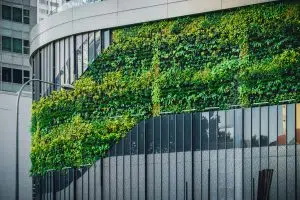
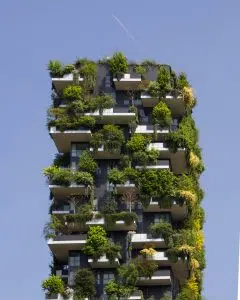
At the urban level, sustainable constructions help reduce heat islands, improve rainwater infiltration, and promote biodiversity with green roofs and walls. In this way, buildings cease to be passive structures and become active agents of environmental balance.
Towards a green revolution in construction
The benefits of ecological materials are not only environmental, but also economic and social. By reducing operating costs and increasing property value, they represent a smart investment for companies and governments.
As environmental regulations tighten and consumers demand transparency, the adoption of sustainable materials ceases to be an option and becomes a necessity. Innovations —such as concrete that absorbs CO₂ or cross-laminated timber— set the course towards a future where building does not mean destroying.
The transition towards green architecture requires commitment, knowledge, and inclusive policies. But its outcome is clear: more resilient cities, healthier communities, and a planet that can breathe better. Building consciously is no longer the future of construction, it is its only possibility for permanence.



