



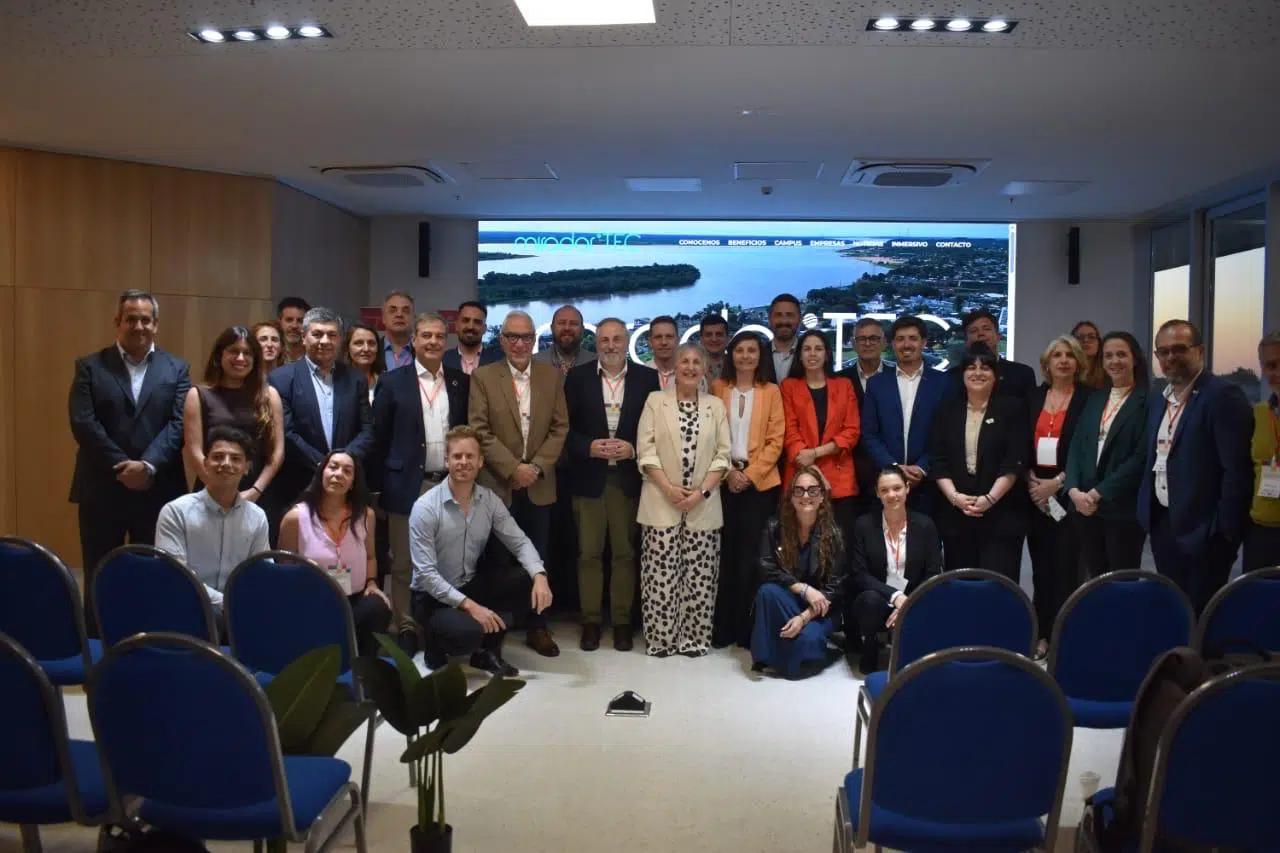
At the Federal Meeting on the Road to COP30 held on October 8 and 9 at the Mirador TEC in Paraná, Entre Ríos, Mariano Villares and Nasha Cuello Cuvelier, co-founders of Sustainability Without Borders, analyzed the national climate policy just weeks before a new Conference of the Parties on climate change.
The meeting brought together provincial and municipal authorities, civil society leaders, international cooperation, and scientific system specialists to align a common roadmap towards Belém.
“Argentina is on track to fail at least 73% of its climate goals by 2030,” said Mariano Villares during his presentation. The statement is based on the category balance of the National Climate Action Observatory with semi-annual cut-off and scheduled updates.
The greatest delays are observed in territorial adaptation, financing, methane, energy transition, and accountability. The message is concrete and verifiable; without enforceable regulatory frameworks, results-oriented budgets, and accessible measurement, reporting, and verification systems, the country will not achieve its roadmap for this decade.
In the panel “The Road to Belém from the Perspective of Civil Society,” Nasha Cuello Cuvelier presented the National Climate Action Observatory as a public monitoring platform with official objectives, progress status, and open sources.
She added the cultural initiative Un Buen Día which brings together microfictions by women leaders from Latin America to reimagine equitable and sustainable futures. She completed with the Report on Provincial Climate Commitments that maps plans, goals, and implementation in the 24 jurisdictions. In parallel, Mariano Villares developed an analysis of the subnational, national, and regional context in terms of climate legislation, focusing on effective norms that require measurable results and public auditing.
What the Observatory Shows
The National Climate Action Observatory is a public platform that displays 100 objectives that reflect official commitments made by the national government.
It evaluates their progress status with clear and homogeneous categories, with semi-annual updates and records of changes and verifiable sources. The methodology is based on 23 foundational documents and gathers 51 goals in 16 topics and 100 prioritized objectives organized in a traffic light system.
The current categories are No information, Impossible to achieve, No progress, Slight progress, Moderate progress, Expected compliance, and Complied. The platform includes a contact form to provide evidence that can improve the evaluation with criteria of transparency and clear language, accessible at observatorio.sustentabilidadsf.org.ar
The Alarming Data
According to the analysis presented by SSF, Argentina is on track to fail at least 73% of its climate goals by 2030. The projection arises from the distribution by categories and the trend of execution in recent semesters. The diagnosis indicates gaps in subnational capacities, instrument design, access to financing, budget execution, and public oversight of results.
Declaration of Paraná and Federal Signal
During the Meeting, in contrast to the national government’s negligence, the provinces signed the Declaration of Paraná and unified their voice towards COP30. The document reinforces an agenda of climate federalism, access to financing with criteria of justice and transparency, strengthening of technical capacities, and energy transition with job creation and social protection. The signing consolidated an operational consensus that connects provinces, municipalities, and civil society with cooperation partners and development banks.
Transparency and Public Climate Culture
Nasha Cuello Cuvelier articulated three interrelated tools. The Observatory, as a public dashboard of official objectives with progress status and verifiable evidence. Un Buen Día, as a cultural project that shifts the conversation from fear towards desirable futures written by women leaders in the region.
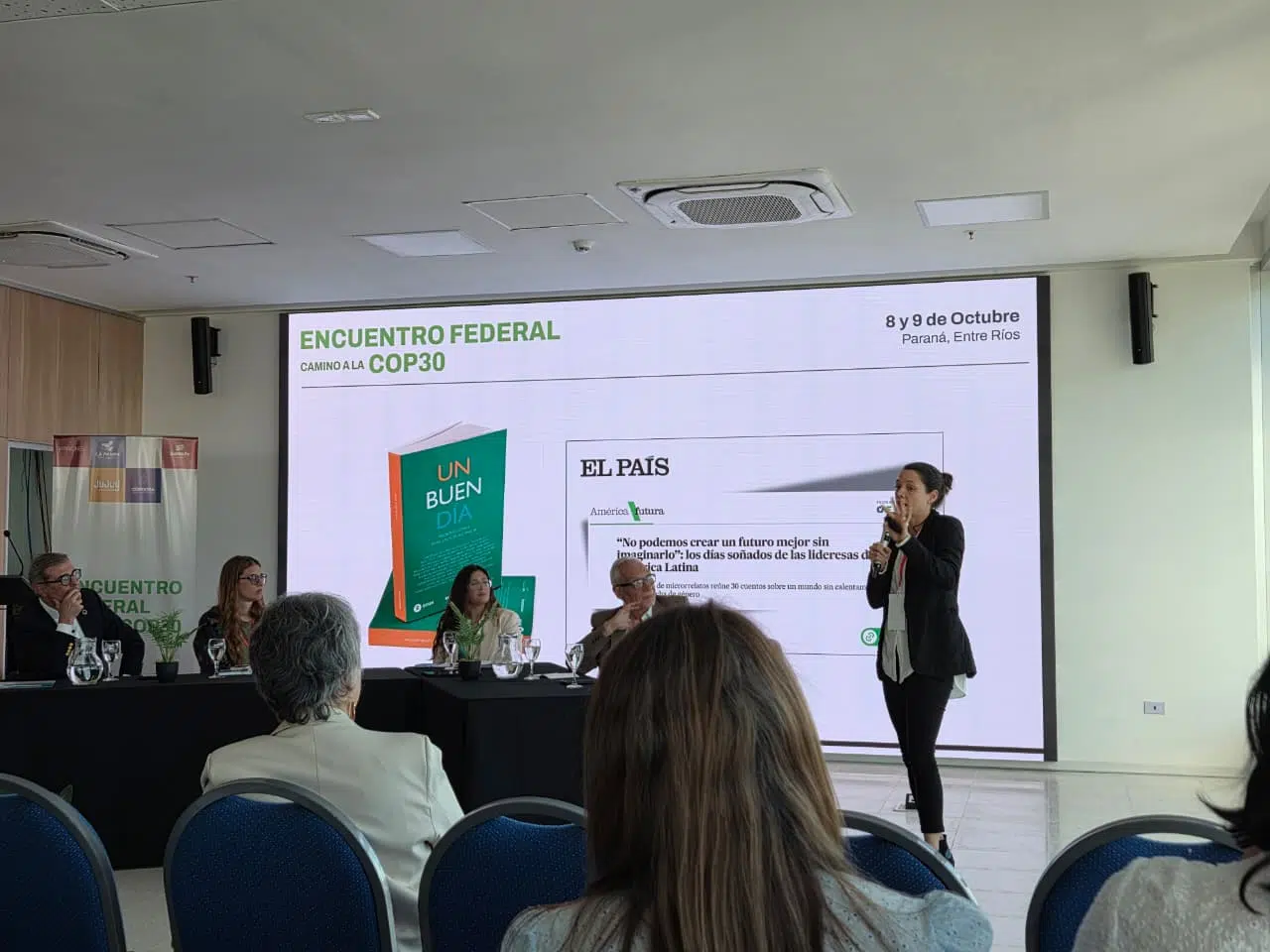
The Report on Provincial Commitments, as a situational map of the 24 jurisdictions that organizes indicators of response plans and their contribution to the NDC. The triad combines transparency, culture, and data to sustain state policies beyond contingencies.
What the Meeting Left Behind
The exchange with international cooperation and development banks reinforced the need to strengthen provincial technical teams to formulate eligible projects and accelerate disbursements. There was consensus on prioritizing instruments that bring financing to the territory, standardizing monitoring methodologies with open data, and maintaining an active presence at the COP with a federal and measurable agenda.
The province of Entre Ríos also formalized its adhesion to an international subnational coalition that enhances cooperation and visibility.
Next Steps for SSF Towards COP30
Sustainability Without Borders will be part of the Local Leaders Forum at COP30 in Rio de Janeiro from November 3 to 5, 2025, co-organized by the COP30 Presidency and Bloomberg Philanthropies, to strengthen articulation with governors and mayors and align financeable projects for just transition and adaptation.
Additionally, it will participate in the COP30 to be held in Belém do Pará, Brazil, presenting at events and coordinating meetings between international organizations and subnational governments.


