



The Technical Degree in Chemistry from Technical School No. 8 of Tolosa (Buenos Aires) received special recognition at the Deliberative Council of La Plata thanks to a unique project: the production of bleach from the recycling of used alkaline batteries.
The initiative, developed by final-year students, not only provides a solution to the problem of hazardous waste but also promotes the circular economy and practical training in applied chemistry.
A project with effort and commitment
The students explained that the work required extra hours and great dedication:
“We made a very big sacrifice for this project. The recognition makes it all worthwhile,” they noted.
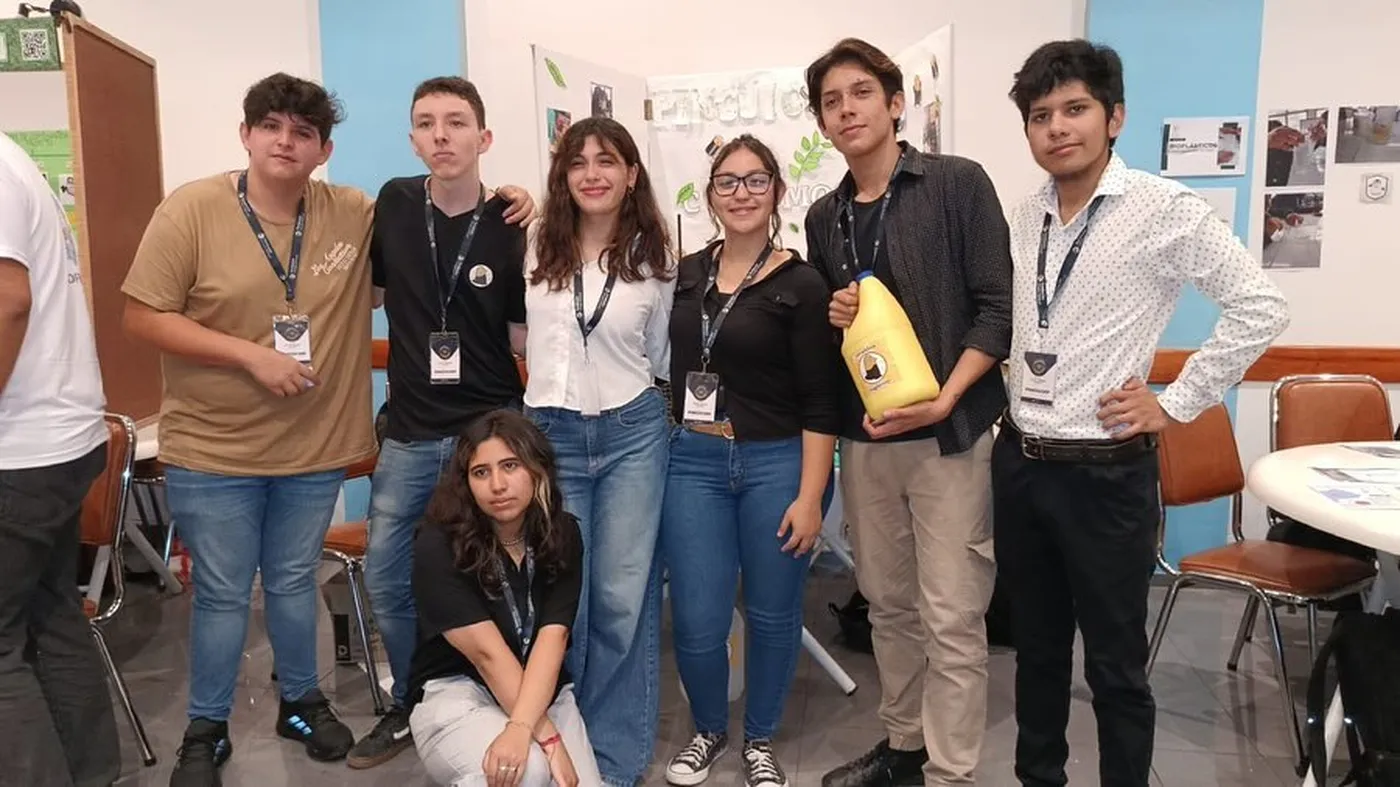
Currently, the team is composed of Morena Ghisoli, Ariadna Fammelume, Fátima Farías, Santiago Del Curto, Máximo Alcoba, Hugo Aguirre, and Santiago Leguizamón, who seek to improve the procedure year after year.
Origin and evolution of the initiative
The project was born in 2022, driven by the teacher Diego Ruiz, a graduate of the same school and remembered as “a passionate educator.” Under his guidance, the students participated in the 2023 Innovation Award, obtaining second place.
In 2024, after Ruiz’s passing, the young people decided to continue in his honor. With the support of Professor Fernando Araya, they managed to become winners of the contest, earning local recognition and a distinction in the Deliberative Council.
The chemical process: from depleted batteries to bleach
The process consists of:
- Extraction of the black paste (manganese dioxide) from the batteries.
- Chemical treatment with muriatic acid, releasing chlorine gas.
- Utilizing that gas to produce sodium hypochlorite, the active component of bleach.
The rest of the components are reused in the production of fertilizers, biodiesel, welding material, and even graphene.
The bleach obtained is marketed by the students, with the proceeds going to the school cooperative to purchase supplies and protective equipment.
Safety and improvements in the laboratory
The work involves risks due to the handling of toxic substances. With the prize money, the students acquired a laboratory hood to reduce exposure and improve safety.
Additionally, they highlighted that the project allowed them to learn to organize, sell the product, and work as a team, key skills for their professional future.
Importance of battery recycling
The project also aims to raise awareness about the hazard of batteries in common trash:
- Pollution: a single battery can contaminate up to 167,000 liters of water.
- Resource recovery: allows the reuse of metals such as lead, nickel, and lithium.
- Circular economy: promotes reuse and reduces the extraction of new resources.
- Reduction of hazardous waste: decreases the impact on landfills and ecosystems.
Continuity and citizen participation
The students hope that new generations will continue the project and perfect it. They also invite the community to collaborate:
- Bringing used batteries to the school (526 street between 7 and 8, Tolosa).
- Donating materials such as gas masks, extractors, reactive glass, or bicarbonate.
“We are very proud of this project. We want to leave a mark with this,” they expressed emotionally.
An example of educational and environmental innovation
The project of Technical School No. 8 of Tolosa demonstrates how technical education can generate real solutions to environmental problems, train young people in scientific competencies, and promote a model of responsible and sustainable production.



