



The renowned actor Leonardo DiCaprio has just bought an island in Chile, but not for the reason one might think.
It is the island of Guafo, which he acquired through the environmental conservation foundation he actively collaborates with, Re:Wild.
This is one of the most valuable ecological jewels of the South Pacific, and now, DiCaprio aims to protect it
The main objective is to transform Guafo into a national park and protect it from industrial exploitation.
The transaction, estimated at 30 million dollars, seeks to put an end to years of mining and logging threats on this remote ecosystem located southwest of the Chiloé archipelago.
A biodiversity refuge in the Pacific
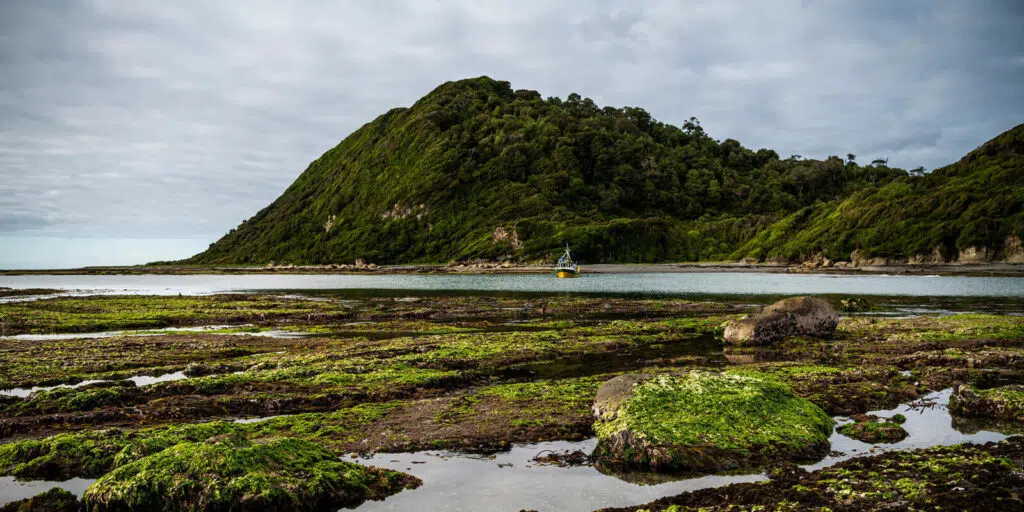
The island of Guafo extends over 197 square kilometers of dense forests and steep cliffs.
It is known as “the little Chilean Galápagos” for its unique natural wealth.
This territory is home to the largest breeding colony in the world of sooty shearwaters.
These are fascinating seabirds that migrate annually more than 40,000 miles between hemispheres.
Also inhabiting here are Magellanic penguins, endangered sea otters, and colonies of sea lions.
Additionally, the surrounding waters serve as a corridor for blue whales and humpbacks migrating from Antarctica.
Today, the island remains practically uninhabited, with only four people operating a historic lighthouse built in 1907.
Leonardo DiCaprio’s environmental mission in acquiring the island of Guafo
Leonardo DiCaprio bought the island of Guafo as part of his commitment to global conservation.
The actor founded Re:wild alongside scientists to protect threatened ecosystems around the planet.
“The irreplaceable Island of Guafo is now protected from coal mining, logging, and other destructive industries,” DiCaprio announced on his social media after the operation was confirmed.
The purchase was supported by the Wyss Foundation, WWF Chile, and other international organizations.
The law firms Akin and Carey advised the transaction pro bono.
Re:wild is now working with the Chilean corporation Cultiva to donate the island to the State.
The goal is for it to be declared a national park under Chilean legislation.
Representatives of Re:wild and Cultiva met in May with the Minister of the Environment, Maisa Rojas, to discuss the necessary requirements to promote this future park.
The national park designation would ensure permanent legal protection and allow for scientific research programs.
It would also facilitate environmental education in one of the most pristine areas of the Pacific.

Tensions with indigenous communities
However, this purchase generated controversy among the Huilliche communities of Quellón.
These indigenous peoples claim they were not consulted during the acquisition process.
“It went from one private owner to another, nothing changed with this NGO buying it,” declared Cristian Chiguay, lonko of the Yaldad community.
And he requested: “What we intend is to be incorporated into the work plan.”
The local communities requested in 2019 the recognition of a Marine Coastal Space for Indigenous Peoples (ECMPO).
This legal figure would allow them to manage more than 225,000 hectares of surrounding sea.
The initiative, known as “Wafo Wapi“, seeks to combine sustainable resource extraction with ecosystem protection.
Today, the procedure is still pending before the Chilean authorities.
The island of Guafo: from mining threat to conservation
The recent history of Guafo was marked by extractive projects on the island.
In 2008, entrepreneurs bought part of the island to exploit coal deposits intended for power plants.
However, the pressure from scientists and communities, along with the 2019 Decarbonization Plan, managed to halt these initiatives.
Therefore, the owners put the island up for sale for 20 million dollars that same year.
It is in this scenario that Leonardo DiCaprio appears, buying the island of Guafo when the risk of industrial exploitation was imminent.
The acquisition by Re:wild thus prevents the territory from falling into the hands of destructive industries.
“The Island of Guafo is critical for the world’s biodiversity and the overall health of our planet,” DiCaprio stated, explaining the importance of this project.
The case represents a new conservation model based on cooperation between private organizations, governments, and local communities.
Experts highlight that integrating the ancestral knowledge of indigenous peoples will be key to success.
The transformation of Guafo into a national park could serve as a replicable example in other regions, where strategic ecosystems face threats.
Today, after the actor’s purchase, the next step depends on the Chilean State.
It must formalize the donation and ensure an inclusive management that respects both nature and the rights of those who have protected these lands for generations.


