



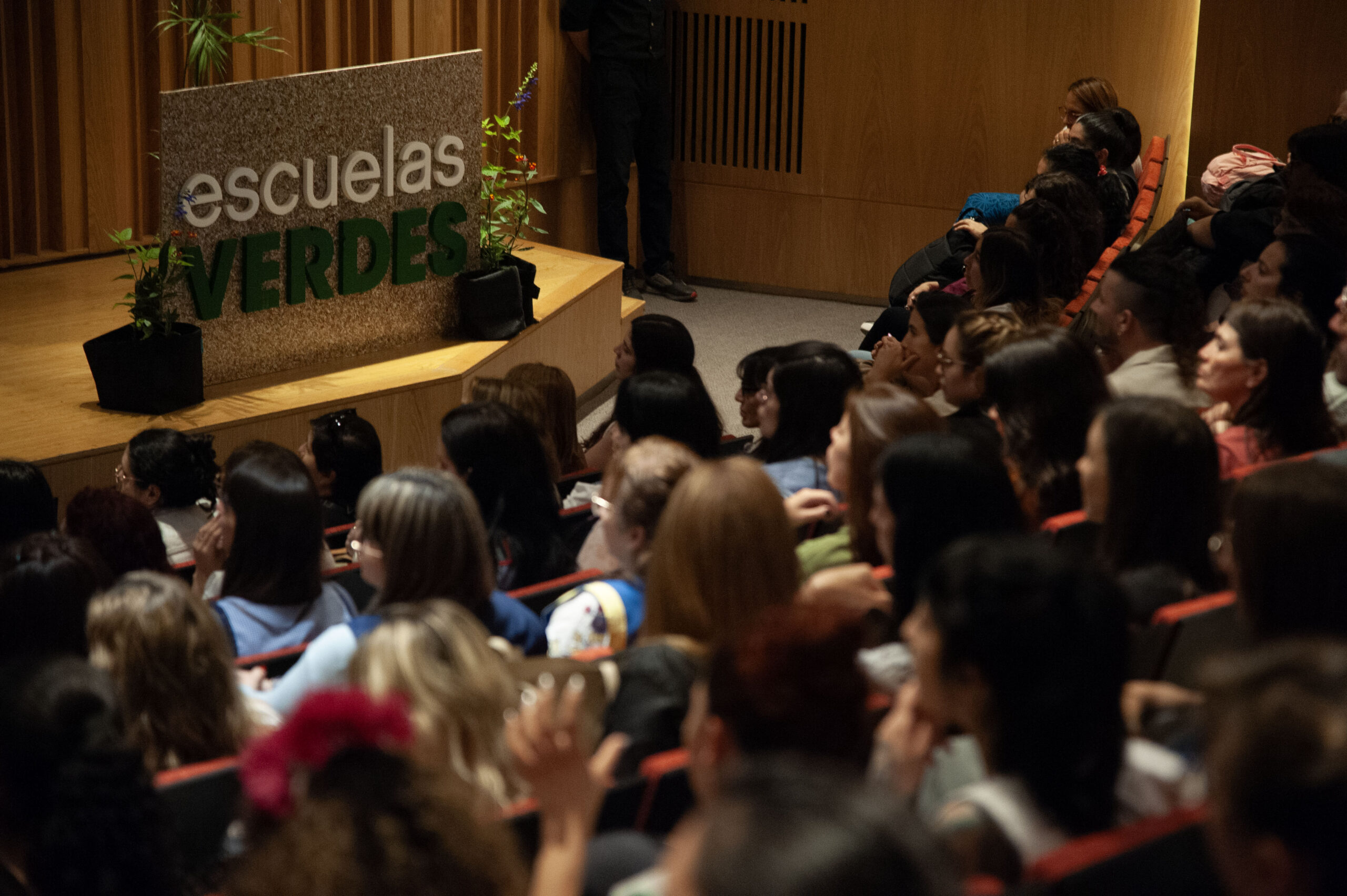
Last Monday, November 17, the auditorium of Polo Saavedra in Buenos Aires City was the setting for the 12th edition of the Green Schools Recognition, a day that brought together teachers, principals, and supervisors from 726 schools to share and celebrate the environmental projects developed during the school year.
Authorities present
The event was attended by:
- Mercedes Miguel, Minister of Education of Buenos Aires City.
- Inés Cruzalegui, Deputy Secretary of Learning Management.
- Angélica Gómez Pizarro, Operational Manager of Education for Sustainability.
The authorities highlighted the commitment of the schools to environmental education and the daily task of promoting student responsibility through actions and content that foster sustainable habits in their communities.
Outstanding recognitions
In this edition, 130 schools achieved the highest distinction of “Consecrated School”, in recognition of their sustained work over the years and the multiplication of experiences with other institutions.
The School Districts No. 3, 4, 8, 9, 14, 15, and 20 were also recognized for organizing congresses, conferences, and exchange meetings. Additionally, 15 teachers received a special recognition for their 10 years of work as environmental leaders.
For the fourth consecutive year, representatives from schools in other municipalities and cities across the country received their diploma as part of the Federal Network of Green Schools, an initiative that promotes environmental education throughout the national territory through the exchange of experiences and projects.
The Green Schools program
Green Schools is the program of the Buenos Aires Ministry of Education that promotes sustainable development from the classrooms, providing educational and environmental management tools to care for the planet and strengthen the bond with nature.
Environmental projects in schools are essential for educating children from an early age, as they foster ecological awareness, develop critical and social skills, and form citizens responsible for the environment.
Benefits of environmental education from childhood
- Awareness and commitment: develops a deep understanding of environmental issues and collective responsibility.
- Critical thinking and skills: fosters analysis, problem-solving, and scientific thinking.
- Development of social skills: promotes empathy, cooperation, and conflict resolution.
- Connection with nature: reduces stress and improves attention through outdoor activities.
- Participation and action: empowers students with concrete actions like recycling and cleaning.
- Global vision: helps understand environmental issues from a planetary perspective and value biodiversity.
Implementation of environmental projects
Environmental education materializes in practical and community activities that integrate different disciplines:
- Practical activities: school gardens, recycling workshops, and cleaning of green spaces.
- Interdisciplinary learning: integration with mathematics, sciences, and language.
- Community participation: involving the entire educational and local community in environmental projects.
- Inspiration and reflection: fostering dialogue about human impact on the environment and building critical thinking.
The 12th edition of the Green Schools Recognition reaffirms the role of environmental education as a key tool for forming conscious and responsible generations. The projects promoted from the classrooms not only strengthen students’ relationship with nature but also promote a model of active and sustainable citizenship.


