



The Lahille’s dolphin (Tursiops truncatus gephyreus), popularly known as tonina or bottlenose dolphin, faces an imminent threat of extinction. With less than 500 individuals throughout its range, the Argentine coastal populations are in critical condition, with an estimated total of just 150 to 200 specimens.
This alarming situation was presented at an international workshop in Buenos Aires, which brought together scientists, technicians, NGOs, government agencies, and experts to design strategies, coordinate actions, and review key information about the species.
A global conservation plan
The International Whaling Commission (IWC) adopted a Conservation Management Plan (CMP), whose practical application is the focus of the meeting organized by the Azara Foundation, the Nuremberg Zoo, YAQU PACHA, and the Mundo Marino Foundation.
During the first day, updates were presented on the conservation status, relevant research, and current management initiatives. The work continues behind closed doors to transform global goals into a practical roadmap for the next five years in Argentina.
Río Negro: a stronghold for the species
The province of Río Negro hosts the most important remnant of the subspecies. In an interview with Diario Río Negro, researcher Magdalena Arias (Conicet, Azara Foundation, National University of Comahue) emphasized:
“We are the only place in our country where the dolphin can be seen from the coast on a daily basis, but we still haven’t given it the level of importance it deserves.”
Arias presented data showing a stable abundance, but with worryingly low birth rates. Meanwhile, researcher Mariano Coscarella (Conicet, National University of Patagonia San Juan Bosco) highlighted that San Antonio Bay concentrates nearly half of the national total, with between 80 and 100 specimens.
The critical problem: low birth rates
Both researchers agreed that the lack of generational replacement is the biggest challenge. Coscarella warned:
“The numbers we are seeing indicate that we are not achieving population replacement.”
Arias explained that in Río Negro, the main threat is not fishing, but the possible presence of environmental contaminants that could affect female fertility. Therefore, the need for funding for sample analysis and genetic studies to determine if the Río Negro population is isolated was emphasized.
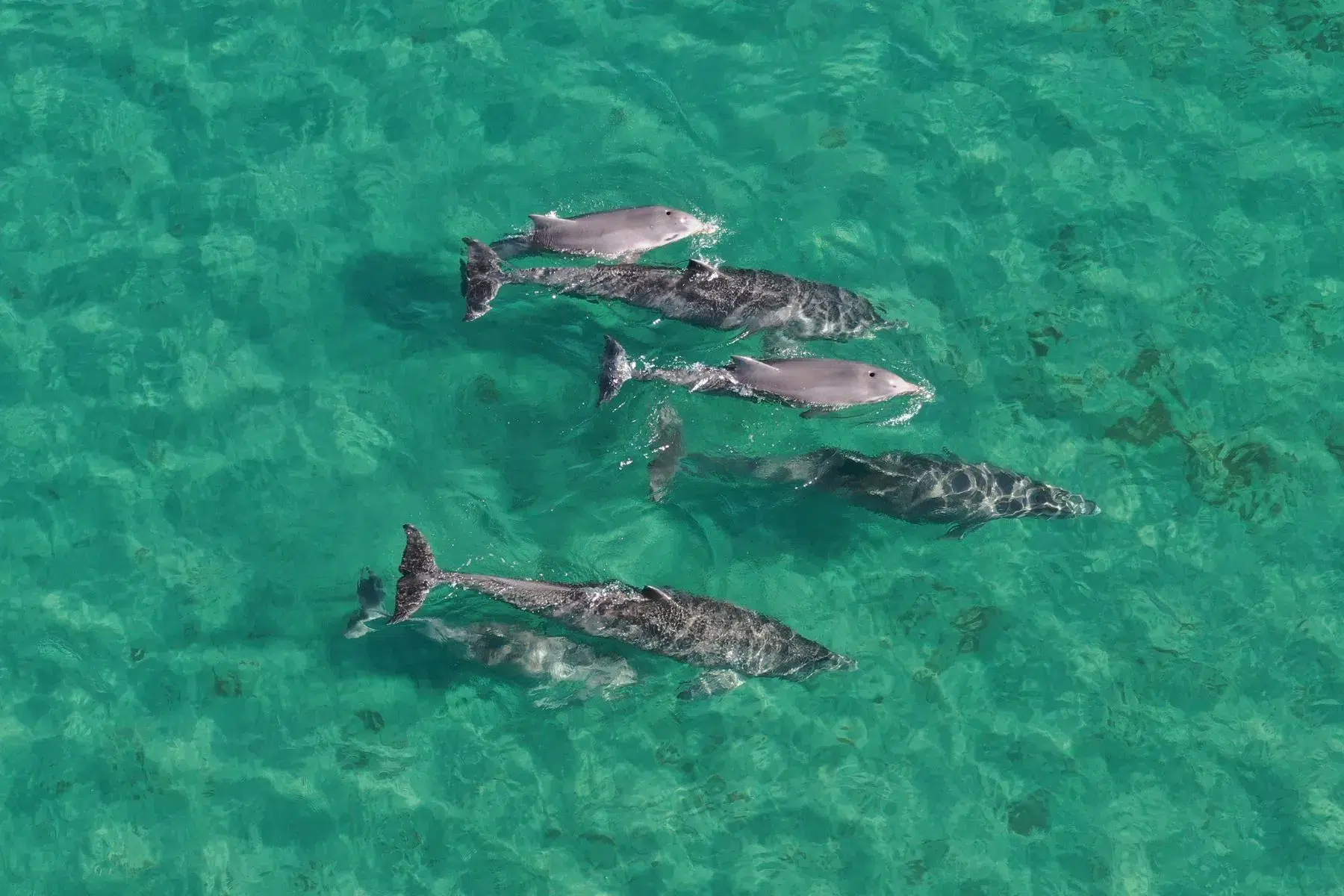
Characteristics of the subspecies
Lahille’s dolphin is a robust and dark variant of the bottlenose dolphin, with a triangular or falcate dorsal fin.
In the 1980s, its silhouette was mistaken for a shark on the Buenos Aires coast, where it has now practically disappeared.
Conservation agenda
The workshop participants defined an agenda for the next five years:
- Research on environmental contamination and its impact on fertility.
- Genetic studies to assess population isolation.
- Integration of social sciences and citizen science to involve local communities.
- Securing funding for priority subprojects.
The Río Negro Environment Secretariat also participated. Fernando Hartmann, coordinator of the technical area of the Viedma Delegation, noted:
“It is an opportunity to organize and streamline the administrative processes that scientific teams need today.”
The official explained that they seek to simplify procedures and facilitate genetic studies related to the Nagoya Protocol, formalizing projects and procedures so that researchers can advance more quickly.
Lahille’s dolphin faces an unprecedented biological crisis in Argentina. Low birth rates and the risk of genetic isolation jeopardize its survival. The roadmap defined in Buenos Aires will be key to transforming the diagnosis into action and ensuring that this emblematic species of the Patagonian coast does not disappear.



