



The province of Santa Fe is experiencing one of the most critical situations in terms of waste management in Argentina.
According to data from the Argentine Chamber of Industrial and Special Waste Treatment and Transport (CATRIES), based on information from the Ministry of Environment and Climate Change, there are about 400 active open-air dumps, of which 70 pose water or road risks, making them among the most urgent to close.
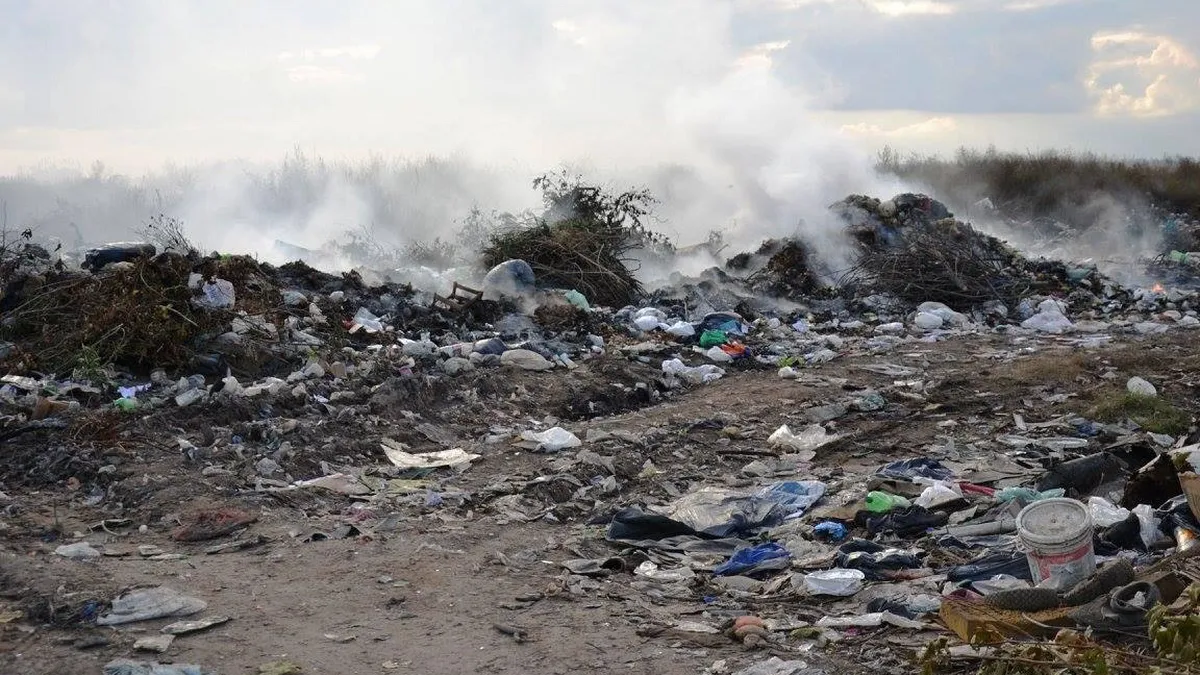
Among them, the historic dump of San José del Rincón stands out, emblematic for its size, age, and proximity to residential areas.
An alarm for the national system
For Claudia Kalinec, president of CATRIES, the situation in Santa Fe is a clear sign of a structural problem:
“What is happening in Santa Fe starkly shows what is happening in much of the country: too many active dumps, little infrastructure in small municipalities, and a management system that needs urgent updating. It is not an inevitable problem; it is a problem of decision and investment.”
The Chamber insists on the need to plan with a regional vision, strengthen controls, expand final disposal capacity, and accompany with environmental education so that more industrial and productive actors manage their waste responsibly.
An uneven map for a structural problem
Santa Fe has three authorized sanitary landfills and a conversion process underway in Venado Tuerto. However, the existing infrastructure fails to compensate for the territorial dispersion of informal dumps.
- 80% of the population, concentrated in Rosario, Santa Fe capital, and metropolitan areas, disposes of its waste in authorized landfills with technical controls, groundwater monitoring, and leachate treatment.
- The remaining 20%, mainly small towns, lacks the economic resources, minimum scale, or logistics to transport their waste to formal sites.
Kalinec warns that this territorial inequality multiplies the problem:
“If a small municipality cannot afford the transportation or operation of a landfill, it ends up resorting to the only immediate option: dumping the garbage on untreated land. That cheap solution quickly becomes a huge environmental and health liability.”
A conflict that transcends provincial borders
The scenario in Santa Fe is part of a national problem. The Waste Observatory, an initiative of CATRIES together with the UNR and the UBA, found that of the 25 million tons of industrial waste generated in 2025, only 4.07% received adequate treatment.
The more than 5,000 open-air dumps that exist in Argentina are, in many cases, the final destination of that untreated waste. “There are no isolated provinces. What happens in Santa Fe also happens in Buenos Aires, in the NOA, in Cuyo. The challenge is national because we need to move from emergency to planning and from informality to an organized and controlled scheme,” said Kalinec.
Environmental and health risks
The dumps in Santa Fe receive mixed waste, without separation or treatment:
- Household and bulky waste.
- Industrial and hazardous waste.
This generates toxic leachates that contaminate groundwater, methane emissions that contribute to climate change, and open-air burning that releases dioxins and furans, two of the most harmful compounds for human health.
Conversions and advances towards Girsu systems
The Ministry of Environment is working on the prioritization and closure of the 70 highest-risk dumps and on the migration of municipalities towards Girsu systems (Comprehensive Urban Solid Waste Management).
Highlighted cases:
- Venado Tuerto and Villa Ocampo are advancing in the transition from historic dumps to sanitary landfill schemes or shared treatment plants.
- The new digital environmental license streamlines procedures for industries, reduces administrative times, and strengthens controls over the final destination of waste, with real-time monitoring.
“The closure of a dump is the beginning. What defines success is what comes next: a stable, regional system with common infrastructure, affordable rates, and sustained controls. Santa Fe has the opportunity to be a national model if it consolidates an integrated final disposal network,” concluded Kalinec.
The waste management crisis in Santa Fe reflects a national structural problem. The province faces the challenge of closing critical dumps and consolidating a regional final disposal system that combines infrastructure, control, and environmental education. If it manages to move towards an integrated model, Santa Fe could become a national leader in responsible waste management.


