



Durante años, la conversación sobre baterías has revolved around lithium. This element has enabled the electrification of transportation, boosted renewable storage, and reduced emissions, but it has also shown its limits: fire risks, geopolitical tensions, intensive mining, and rising costs. In this context, the progress made by Canadian scientists with solid-state sodium batteries opens an alternative path that deserves attention, not as a futuristic promise, but as a key piece of the global energy puzzle.
A scientific development with real impact
The new system, presented in two recent studies, combines greater safety, lower cost, and electrochemical performance close to that of lithium, without resorting to flammable liquid electrolytes.
The result is remarkable: a coulombic efficiency of 99.26% after 600 charge cycles, very close to commercial lithium values. Although not an absolute record, it does represent a clear sign of technological maturity.
Enhanced safety against “thermal runaway”
One of the major problems with current batteries is thermal runaway, a chain reaction that can be triggered after a shock, an internal defect, or an overcharge, causing fires that are difficult to extinguish.
By replacing the liquid electrolyte with a non-flammable solid electrolyte, sodium batteries drastically reduce that risk. They do not eliminate it completely, but they lower it to much more manageable levels, which is crucial for electric vehicles and critical storage infrastructures.
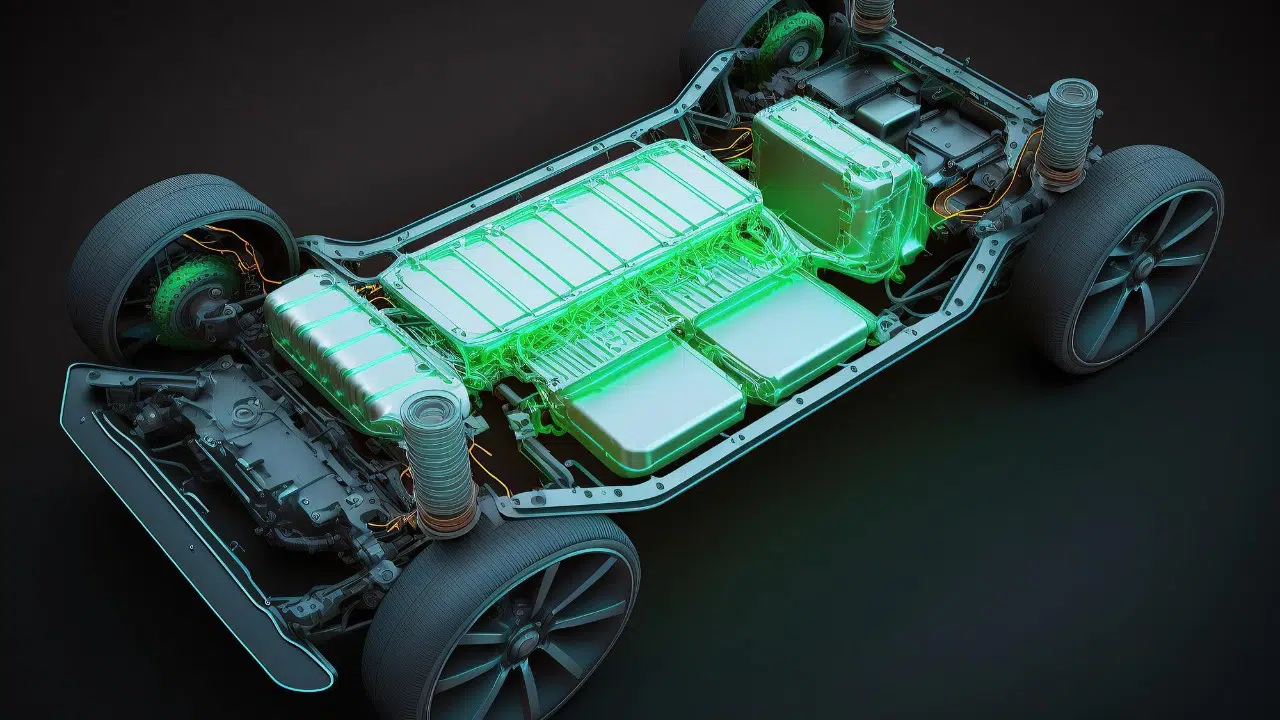
Structural advantages of sodium
Sodium is not new in electrochemistry, but it has always been at a disadvantage compared to lithium due to its lower energy density and shorter life cycles. The current advancement breaks part of that technological ceiling thanks to a solid material based on sulfur and chlorine, which allows ions to pass with surprising efficiency.
Moreover, sodium plays with a structural advantage: global abundance. It does not depend on Andean salt flats or refining chains concentrated in a few countries. It is present all over the planet, reducing geopolitical tensions and making long-term supply more predictable.
Industrial and urban applications
From an industrial perspective, these batteries could translate into lower costs, especially relevant for:
- Electric public transport.
- Urban micromobility.
- Stationary renewable energy storage.
Although they are not designed to compete with lithium in long-range vehicles or aerospace applications, in many real uses safety, cost, and durability weigh more than extreme energy density.
Technological diversification and energy transition
The key lies in technological diversification: not replacing everything with sodium, but using each chemistry where it fits best.
The use of advanced infrastructures like the Canadian Light Source has allowed precise observation of how ions move within the solid electrolyte, accelerating development and reducing errors in later scaling phases.
Industry and recycling: a more sustainable future
The hegemony of lithium is not broken overnight, but it is eroded. Major industrial players are already moving:
- CATL announced mass production of sodium batteries under its Naxtra platform for 2026.
- BYD is exploring its use in grid storage.
Recyclability is another point in favor: by containing fewer hazardous materials and avoiding heavy metals, sodium batteries simplify recovery processes and reduce environmental impacts at the end of their useful life.
Solid-state sodium batteries represent a tangible advance towards the energy transition. Their combination of safety, lower cost, and resource abundance makes them a viable alternative for electrifying urban transport, strengthening power grids, and facilitating renewable storage.
Integrated with policies that prioritize safety, recycling, and responsible resource use, sodium can become a silent but decisive ally in building a more sustainable energy future.



