



The province of Satipo, Peru, approved an unprecedented ordinance in the country. The regulation recognizes stingless Amazonian bees as subjects of rights and declares the legal protection of their natural habitat.
The measure applies in the Avireri Vraem Biosphere Reserve, being the first case in Peru where an insect gains legal recognition. The approach is part of the expansion of nature’s rights.
Local authorities unanimously promoted the initiative. The main objective is to curb accelerated environmental degradation by linking biodiversity, environmental justice, and local governance.

Ecological rights and concrete obligations
The ordinance establishes that these bees have the right to exist, as well as to live in healthy environments with climatic balance. It also recognizes the need to maintain viable populations.
Moreover, the text protects their access to native flora and complete life cycles and includes the possibility of legal representation in the face of environmental damage. This allows for quick institutional responses.
Additionally, it sets clear prohibitions in protected areas and restricts the use of high-impact pesticides. The deliberate destruction of hives is also prohibited.
Active protection of territory and communities
The municipality must prioritize the relocation of hives, so destruction is no longer an option in human conflicts, as this approach aims for coexistence with biodiversity.
A progressive reduction of insecticides is anticipated, along with the preservation of native flora, which will be mandatory. The entire process will have technical environmental supervision.
The regulation includes environmental education in Amazonian communities, with the intention of strengthening sustainable productive practices, as local knowledge is a central part of the strategy.
Stingless bees: guardians of the forest
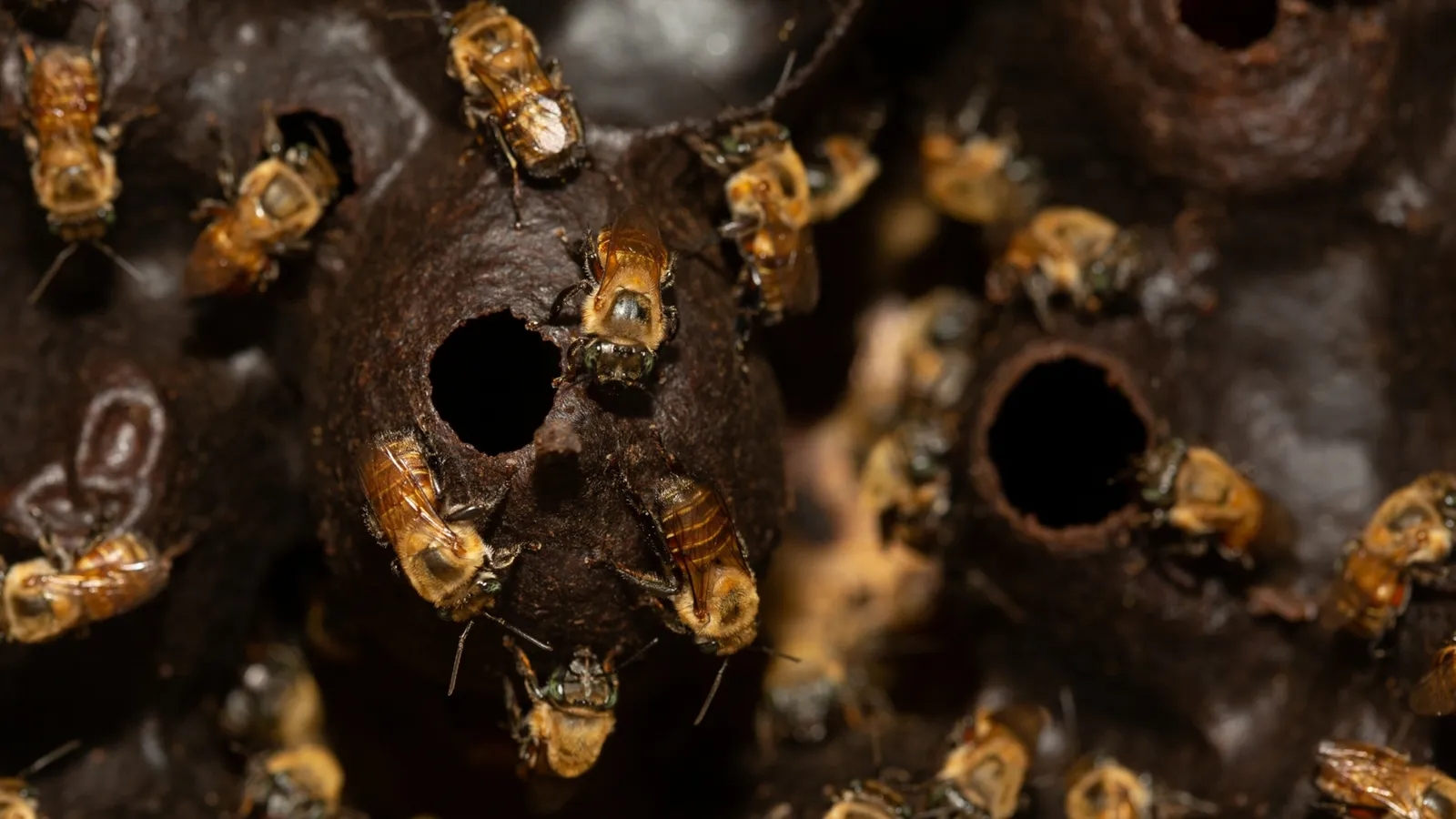
These native bees are the oldest on the planet, playing a key role in Amazonian pollination, as they support the natural regeneration of the forest.
In the Vraem, they pollinate most of the wild plants. Their activity ensures food, seeds, and genetic diversity, as well as supporting local economies and ancestral knowledge.
In fact, traditional meliponiculture depends on their survival. Indigenous communities have practiced it for generations, protecting culture and territory.
A precedent for the rights of nature
The ordinance relies on innovative environmental legal frameworks, as several scientific and community organizations supported the process. The case is already generating international interest.
The recognition of an insect as a subject of rights is exceptional, as it opens the debate on new forms of ecological protection, especially in megadiverse regions.
Satipo positions itself as a reference in environmental justice, as its model could be replicated in other Amazonian areas, thus biodiversity gains a new legal tool.
Ecological, social, and productive benefits of the initiative
The protection of bees strengthens the ecosystem’s health, improves the forest’s regeneration and local climatic stability, while enhancing food security.
Sustainable agriculture is directly benefited, as it increases the pollination of crops and native plants, while reducing the dependency on chemical inputs.
Additionally, community economies are strengthened, promoting respect for indigenous knowledge. The initiative integrates conservation, justice, and local development.



