



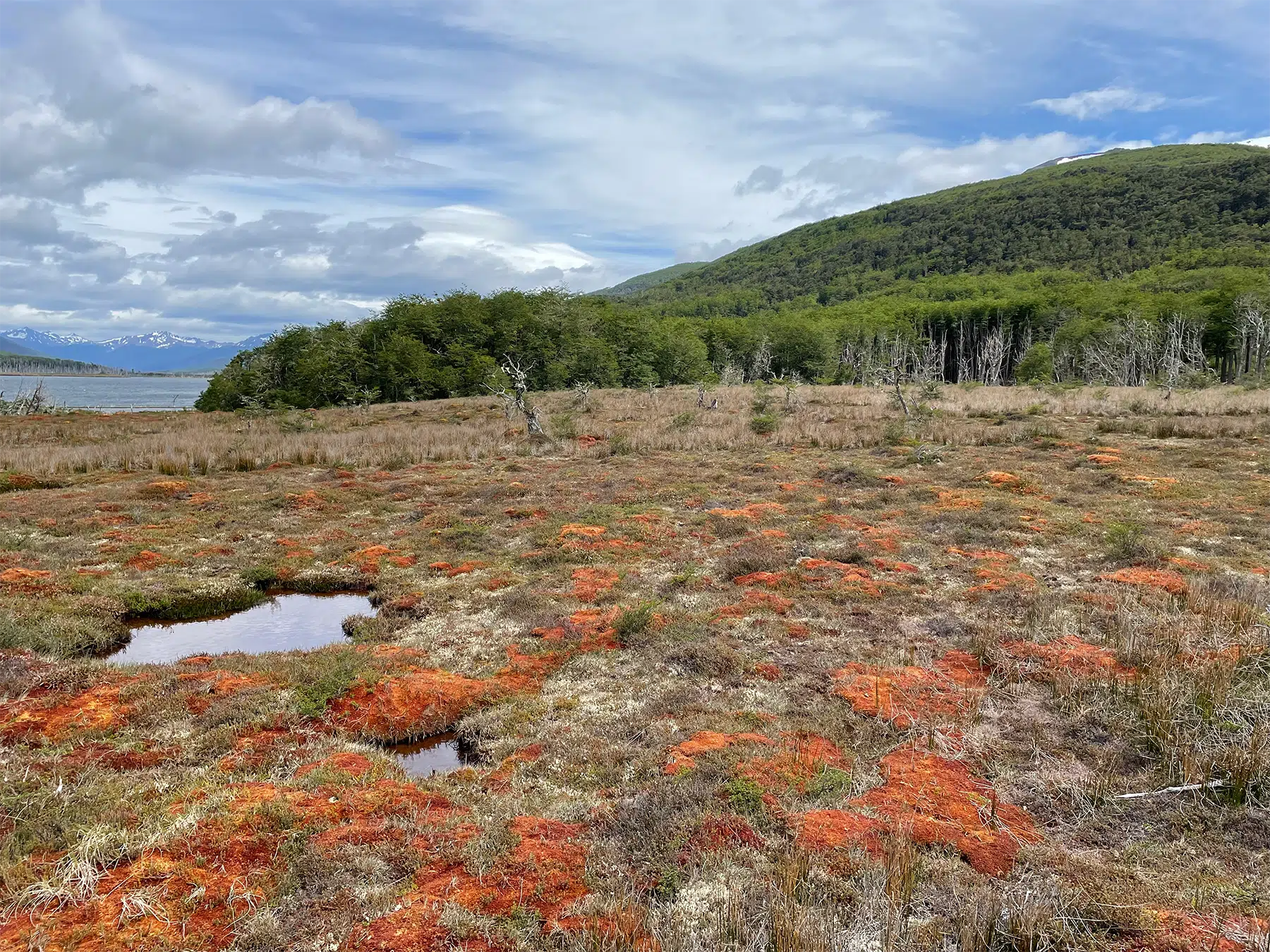
The Patagonian peatlands are now the focus of an unprecedented binational initiative between Argentina and Chile.
Recently, both nations consolidated a system of shared environmental governance to ensure the long-term protection of these crucial ecosystems.
The proposal emerged from the joint work between institutions and organizations from both countries.
From Argentina, the Manekenk Association and the National University of Tierra del Fuego (UNTDF) participated.
Meanwhile, Chile added the Hach Saye Foundation, Citizens and Climate Foundation, University of Magallanes, the Ministry of the Environment, and WCS.

A draft for the conservation of Patagonian peatlands
Specialists from both countries met in Magallanes to draft a governance document.
The document defines the structural components, decision-making mechanisms, and organization of the initiative.
This framework seeks to continue the vision and mission established participatively in 2022.
The draft will be discussed in the coming months with all involved parties.
“This space of binational collaboration and cooperation is fundamental because we highlight the importance of conserving and protecting the Patagonian peatlands as a common and ecologically continuous ecosystem,” said Paula Otth, a professional from the Aquatic Ecosystems Department of the Ministry of the Environment of Chile.
Engineer Adriana Urciuolo, a research professor at the National University of Tierra del Fuego, emphasized: “This document reflects everyone’s vision of the Patagonian Peatlands Initiative.”
“It’s what we dreamed of when we met in 2021 and decided to form this initiative,” she added proudly.
The objectives and scope of the initiative to protect the Patagonian peatlands
The proposal articulates science, policy, and society to ensure the protection of the Patagonian peatlands.
The process aims to add new stakeholders related to the topic and provide diverse perspectives for conservation.
The main objectives include:
- Promote the conservation and restoration of peatlands
- Strengthen the binational work network
- Generate shared scientific knowledge
- Promote coordinated public policies
- Inspire society to care for these ecosystems
Nicole Püschel, in charge of Climate Change and Biodiversity at WCS Chile, emphasized: “For WCS, as custodians of peatlands in Karukinka, it is important that the protection of these ecosystems extends beyond the local level.”
The threats facing the peatlands
The peatlands constitute the largest natural reserves of carbon on the planet, making them especially relevant.
They store twice as much as the entire global forest mass, so their role is key in mitigation and adaptation to climate change.
However, these ecosystems face significant threats. Drainage, land use change, and the invasion of exotic species like the beaver pose major risks.
Therefore, the unsustainable exploitation of peat and moss also endangers their integrity.
In light of this, the binational initiative between Argentina and Chile is especially relevant in the current context.
The meeting was held within the framework of the project led by WCS Chile: “Enhancing the conservation of peatlands in Patagonia through scientific research and collaboration among stakeholders.”
This project seeks to improve the management and handling of ecosystems in Karukinka Park.
It particularly focuses on two pressures: hydrological changes associated with the beaver and the effects of climate change.
In recent years, both countries have taken significant steps in the knowledge and appreciation of the peatlands.
The growing scientific and community interest offers concrete opportunities to expand conservation efforts in the region.


