



A scientific innovation inspired by trees revolutionizes the energy sector in desert areas: it is about the self-cleaning solar panels.
This development, devised by a team of Egyptian scientists, mimics the movement of tree leaves with biomimetic technology that removes dust from solar panels without water or human intervention.
Today, the accumulation of dust and sand represents the biggest obstacle to the performance of panels in arid regions.
For example, in just six weeks a conventional panel loses up to 33% of its efficiency.
In response to this, Mohamed Salama Abdel-Hadi, professor at the Faculty of Engineering and Materials Science at the German University in Cairo, led this key research.
The team observed how tree leaves naturally shake to rid themselves of dust through vibration and were inspired by it.
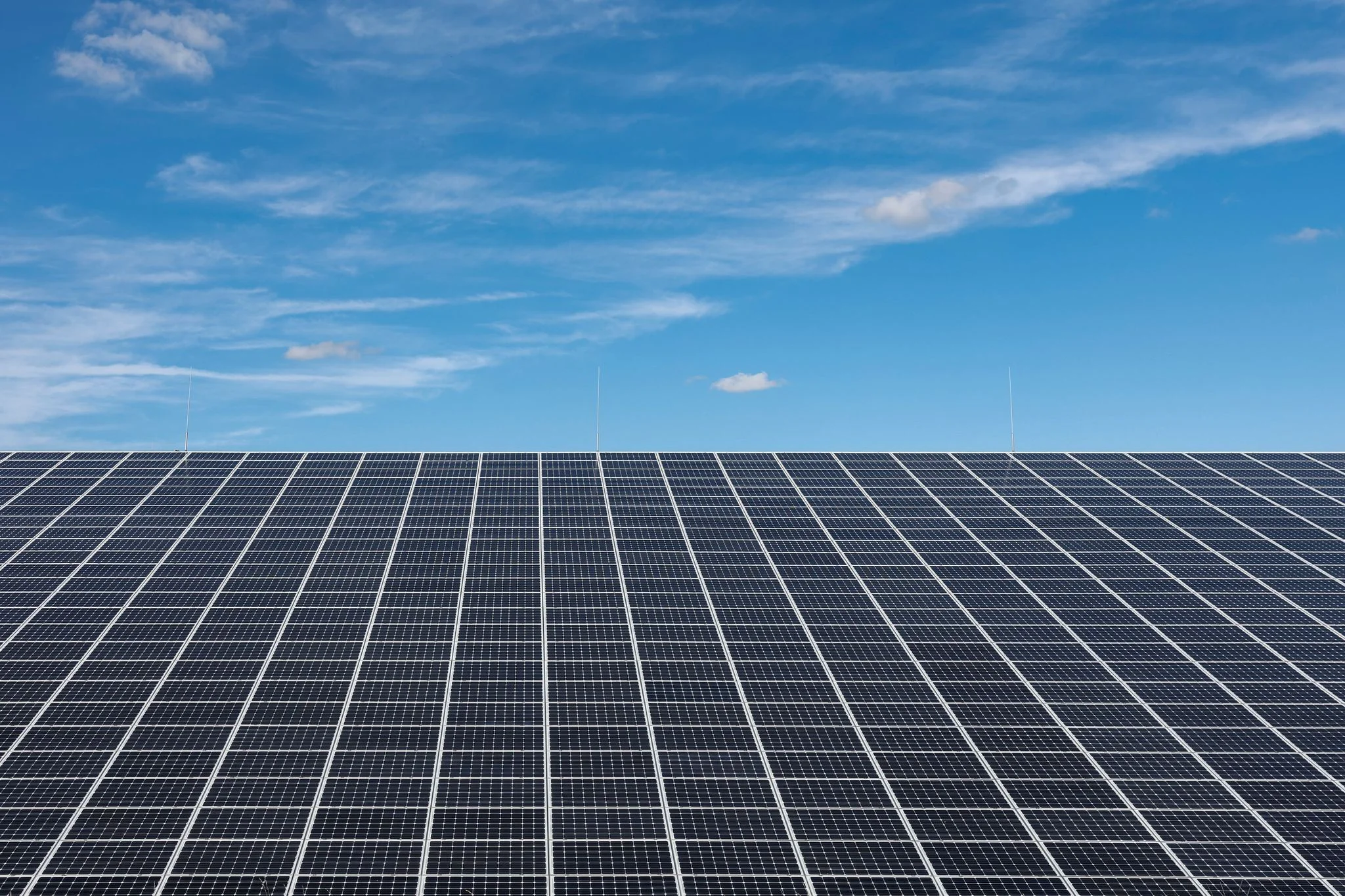
How self-cleaning solar panels work
The system incorporates a small motor with a counterweight that generates controlled vibrations.
These shakes are transmitted to the panel and cause the dirt to fall by gravity, without the need for water.
An intelligent controller activates the mechanism twice a day: at noon and early morning.
Additionally, the system can operate with a battery or with the panel’s own energy.
Initial tests in Cairo showed strong results. The self-cleaning solar panels only lost 12.9% of performance in six weeks, compared to 33% for conventional ones.
A drastic reduction in maintenance costs
The economic impact of this technology is significant for large installations.
Today, keeping 200 solar posts clean costs more than 40,000 Egyptian pounds monthly with traditional methods.
Now, the self-cleaning solar panels allow for a drastic reduction in that expense and only require manual cleaning every two or three months.
Thus, the initial investment is recovered in less than a year thanks to savings on maintenance.
The team also developed an even simpler passive version that works exclusively with wind.
This design does not include motors or electronics: the panel is mounted on a flexible support that vibrates with gusts.
At the German University in Cairo, this passive system maintained 95% efficiency after six weeks. Fixed panels barely reached 75% performance in the same period.

Durability and expansion of the project
An initial concern was whether the self-cleaning solar panels would withstand constant vibrations.
However, tests confirmed that the materials withstand well without structural damage in the long term.
The system’s features include:
- Motor with counterweight to generate controlled vibrations
- Intelligent controller that schedules automatic cleanings
- Autonomous operation with solar energy or battery
- Adaptability to different types of installations
- Minimal maintenance every two or three months
The performance of the passive system varies according to the season. It works better in winter, when there is more constant wind, but still outperforms traditional methods.
The company is already preparing a new installation in Giza after the good results obtained.
The flexible design allows adaptation to rural or isolated areas where conventional maintenance is complicated.
This innovation represents a crucial advance for solar energy in desert regions.
The self-cleaning solar panels demonstrate that biomimicry offers practical and sustainable solutions to complex technological challenges.



