



What began as a university research in London ended up becoming an innovative proposal for sustainable construction in the United Arab Emirates. Architects Máximo Tettamanzi, of Argentine origin, and Alyina Ahmed developed a material capable of utilizing desert sand to manufacture decorative bricks with less cement usage.
The initiative emerged during a master’s program at the Architectural Association School of Architecture in London, where both sought alternatives to reduce the carbon footprint of one of the industries with the greatest environmental impact globally.
During their studies, they identified a striking situation: despite being surrounded by extensive desert areas, the United Arab Emirates relies on the importation of sand from other countries for numerous construction projects.
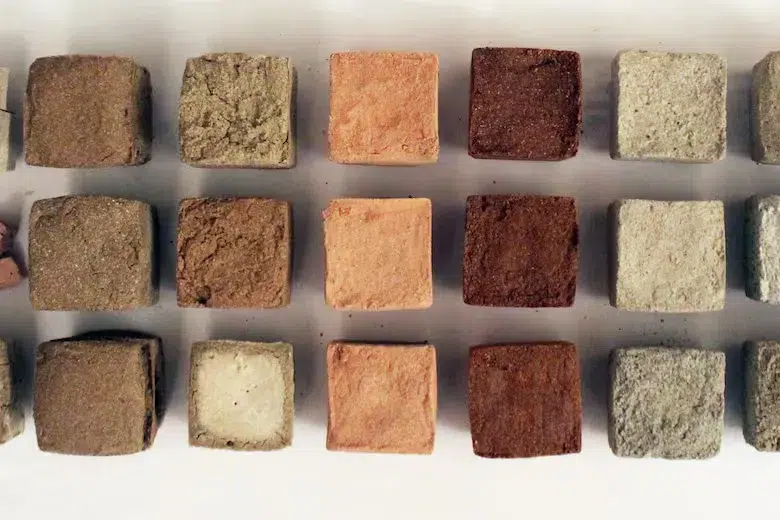
The technical challenge of using desert sand
The main difficulty lies in the physical characteristics of this natural resource. The particles of desert sand have rounded shapes due to wind erosion over thousands of years.
In contrast, river-extracted sand has more irregular grains that facilitate compaction and adhesion in conventional concrete and mortar mixes.
To solve this problem, the architects initiated a funded research through two grants that allowed them to start an extensive experimental phase in search of a viable formula.
From an improvised laboratory to a growing company
The decisive breakthrough came during the Covid-19 pandemic. In Dubai, Ahmed set up a small laboratory in the garage of her home and began conducting numerous tests to stabilize the mix made with desert sand.
After several trials, she managed to develop a composition capable of meeting the necessary technical requirements for construction applications. Subsequently, specialized analyses confirmed the material’s strength.
Moreover, the innovation allowed for a reduction of approximately 50% in the amount of cement required in the mix, a significant aspect due to the high emissions associated with the production of this input.

What are the benefits of this initiative for the construction sector
The use of desert sand represents an opportunity to decrease the extraction of river sand, an activity that causes alterations in watercourses, aquatic ecosystems, and natural landscapes.
Likewise, the reduction in cement use helps decrease greenhouse gas emissions linked to the manufacture of construction materials, promoting projects with a lower climate impact.
On the other hand, the utilization of local resources reduces the need for international transportation of raw materials, decreasing energy consumption and strengthening circular economy models adapted to the environmental conditions of each region.
Innovation, design, and circular economy
After completing their studies, the architects continued to refine the project through incubators, acceleration programs, and international exhibitions. Simultaneously, they incorporated a second line of research based on date waste.
From roasted and ground pits combined with resins, they developed panels for cladding and furniture. Both initiatives were integrated under the brand ARDH Collective, inspired by the Arabic word for earth.
Commercial consolidation came in 2023 during the Dubai Design Week. Finally, in 2025 the company launched decorative bricks for facades, characterized by geometric designs that allow natural light entry and improve space privacy.
Currently, the company continues exploring new applications for its sustainable materials and plans to expand its presence in the United Arab Emirates, demonstrating that environmental innovation can transform underutilized resources into valuable solutions for the construction of the future.



