



As space activity multiplies, an invisible risk also grows. In the Earth’s orbit, thousands of uncontrolled objects accumulate, making environmental and outer space safety a global concern. These elements are known as debris or space junk.
Inactive satellites, rocket remnants, and tiny fragments spin at high speed. Thus, any collision can generate thousands of new pieces. Consequently, the space near Earth becomes increasingly dangerous.
In light of this scenario, science seeks solutions that do not exacerbate the problem. Therefore, some researchers are betting on non-contact technologies. In this way, they aim to reduce risks and protect orbital infrastructure.
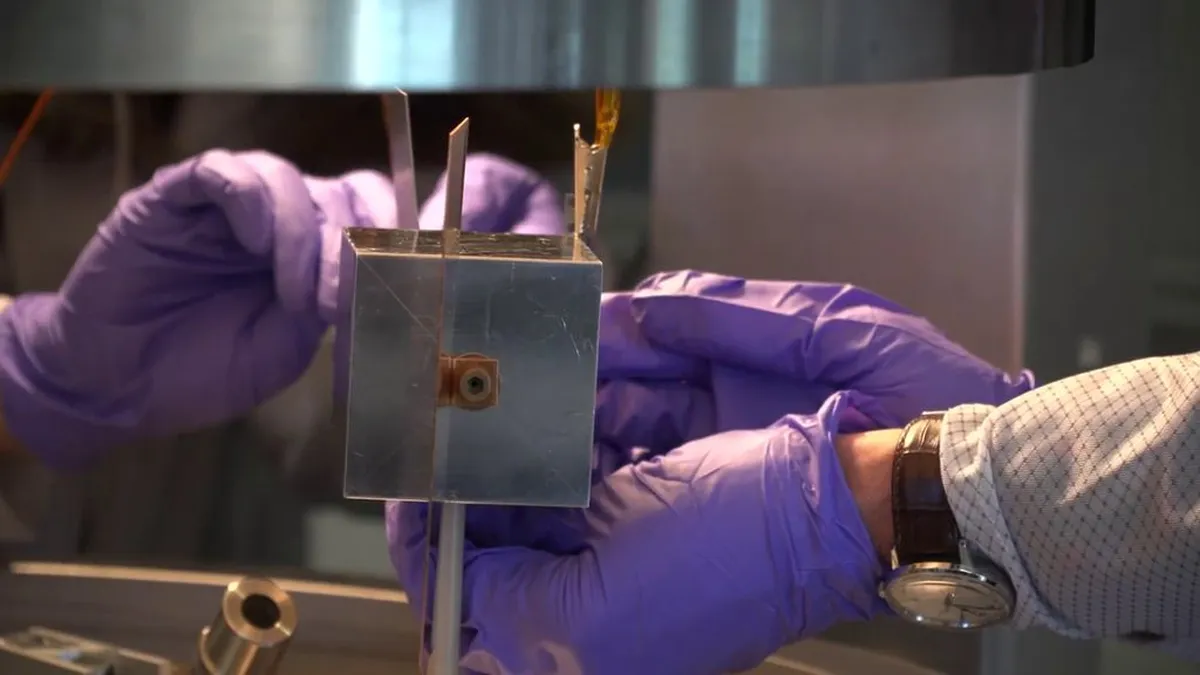
An “electrostatic tractor” inspired by physics
Far from science fiction, the proposal is based on real electrical principles. A scientific team from the University of Colorado Boulder proposes using opposite charges to move space objects. Thus, they would avoid touching and fragmenting them.
The idea involves a service spacecraft equipped with an electron emitter. By negatively charging an inactive satellite, controlled attraction is generated. Then, the object can be pushed into a safe orbit.
Although the process is slow, it is safer than nets or harpoons. Additionally, it maintains a constant distance of up to 30 meters. Therefore, the risk of accidental collisions is significantly reduced.
Lessons from past collisions
The danger of space junk is not theoretical. In 2009, a satellite collision generated thousands of fragments. Since then, the problem has worsened.
Each new impact multiplies the debris in orbit. Thus, it triggers a chain reaction that is difficult to stop. This scenario could render entire areas of near space unusable.
Therefore, avoiding direct contact becomes key. Soft and progressive solutions are gaining ground. In this context, the electrostatic tractor emerges as a viable alternative.

Costs, timelines, and challenges ahead
Despite its potential, the project faces economic barriers. Developing and launching a prototype requires significant investments. Without funding, the technology advances slowly.
The timelines are not immediate either. Even under ideal conditions, the system would take years to be operational. However, the urgency of the problem drives international interest.
If these obstacles are overcome, orbital cleanup could change paradigms. Thus, space sustainability would cease to be just a concept and become an active policy of environmental protection.
What is space junk and why it concerns the environment
Space junk includes any artificial object that no longer serves a function. From out-of-service satellites to millimeter fragments. All remain orbiting the Earth for decades or centuries.
These debris threaten active and future space missions. Additionally, they increase the risk of chain collisions. Therefore, safe access to space could be compromised.
Although it occurs outside the planet, the impact reaches Earth. The loss of satellites affects communications, weather, and environmental monitoring. Thus, taking care of space also means protecting the global environment.


