



A recent report prepared by the National Water Directorate (Dinagua) of the Ministry of Environment of Uruguay revealed a worrying fact: 49% of the territory is currently suffering from a water deficit.
This phenomenon, understood as situations where the demand for freshwater exceeds availability, affects everything from personal consumption to production, making it particularly relevant.
According to the survey, the hydrological conditions recorded in December indicate a serious situation.
The availability of water is low and below normal in much of the south and east of the country.
However, the situation does not represent a recent phenomenon: the water stress has persisted for four to five months in the main basins of the country.
This is exacerbated by intense storms that, in addition to not alleviating the problem, have caused damage in numerous places.
As detailed in Dinagua’s hydrological bulletin, to reverse the water deficit affecting half of Uruguay, less intense but more consistent rains are needed.
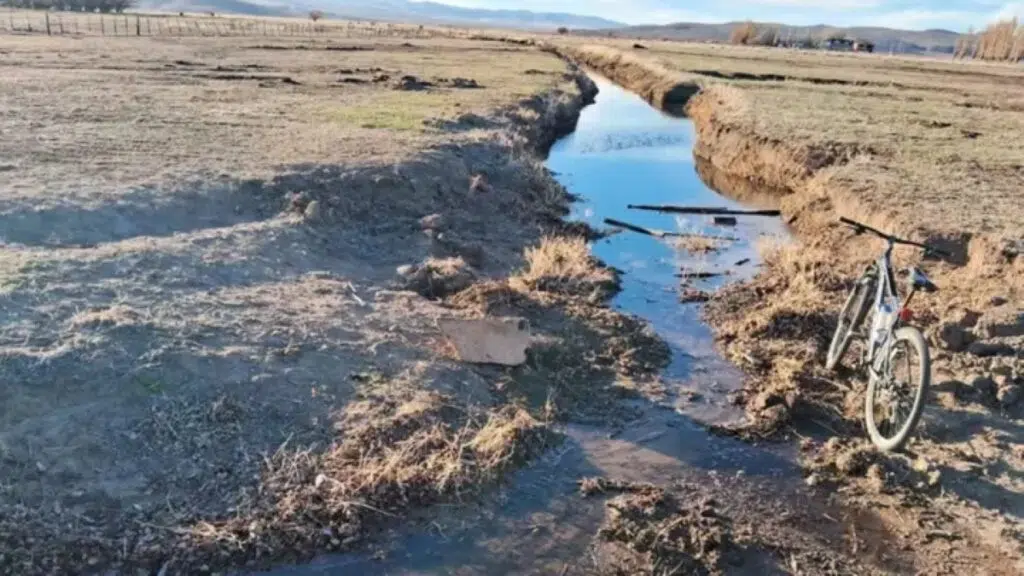
The most affected basins by the water deficit in Uruguay
The most compromised hydrographic basins include the Santa Lucía and San José rivers.
The Atlantic Ocean slope also faces critical conditions, including the Pando stream, Solís Grande, Maldonado stream, and Rocha Lagoon.
The basins that feed the Merín Lagoon, such as the Cebollatí River, complete the picture of areas under prolonged stress.
Conversely, some regions maintain normal conditions. Among these are those that drain into the Río de la Plata, such as Rosario and San Juan.
The basins that feed the lower stretch of the Uruguay River —Cuareim, Arapey, and Daymán— also remain within the normal range for this time of year.
The irregular distribution of rainfall worsens the outlook
The rains recorded a highly irregular distribution throughout the country in December, worsening the water deficit.
While the basins of the lower stretch of the Uruguay River and the upper part of the Negro River accumulated precipitation exceeding 150 mm, other areas suffered from extreme scarcity.
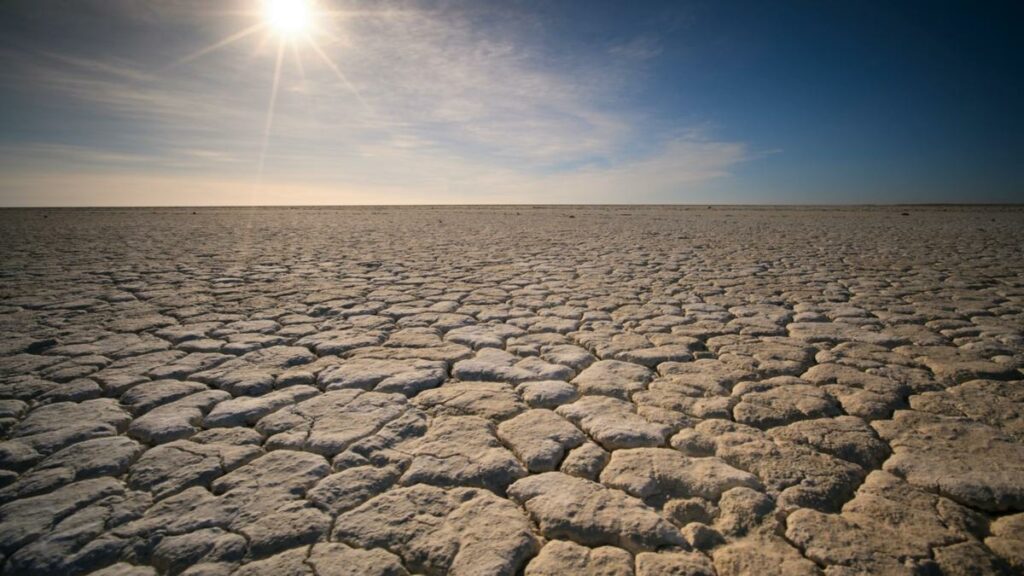
The basins of the Río de la Plata and Maritime Front, including those of the Santa Lucía and San José rivers, recorded monthly accumulations between 20 mm and 45 mm.
In contrast, the situation reaches its most critical point in specific areas of the south, as noted by Dinagua.
The accumulations were below 10 mm in the basins of the Pando stream and Colorado stream, located in the lower stretch of the Santa Lucía River.
Unpromising prospects for the summer
Regarding the possibility of reversing the water deficit in Uruguay in the coming months, the hydrological forecast for January and February does not offer favorable expectations.
The report details that there is a 70% probability that the flows most affected by the lack of water will remain below normal, especially during January.
Therefore, authorities anticipate that the water deficit could extend until the end of the first quarter of 2025.
Only from March would conditions tend to normalize according to official estimates.
However, there remains the possibility that the situation could continue even until the end of the first quarter of the year.


