



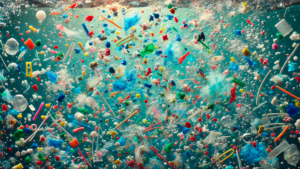
The coastal waters of the Pacific Island Countries and Territories are no longer safe from plastic pollution. A regional analysis detected microplastics in nearly one-third of the fish inhabiting these areas.
This data is particularly alarming because it concerns regions far from major industrial centers. However, the pollution confirms that plastic travels long distances and accumulates even in seemingly pristine ecosystems.
Thus, the research highlights that geographical remoteness does not guarantee protection against a global-scale environmental crisis.
Fiji, Tonga, Tuvalu, and Vanuatu under scientific scrutiny
The study examined 878 coastal fish belonging to 138 species, captured by fishing communities in Fiji, Tonga, Tuvalu, and Vanuatu. From this survey, a strong disparity between islands was observed.
In Fiji, almost 75% of the analyzed fish contained microplastics, a value much higher than the global average. In contrast, in Vanuatu, only 5% of the catches showed contamination.
These differences suggest that local dynamics, such as urbanization and waste management, directly influence the exposure of marine fauna.
Most exposed species and key ecological factors
Although each country hosts different fish communities, two species were common in the four studied areas. The emperor snapper and the goatfish with stripes and spots showed higher contamination in Fiji than in the rest of the islands.
Additionally, the analysis revealed that reef fish and those inhabiting the seabed are more likely to ingest microplastics. This pattern relates to their diet and feeding habits.
Consequently, species that consume invertebrates or use ambush tactics are more exposed to plastic particles accumulated in sediments and reefs.
Microplastics, human health, and food security
The presence of microplastics not only affects marine ecosystems. In many Pacific islands, fish is a nutritional, economic, and cultural pillar.
Therefore, the pollution poses potential risks to human health, especially in communities that rely on the daily consumption of local fish. This is compounded by the limited capacity for waste and water treatment.
Thus, the environmental problem also becomes a social and health challenge for island communities.
A global crisis demanding structural responses
The results reinforce the idea that plastic pollution is ubiquitous. Even the most isolated ecosystems show clear signs of deterioration.
In this scenario, strategies based solely on recycling are insufficient. The magnitude of the problem demands reducing plastic production from its source.
Thus, the data provide solid arguments to promote international agreements that limit the use of plastics and protect marine biodiversity and food security in the Pacific.


