



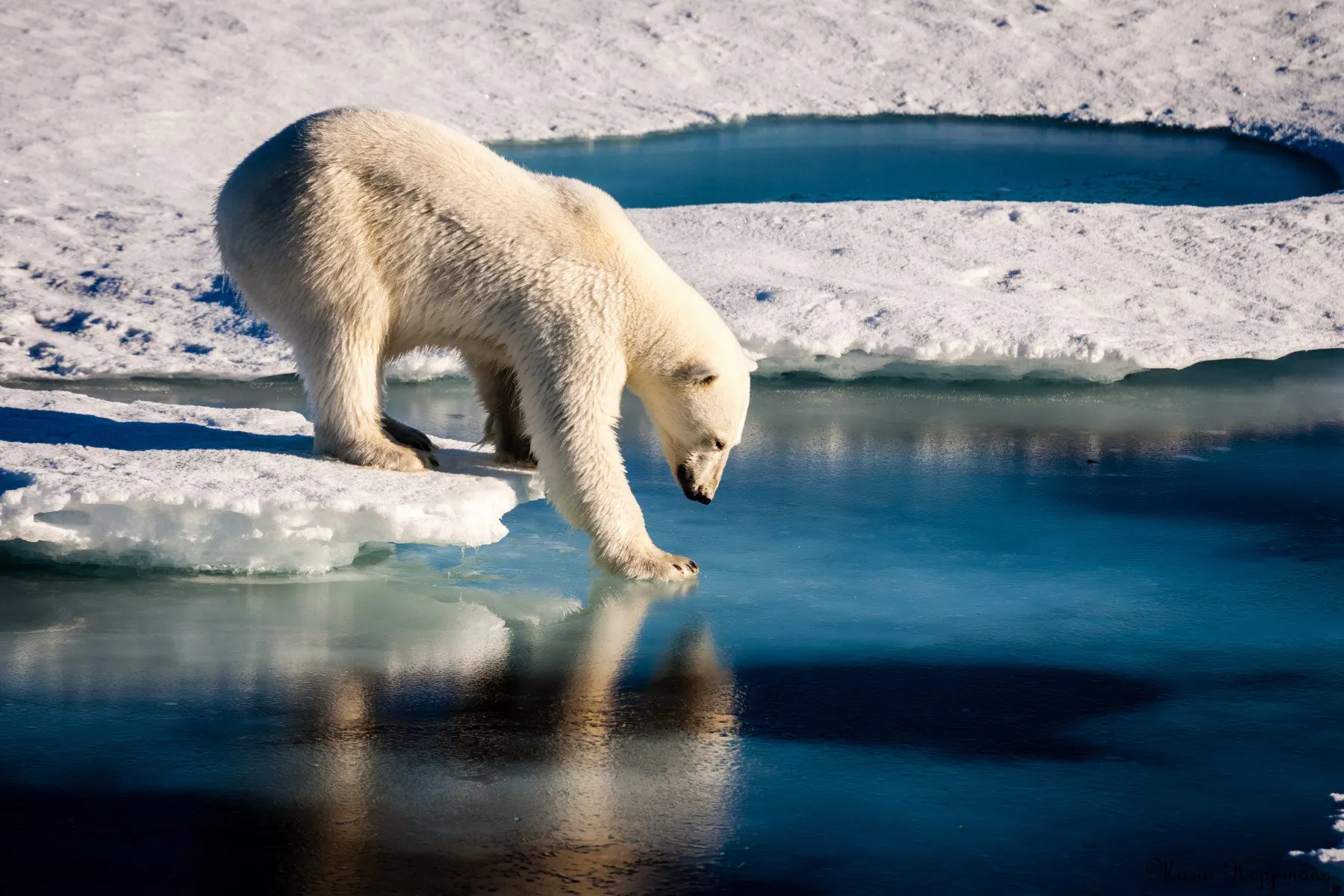
In the Norwegian archipelago of Svalbard, scientists observed an unexpected phenomenon. Despite the sustained reduction of sea ice, polar bears show better body condition than three decades ago.
This result contrasts with the usual forecasts about the impact of climate change in the Arctic. However, researchers warn that this is an exceptional and regional situation.
Thus, the finding raises new questions about the adaptability of the species in the face of a changing environment.
More body fat in a warmer Arctic
Between 1992 and 2019, 770 adult polar bears were measured and weighed in Svalbard. The data revealed a significant increase in their fat reserves.
These reserves are essential for survival. They provide energy, thermal insulation, and allow females to feed their young with nutrient-rich milk.
However, the same period was marked by an increase of almost 100 days without ice per year in the region.
New feeding strategies
Faced with the loss of hunting platforms on the ice, the Svalbard bears seem to have modified their diet. In addition to seals, they have incorporated terrestrial prey such as reindeer and walruses.
The recovery of walrus populations, protected in Norway since the 1950s, has increased the availability of fat-rich food.
At the same time, the concentration of seals in reduced ice areas facilitates their hunting, even in groups.
A fragile and temporary balance
Although the results are encouraging, specialists agree that the scenario is unstable. As the sea ice continues to retreat, the bears will have to travel greater distances.
This additional effort implies a higher energy expenditure and a progressive depletion of the accumulated reserves. Therefore, the physical improvement could be only temporary.
Moreover, parallel studies indicate a lower survival rate of cubs and vulnerable females when the days without ice increase.
How to protect the Svalbard polar bears?
The conservation of polar bears depends, first and foremost, on halting the loss of sea ice. Reducing greenhouse gas emissions is a key measure on a global scale.
At the regional level, maintaining and strengthening protected areas helps safeguard critical feeding zones. The strict regulation of human activities also reduces disturbances.
Furthermore, continuing with scientific monitoring allows anticipating changes and designing conservation policies based on evidence.
A mirror of the Arctic’s future
There are 20 subpopulations of polar bears throughout the Arctic, and not all show the same response to global warming. In regions like Hudson Bay in Canada, populations are already declining.
The case of Svalbard demonstrates that responses can vary depending on the ecological context. However, the underlying message is clear.
Without sea ice, polar bears have no future. Protecting them means acting now to preserve the ecosystems that sustain their lives.



