



Peru once again stands out on the regional scientific map, this time for projects that transform waste into environmental opportunities. Applied research is beginning to address urgent problems such as water pollution and the accumulation of urban waste.
In this context, the University of Lima promotes studies that integrate technology, sustainability, and circular economy. The goal is clear: reduce environmental impacts and optimize the use of available resources.
Thus, discarded materials go from being a problem to becoming strategic inputs for new solutions.
Urban plastics returning to the productive system
One of the most relevant advances focuses on the transformation of urban plastic waste into fuel. To achieve this, rapid catalytic pyrolysis is applied, a process that uses high temperatures without the presence of oxygen.
Through this technique, non-recyclable plastics are broken down and generate usable energy products. In this way, waste that used to end up in landfills finds a new productive destination.
Moreover, the method reduces the volume of waste and offers an alternative to the use of conventional fuels.

Alternative energy with a circular focus
The research focuses on plastics that are difficult to recycle, one of the main challenges of large cities. By reincorporating them into the energy system, part of the material use cycle is closed.
This approach not only reduces the pressure on landfills but also reduces emissions associated with the production of traditional energy.
Therefore, technology presents itself as a concrete tool to move towards cleaner and more efficient cities.
Waste that helps clean water
Another line of work is oriented towards the decontamination of water sources. From agricultural and organic waste, researchers have developed materials capable of retaining pollutants.
These adsorbents allow the removal of harmful substances, including heavy metals, present in contaminated waters. The proposal reuses waste of low economic value to solve a critical problem.
This type of solution is especially relevant in regions where access to advanced purification systems is limited.
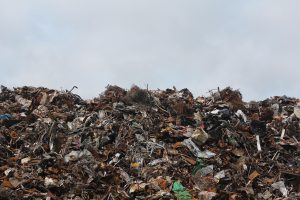
From waste to clean energy: what are its benefits
The main benefit of these investigations is the reduction of environmental impact. Less waste ends up in landfills and fewer natural resources are extracted to produce energy or treat water.
Moreover, the developed technologies are lower in cost and more accessible, facilitating their application in vulnerable communities. This improves access to clean water and promotes more equitable development.
At the same time, the circular economy generates new productive opportunities and fosters local innovation.
A model with regional projection
Both lines of research share a common vision: closing the resource cycle and rethinking the concept of waste. Trash ceases to be an end and becomes a new beginning.
With these projects, Peru positions itself as a leader in science applied to sustainability. The experience shows that the circular economy is not a theory but a concrete solution.
Thus, scientific research consolidates itself as a key ally in the transition towards an environmentally responsible model.


