



The administration of President Donald Trump not only questioned offshore wind energy but also hindered solar and wind projects on land. The halt affects more than 60 large parks at various stages of development.
According to a report published by The New York Times, federal agencies are delaying approvals that were previously routine. The delays impact both federal lands and private properties.
This scenario occurs in a context of sustained increase in electricity demand. Therefore, renewable energy developers face regulatory and financial uncertainty.
Some companies have chosen to redesign projects to avoid federal permits. However, others are considering redirecting investments towards fossil fuels.

Paralyzed projects and consequences
Among the mentioned cases is Jackalope Wind, under development in Wyoming by NextEra Energy. The park planned hundreds of turbines and a power purchase agreement with Idaho Power for 35 years.
However, an environmental review by the Department of the Interior stalled for months. As a result, Idaho Power canceled its contract, and the project was left dead in the water.
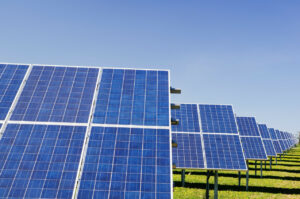
Similar situations are replicated in different states, affecting new solar and wind installations. Additionally, in photovoltaic solar, 73,000 MW could be at risk due to political interference.
The company Engie North America estimates that up to 40% of its renewable projects planned for 2027 could be affected. Without these works, they warn of possible tensions in the energy supply and higher costs for users.
The use of renewable energies in the United States
Despite the current obstacles, the United States has increased the share of renewable energies over the last decade. The wind expansion in midwestern states and solar in the southwest transformed the energy map.
Texas, California, and Iowa have established themselves as leaders in wind and solar generation. These sources complement a matrix still dominated by oil and gas.
Moreover, the decline in technological costs has driven private investments and long-term contracts. Clean energies have become competitive against fossil fuels.
The development of batteries and storage systems has also strengthened renewable integration. This allowed for greater stability in electric grids with high solar and wind penetration.
Energy transition in tension
The current federal policy seeks to reduce what it considers preferential treatment for green energies. At the same time, it promotes favorable conditions for oil and gas, a sector in which the United States is a world leader.
However, experts warn that halting renewable projects could limit energy diversification. Additionally, it could delay emission reduction commitments.
In this context, the U.S. energy transition is going through a stage of regulatory tension. The future of the sector will depend on political decisions and the evolution of the electric market.
Thus, while the country debates its energy direction, hundreds of renewable projects remain on hold. The outcome will have economic, environmental, and climatic implications on a global scale.

