



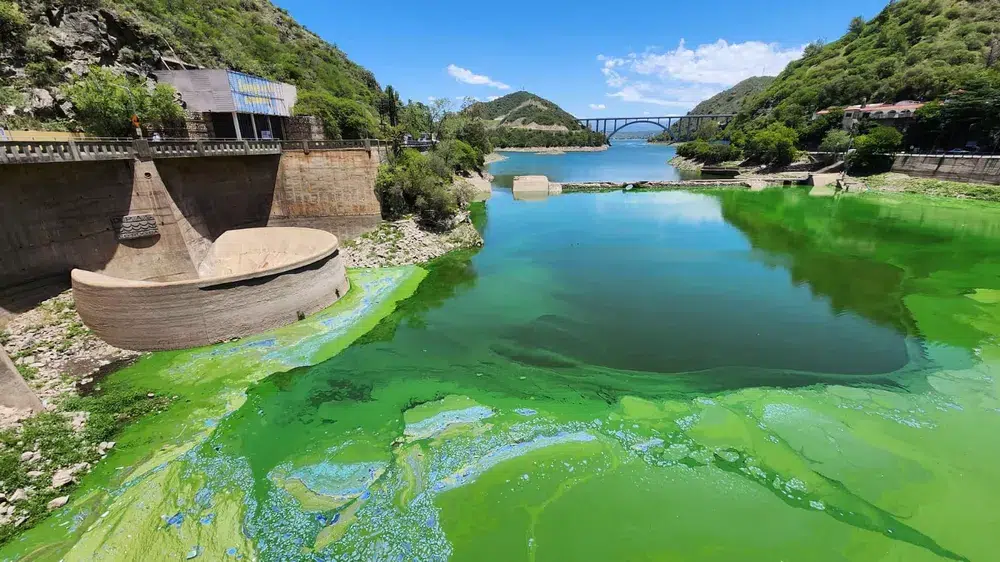
The San Roque Dam, a water source for a large part of the Cordoba population, is in a critical state due to excess nutrients and proliferation of cyanobacteria. However, the province has decided to bet on applied science to reverse decades of deterioration.
The General Secretariat of Environment and Circular Economy of the Government of Córdoba funds two projects developed by the National University of Córdoba with the aim of cleaning up the reservoir and reusing its waste.
In this way, the strategy combines satellite monitoring, nanotechnology, and circular economy. Additionally, it proposes transforming an environmental liability into an energy opportunity.
Satellite technology and nanoparticles to stop algae
The first line of action focuses on accurately identifying contamination hotspots. To this end, the Gulich Institute works with specialists from Catalonia using over fifteen years of satellite data.
This monitoring functions as a system for chlorophyll localization and toxic pigments. Thus, it allows intervention at specific points where the concentration of cyanobacteria is higher.
Subsequently, floating platforms incorporate nanoparticles activated by sunlight. These degrade toxins and microorganisms, converting them into less harmful compounds for the ecosystem.
As a result, the intervention ceases to be generalized and becomes strategic. This reduces costs and increases the effectiveness of the cleanup.
From contaminant waste to biogas source
The second phase of the project targets the circular economy. Currently, the algae and aquatic plants removed from the lake tend to accumulate on shores or burials, generating visual impacts and odors.
However, the UNC team is evaluating their use in biodigesters. In this way, the excess biomass becomes an input for producing biogas.
Thus, environmental remediation is integrated with the generation of renewable energy. Therefore, what once suffocated the lake could supply part of the regional energy demand.
This model opens the door to replicating the experience in other Argentine reservoirs with similar problems. Furthermore, it strengthens a scheme where cleaning and production are not opposed, but rather complement each other.

The San Roque Dam and its strategic importance in Córdoba
Located in the Punilla Valley, the San Roque Dam is one of the main water reservoirs in Córdoba. For decades, it has supplied potable water to a large part of the metropolitan area.
However, the accumulation of nutrients from urban and productive activities has favored eutrophication. This has caused cyanobacteria blooms that affect water quality and biodiversity.
In this context, the collaboration between scientific organizations, CONICET, and local foundations is key to sustaining the plan. The management of funds through the UNC’s Secretariat of Science and Technology ensures institutional support.
Finally, the initiative positions Córdoba as a national leader in biotechnology applied to water resources. By integrating nature and technology, the province seeks to turn a historical environmental problem into a driver of sustainable development.


