



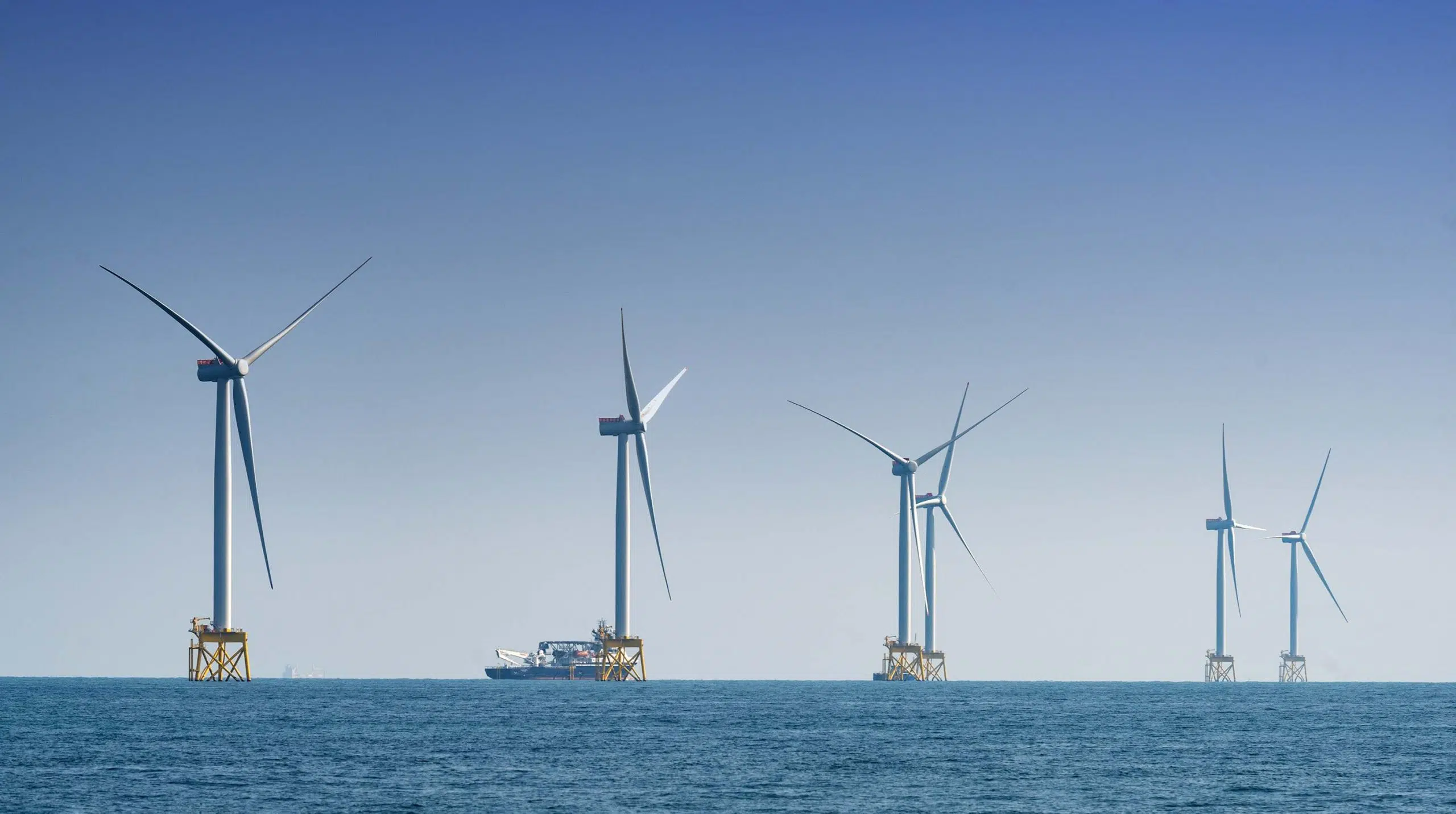
A recent study warns that offshore wind farms are altering the natural dynamics of the ocean.
The megastructures installed offshore modify both the speed of surface winds and the flow of tidal currents, generating direct consequences on the distribution of nutrients, sediments, and biodiversity.
The wind turbines act as mechanical barriers:
- The rotors reduce wind force.
- The underwater pillars slow down water currents.
- The result is a weakening of water mass transport and a visible distortion in computer simulations.
Immediate ecological consequences
- Diverted sediments: reduced water force alters the accumulation of mud and organic carbon.
- Trapped nutrients: fertile areas lose essential resources for marine fauna.
- Thermal alteration: decreases the vertical mixing of cold and warm waters, generating localized warming.
- Impact on species: fish and mammals see their feeding areas transformed, weakening the ecosystem’s resilience.
Experts’ recommendations
Researchers suggest reconsidering marine spatial planning:
- Optimize the distance between turbines to reduce harmful effects.
- Incorporate complex oceanographic variables before authorizing energy concessions.
- Protect the dynamics of the seas as a vital condition for the planet’s future.
The essential role of ocean currents
Currents are the vital engine of the Earth, functioning as a global conveyor belt that redistributes heat, oxygen, and nutrients:
- Climate regulation: they transport warm waters to the poles and cold waters to the equator, balancing temperatures.
- Regional climate: the Humboldt Current cools the South American Pacific coast; the Gulf Stream keeps the European climate mild.
- Support of marine life: the process of upwelling brings nutrients to the surface, sustaining phytoplankton and biodiversity.
- Carbon and oxygen cycle: cold currents absorb more CO₂ and oxygenate the water.
- Navigation and trade: optimizing maritime routes according to currents reduces time and costs.
The study reveals that offshore wind farms, although key to the energy transition, can generate unexpected physical effects in the ocean.
The need for clean energy must be balanced with the protection of marine ecosystems, integrating oceanographic science into project planning.
Sustainability cannot be limited to emission reduction: it must include the preservation of the natural dynamics of the seas.



