



The Province of Buenos Aires faces one of the most critical environmental issues in its territory: the management of urban solid waste (RSU). Approximately 20,400 tons of waste are generated daily, which accounts for 40% of the national total. This figure reflects the scale of the challenge and the need for sustained public policies with strong territorial anchoring in the fight against open-air dumps.
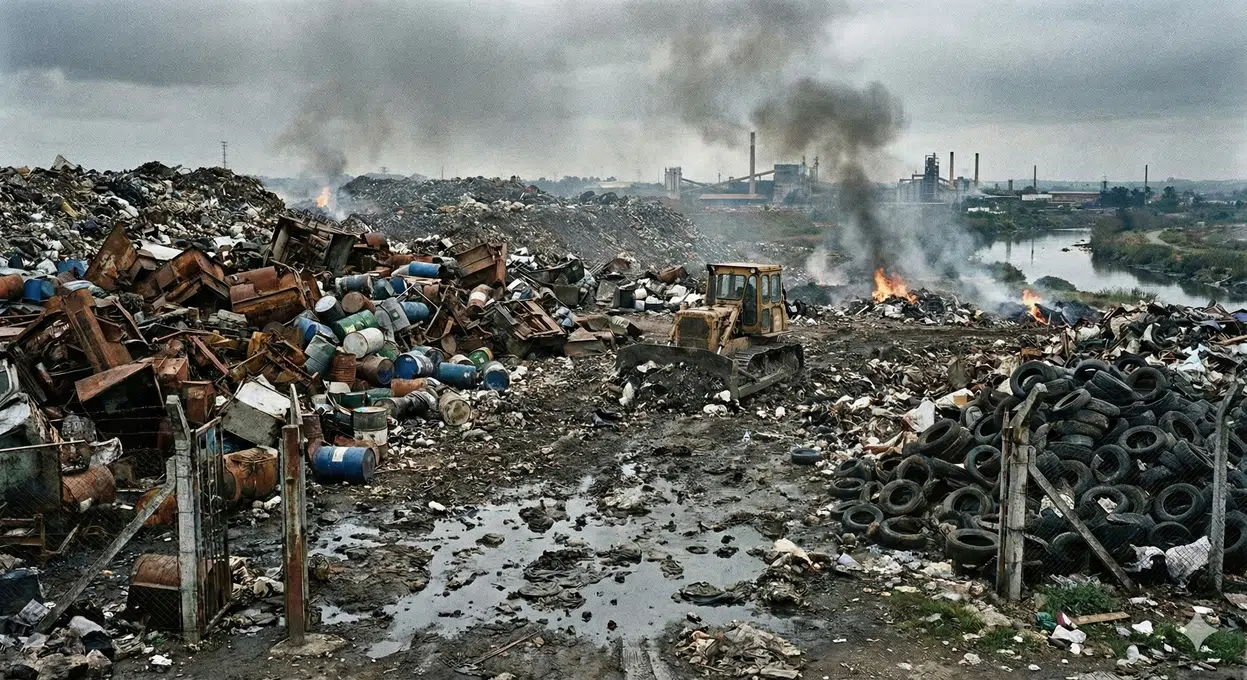
Currently, 77 out of the 135 municipalities in Buenos Aires dispose of their waste in open-air dumps, exposing thousands of inhabitants to adverse environmental and sanitary conditions. These sites not only pollute air, water, and soil, but also deepen social inequalities, especially affecting vulnerable communities and recycling workers who operate under precarious conditions.
Dumps as an expression of inequality
Open-air dumps are more than an environmental problem: they are a manifestation of social inequality.
- The nearby populations often lack basic services such as drinking water.
- They are exposed to chronic diseases and environmental degradation.
- Recyclers work without adequate infrastructure or protection.
The “My Province Recycles” policy
To address this crisis, the Province is implementing the comprehensive strategy My Province Recycles, organized into four pillars:
- Sanitation and eradication of dumps: recovery of degraded soils and construction of safe sanitary cells.
- Comprehensive and inclusive management: strengthening of local systems with planning and community articulation.
- Circular economy: material valorization, recycling, and job creation.
- Environmental promotion: education and citizen participation to encourage source separation.
Action lines of the Ministry of Environment
The plan combines short-term measures with medium and long-term strategies:
- Survey of municipalities and soil studies to validate suitable sites.
- Executive projects for sanitation and construction of sanitary cells.
- Coordination with municipalities and cooperatives for solutions adapted to each territory.
- Delivery of machinery and trucks for differentiated collection.
- Environmental Promoters who develop community workshops and awareness campaigns.
- Technical and social support with surveys of recyclers, salary supplements, and strengthening of cooperatives.
Progress and obstacles
Since 2021, the Province has managed to close five dumps and develop closure projects and construction of sanitary cells in 12 municipalities. In Salto, Benito Juárez, and Navarro, in addition to the closure of dumps, sanitary cells were inaugurated to allow safe waste disposal, preventing soil, water, and air contamination.
However, the continuity of this policy is conditioned by the interruption of national funds and international financing. Strategic projects such as the sanitation of the Luján dump, the largest in the country, remain paralyzed despite having court rulings ordering their completion.
Waste management in the Province of Buenos Aires is a structural challenge that requires comprehensive policies, sustained investment, and coordination with municipalities and communities.
The progress made shows that it is possible to transform the reality of the dumps, but the lack of funding threatens to halt the process. Ensuring a healthy and safe environment for millions of Buenos Aires residents depends on sustaining and expanding these policies of environmental and social justice.



