



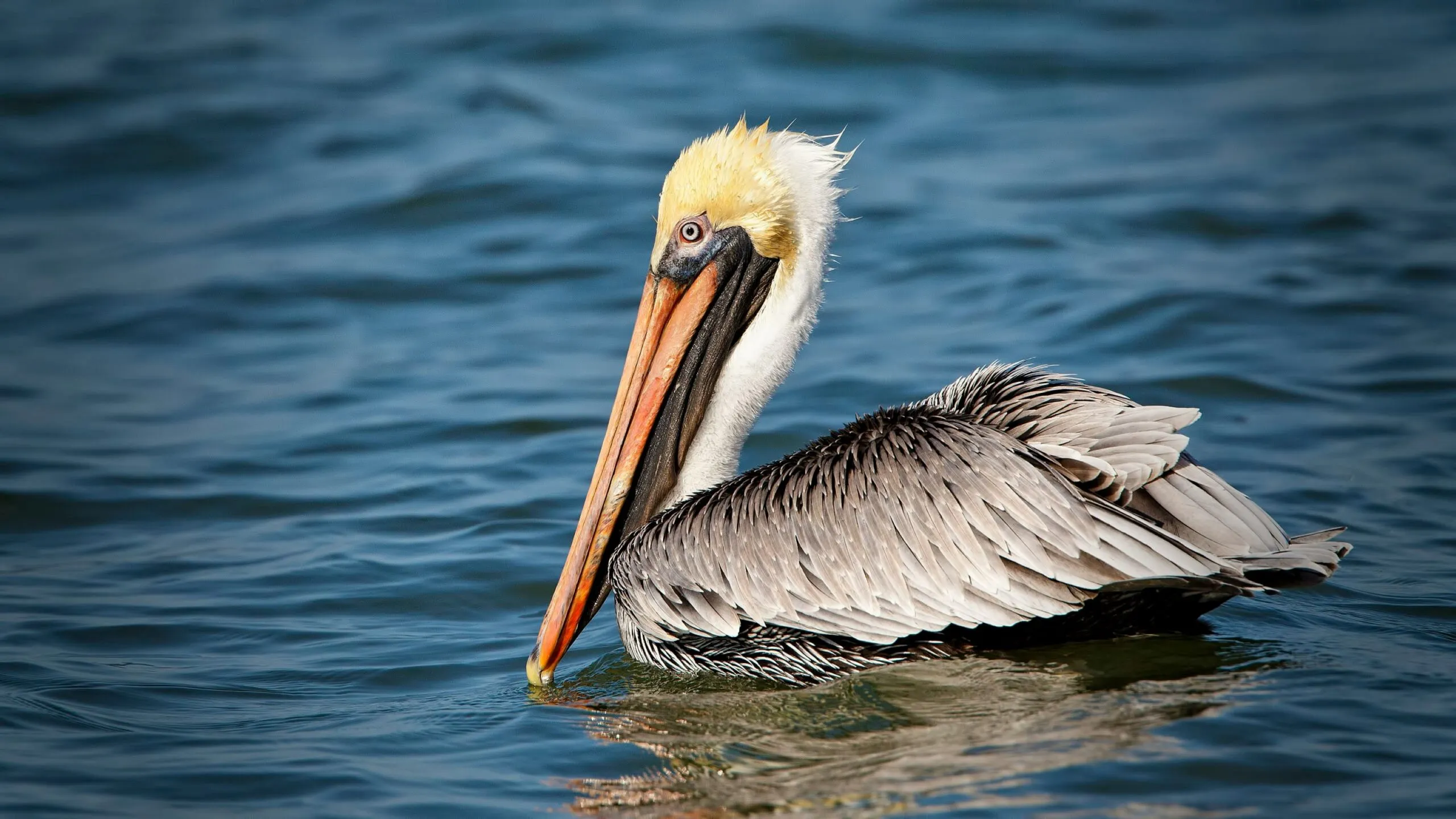
The brown pelican (Pelecanus occidentalis), a symbol of Florida’s coasts and a key bioindicator of marine ecosystem health, faces serious threats: indiscriminate fishing, plastic and waste pollution, and climate change.
Although it managed to recover after the DDT pesticide crisis in the 1970s, it is once again in danger today.
The Mission of the Florida Wildlife Hospital
The Florida Wildlife Hospital (FWH) launched a campaign together with local biologists to tag pelicans through banding. Each released bird receives a federal metal band and a black plastic band with white letters, allowing them to be easily identified in the field.
The goal is to determine if the same pelicans repeatedly get caught in fishing lines in areas like Sebastian Inlet State Park, which is very popular with fishermen and tourists. There, nylon waste, hooks, and fish remains cause serious injuries: cuts, flight limitations, and even amputations.
Risks of Interaction with Humans
One of the greatest dangers is that pelicans consume fish remains cut by humans. In doing so, their gular pouch can tear if they ingest large pieces or sharp fins.
Additionally, discarded fishing lines become deadly traps when entangled around legs or wings.
Civic Participation
The FWH called on trained volunteers to patrol the area and detect banded pelicans. When an injured specimen is spotted, park rangers or the hospital’s specialized team transport it for care.
The idea is to save the species in the field, not just on the stretcher, reinforcing prevention as a central strategy.
Ecological and Cultural Importance
Conserving the brown pelican is vital for multiple reasons:
- Bioindicator of healthy ecosystems: its presence reflects an abundance of fish and invertebrates.
- Regulator of the food chain: by feeding on fish, it helps maintain population balance.
- Successful recovery species: it survived the DDT crisis but remains vulnerable to human activity.
- Habitat protection: conserving it protects wetlands and migratory corridors.
- Cultural and ecological value: gregarious birds that symbolize the natural beauty of the oceans.
Current Challenges
Plastic pollution, entanglement in fishing nets, and overfishing remain constant threats. Climate change, with rising temperatures and the alteration of coastal ecosystems, exacerbates the situation.
The efforts of the Florida Wildlife Hospital and civic cooperation represent a key step in ensuring the survival of the brown pelican. Protecting it also means preserving the marine and coastal ecosystems on which biodiversity and human life depend. Each rescue is a second chance, but the real solution lies in prevention and collective commitment.



