



The national government is moving forward with a package of reforms on key laws related to land use. Additionally, the initiatives aim to strengthen private property with the sale of burned lands.
For this reason, changes in regulations are expected that regulate burned lands and the purchase by foreigners, opening the space for a new legal scenario.
These measures arise in a context of recurrent forest fires, which leads to an intensified environmental debate.
In light of this panorama, various sectors have expressed concern regarding the measures that are intended to be implemented, leading to a multiplication of critical voices.
Reforms in the Fire Management and Rural Lands Law
One of the central axes is the modification of the Fire Management Law. Moreover, this law currently restricts uses in burned areas.
In fact, the aim of the reform is to relax those limitations, which could enable new productive activities.
Furthermore, changes are projected in the rural lands law, where the limits on purchases by foreigners would be reviewed, as the current regulation establishes caps of 15% of the territory and sets restrictions by nationality.
Finally, the reforms include adjustments to the expropriation regime, as well as redefining criteria of public utility.
A context marked by forest fires
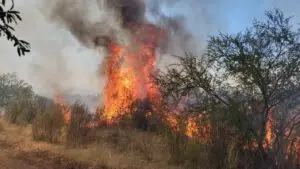
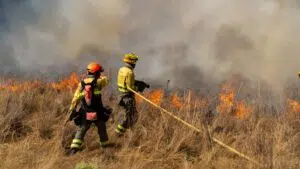
The modifications coincide with a critical fire season, in which thousands of hectares were affected in Patagonia.
Consequently, the environmental impact is significant, as ecosystems face a degradation process because fires alter biodiversity and affect both flora and fauna.
On the other hand, the recurrence of these events generates alarm, which has intensified demands for greater protection.
Social debate and citizen participation
The initiatives have generated rejection in environmental sectors, as organizations and citizens have expressed concern. For this reason, public hearings were convened, with the intention of expanding the democratic debate.
Furthermore, experts and legislators participate in the analysis with the aim of incorporating different perspectives. In this sense, thousands of people submitted contributions, contributing to the topic gaining national relevance.
Finally, the debate reflects tensions between development and conservation. Therefore, the challenge is to find a balance.
Ecological implications of the proposed reforms
The relaxation of the use of burned lands could encourage changes in ecosystems, which would increase the risk of biodiversity loss. At the same time, natural regeneration processes would be weakened, causing soils to become more exposed.
Additionally, the expansion of productive activities can intensify the environmental pressure. Thus, it increases the fragmentation of habitats.
On the other hand, the modification of the glacier law could affect water reserves. Consequently, strategic resources are compromised.
Finally, specialists warn about cumulative impacts. Therefore, environmental planning is key to avoiding irreversible damage.


