



Located in the southeast of Peru, Madre de Dios is considered one of the regions with the greatest biodiversity on the planet. Its capital, Puerto Maldonado, is less than two hours by plane from Lima and less than an hour from Cusco, making it an accessible destination for those wishing to explore the Amazon.
The region attracts visitors looking to observe almost untouched fauna and flora and get closer to the local culture through responsible tourism.
Reserves and Main Attractions
- Tambopata National Reserve: recognized for the conservation of its tropical forests and species diversity. Jaguars, giant otters, capybaras, caimans, and birds such as macaws, toucans, and the Andean cock-of-the-rock can be observed there.
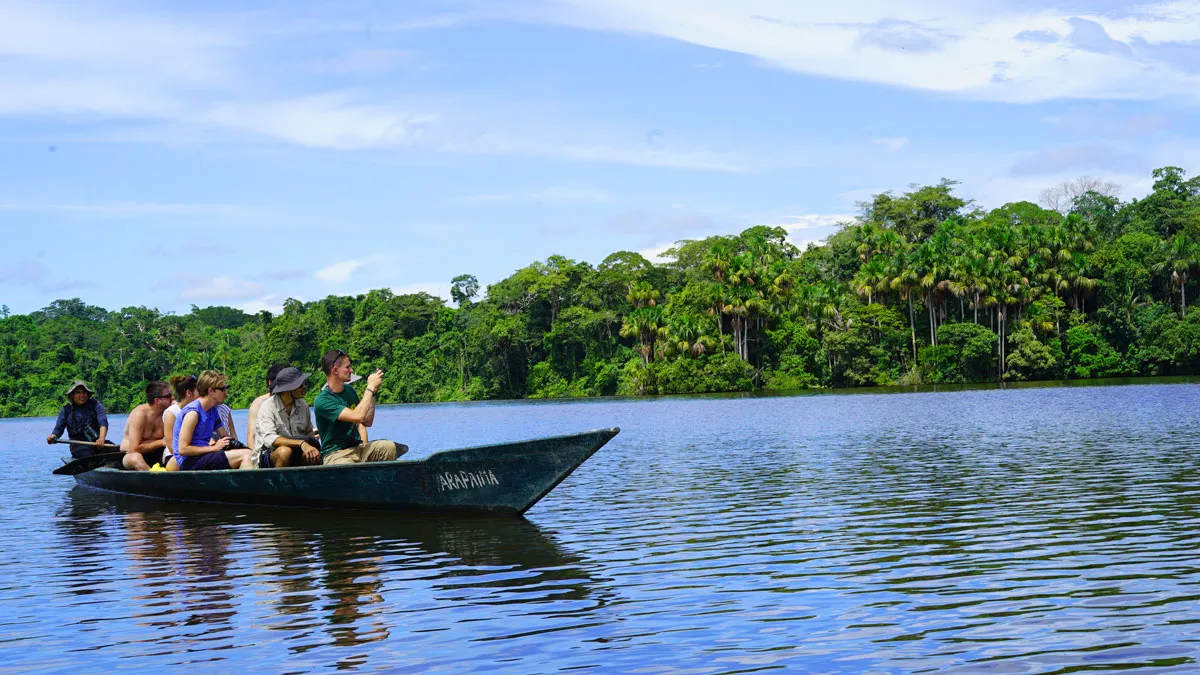
- Lake Sandoval: surrounded by dense vegetation, it is ideal for spotting aquatic fauna and exotic birds like the hoatzin.
- Clay Licks: cliffs where macaws and tapirs feed, offering a unique natural spectacle.
Ecotourism Experiences
Visitors can enjoy activities that allow them to explore the jungle from different perspectives:
- Canopy: panoramic views from the treetops.
- Day and night walks: to observe wildlife at different times of the day.
- Canoe rides: spotting caimans, aquatic birds, and monkeys.
- Bird watching: especially macaws, the emblem of the region.
Conservation and Notable Projects
Among the most relevant initiatives is the Tambopata Macaw Project, promoted by Wired Amazon. This project supports the reproduction of macaws through artificial nests that replicate natural conditions.
- The chicks grow in a safe environment while researchers study their development.
- The tool Macaw Cam broadcasts live from the nests, allowing the global public to observe the reproductive cycle in real time.
- Studies at Collpa Colorado offer a complete view of the free life of these birds.
Cultural and Environmental Importance
Madre de Dios is not only a nature destination but also a space where the local culture intertwines with conservation. Amazonian communities participate in sustainable tourism projects, offering authentic experiences that include regional cuisine, crafts, and stories about life in the jungle.
The region is key to mitigating climate change, as its forests act as carbon sinks and protect vital water sources. Additionally, the scientific research conducted in the area contributes to a better understanding of Amazonian ecosystems and the design of global conservation strategies.
Madre de Dios combines scientific research, conservation, and responsible tourism, offering a unique experience for those seeking to connect with the Amazon. Its natural and cultural wealth makes it an essential destination for understanding the importance of preserving one of the planet’s most diverse ecosystems.


