



In the humid forests of South America, the Hura crepitans —known as sandbox tree, yellow ceiba, or dynamite tree— has developed a seed dispersal mechanism as astonishing as it is efficient: the audible explosion of its ripe fruits.
When the woody capsules dry, they accumulate internal tension until reaching a critical point. The result is a dry, loud burst capable of launching seeds at distances close to 100 meters and speeds of up to 250 km/h. This phenomenon is not only spectacular but ensures that the seeds colonize new spaces, reducing competition with the mother tree.
Characteristics of the tree
- Height: between 4 and 35 meters.
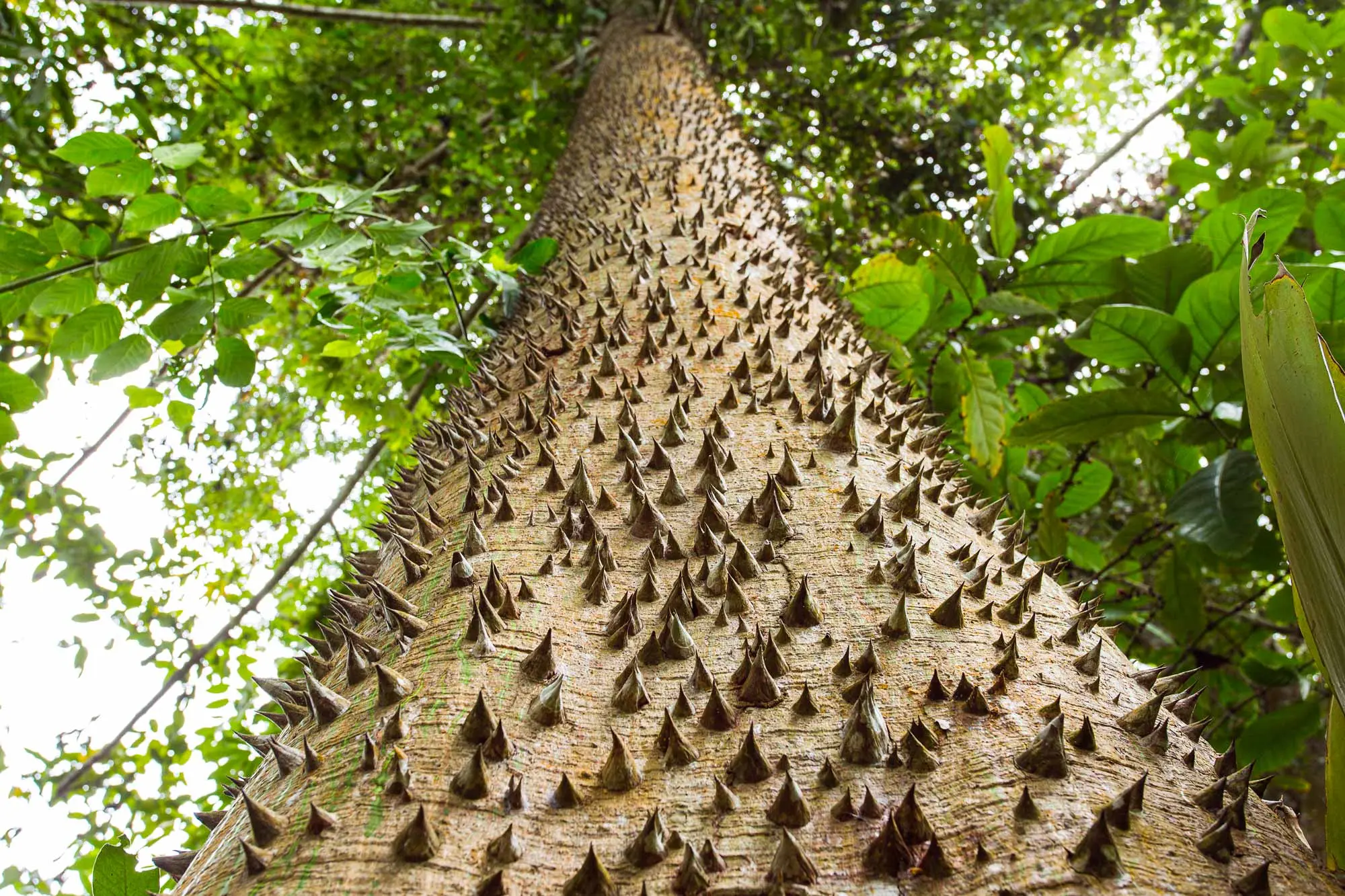
- Trunk: robust, covered with conical spines as a defense against herbivores.
- Leaves: simple, alternate, with petioles that have glands at the end.
- Flowers: small, without petals, with numerous stamens organized in whorls.
- Wood: light and low-cost, used in carpentry, packaging, and interior construction.
- Toxic latex: traditionally used to stun fish, although irritating to skin and eyes.
Curiosities and traditional uses
- Explosive fruits: when dried, they burst with a sound similar to thunder.
- “Sandbox tree”: its dried fruits were used as containers for fine sand intended to dry ink, hence its English name sandbox tree.
- Botanical weapon: Caribbean indigenous peoples used its latex to poison arrows.
- Craftsmanship: the woody capsules are polished and decorated for jewelry or ornamental objects.
- Traditional medicine: roasted seeds and sap were used against parasites, skin infections, and rheumatic pains.
Ecological importance
The Hura crepitans is an indirect ecological predator: although it does not hunt, its explosive dispersal strategy ensures the regeneration of tropical forests. Additionally, some animals like parrots and monkeys consume its tender fruits, integrating the tree into the food chain.
Its ability to colonize new spaces makes it an indicator of ecological resilience, especially in environments fragmented by human action.
Threats and conservation
Although it is not critically endangered, the tree faces risks derived from:
- Deforestation and habitat loss.
- Agricultural expansion that reduces its presence in tropical forests.
- Logging due to its economic value.
The conservation of the Hura crepitans involves protecting the tropical forests where it resides and recognizing its role in biodiversity.
The dynamite tree is a fascinating example of how nature develops extreme mechanisms to ensure survival. Its seed explosion is not only a sonic spectacle in the jungle but also an evolutionary strategy that guarantees the species’ expansion and the balance of tropical ecosystems.

