



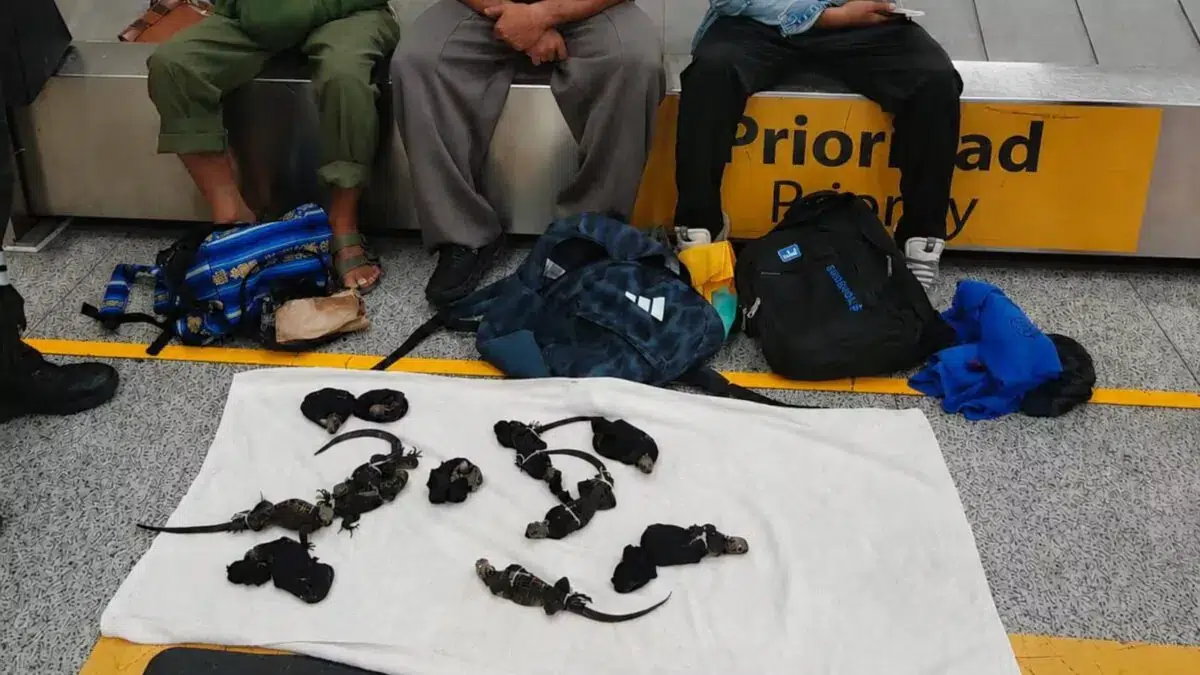
At José Joaquín de Olmedo Airport in Guayaquil, the police arrested three Asian citizens for the illegal trafficking of marine iguanas.
The intervention, carried out in coordination with the Ministry of Environment and Energy (MAE), allowed the rescue of 12 specimens of Galápagos marine iguanas, although one died and several showed numbness in their limbs due to transport conditions.
The animals were placed under the custody of the MAE for analysis, stabilization, and specialized care.
Recent Background
The previous weekend, four marine iguanas were found in the Simón Bolívar neighborhood, in front of the airport. One of them also died.
These events reinforce concerns about the illegal trafficking of endemic species from the archipelago and highlight the presence of organized mafias operating in the region.
Legal Actions
The detainees were taken to the Modelo Barracks and placed at the disposal of the judicial authority. They could be prosecuted for the crime of illegal wildlife trafficking, which in Ecuador carries penalties of up to three years in prison, in addition to fines and environmental compensation.
The Prosecutor’s Office and the MAE have activated legal actions to ensure that the case is criminally processed and sets a precedent in the fight against species trafficking.
Routes and Modus Operandi
Marine iguana trafficking is linked to international organized crime networks:
- Origin: clandestine extraction from the Galápagos Islands.
- Transit: transport to the mainland, mainly through Guayaquil, hidden in suitcases under extreme conditions of dehydration and mistreatment.
- Final Destination: Asian markets, where private collectors pay exorbitant sums for unique species in the world.
This modus operandi bypasses airport controls and highlights the need to strengthen security at strategic exit points from the country.
Impact on Biodiversity
Galápagos marine iguanas are vulnerable and strictly protected species. Their illegal extraction causes irreversible damage:
- Vulnerability: populations threatened by introduced predators and urban pressure.
- Mortality in Transit: many specimens die due to lack of water and confinement conditions.
- Threat to Conservation: recurrent extraction endangers local subspecies and disrupts the ecological balance of the archipelago.
The loss of reproductive individuals directly affects the populations’ recovery capacity, which already face threats from climate change and pollution.
International Protection
Environmental organizations are requesting to elevate the status of marine iguanas to CITES Appendix I, which would allow for stricter control and prohibit their international trade under false captive breeding permits. This step would strengthen global cooperation against species trafficking and ensure greater protection for the endemic fauna of Galápagos.
The Guayaquil case reflects the severity of wildlife trafficking in Ecuador and the need to strengthen controls at airports and ports. Protecting marine iguanas is essential to preserve the unique biodiversity of Galápagos and prevent organized crime from continuing to profit from endangered species.
The joint action of national and international authorities will be key to stopping this practice and ensuring that future generations can continue to admire these unique reptiles in the world.


