



The San Miguel City Council approved the ordinance that establishes the prohibition of animal-drawn vehicles (TAS) in the district.
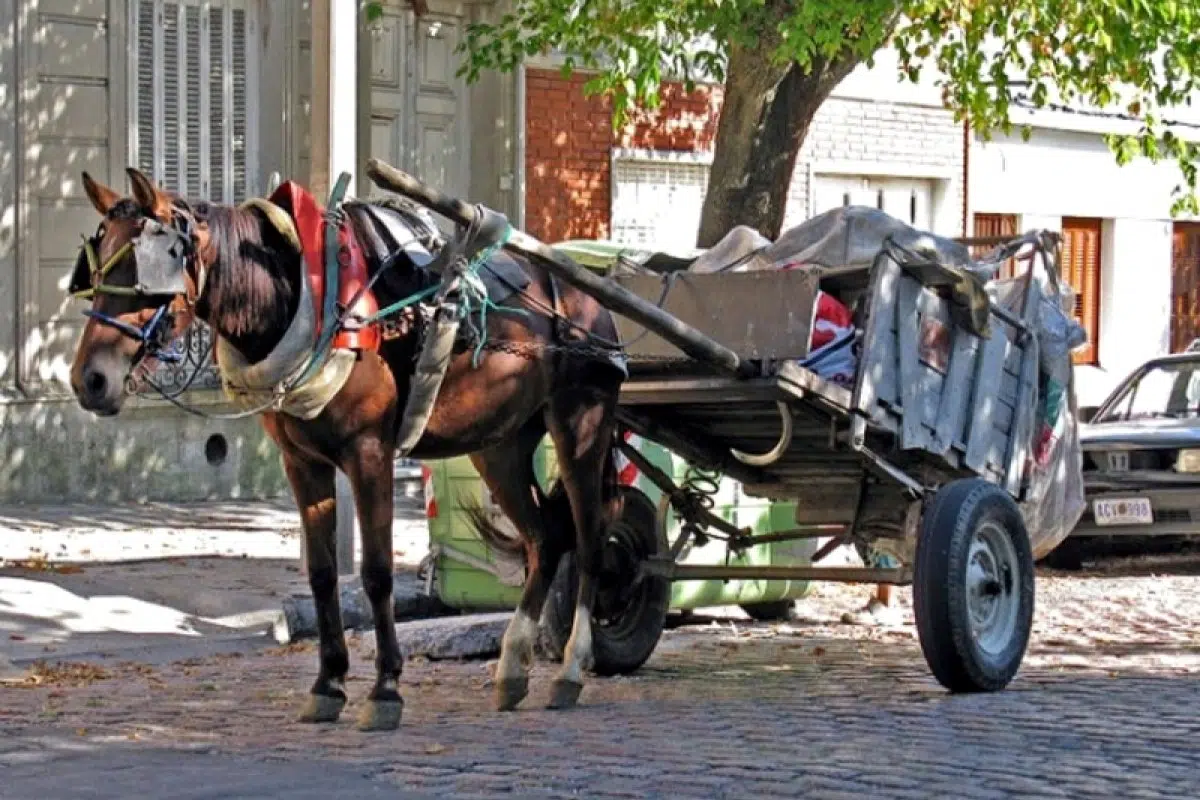
The regulation seeks to protect animal welfare, prevent risks to road safety, and ensure public hygiene conditions. The use of animals to transport people, waste, materials, goods, or any type of load is prohibited.
The measure responds to a historical demand that has been debated for over 20 years. The first project was presented in 2005, but only now has it achieved final approval.
Reasons for the prohibition
The eradication of animal-drawn vehicles is based on three main pillars:
- Animal welfare: horses used to pull carts suffer from malnutrition, dehydration, severe injuries, and overexposure to extreme temperatures. National Law 14.346 considers mistreatment and cruelty to animals a criminal offense.
- Road safety and public space: carts are slow vehicles, without adequate lighting, and pose a high risk of serious accidents. There are precedents of collisions and railway obstructions caused by frightened animals.
- Social and labor integration: the prohibition requires replacing carts with sustainable vehicles (bicycles or electric motor vehicles) and supporting recycling families with programs for dignified labor inclusion.
Recognitions in the same session
In parallel, the Council approved other initiatives:
- Commendation for the creation of the Pope Francis Square in the Santa María area.
- Recognition of the Union of Working Families (UFO) for its community trajectory on its 70th anniversary.
- Declaration of illustrious citizen to Roberto Baschetti, for his cultural and social contribution.
National context
Although the Autonomous City of Buenos Aires banned TAS decades ago, at the national level, a unified legislation is still lacking.
The eradication is progressing through municipal ordinances in districts like Avellaneda, Berazategui, and now San Miguel, in addition to bill projects that seek to provide a comprehensive solution.
Social and environmental impact
The prohibition of animal-drawn vehicles not only protects animals but also:
- Reduces road risks in urban areas.
- Improves hygiene and safety in waste collection.
- Promotes the transition to safer and more formal work models.
- Strengthens the construction of a conscious city, where animal welfare and neighborhood safety are priorities.
San Miguel’s decision marks a milestone in the fight against animal mistreatment and labor precariousness.
The eradication of animal-drawn vehicles is a step towards a safer, more inclusive, and respectful urban model. The challenge now will be to support the families that depend on this practice, ensuring sustainable and dignified alternatives.


