



The Maldives have announced the deployment of up to 100 electric hydrofoil boats, a project aimed at transforming the island-to-island travel experience and reducing the country’s carbon footprint.
The partnership between the American company Navier and the Dubai-based firm JIH Global Investment involves an investment of 100 million dollars to create the first sustainable luxury maritime network, called Navier Network.
The plan will start with five Navier N30 vessels at the end of this year and will expand with 95 more over the next three years.
Hydrofoil technology: speed and efficiency
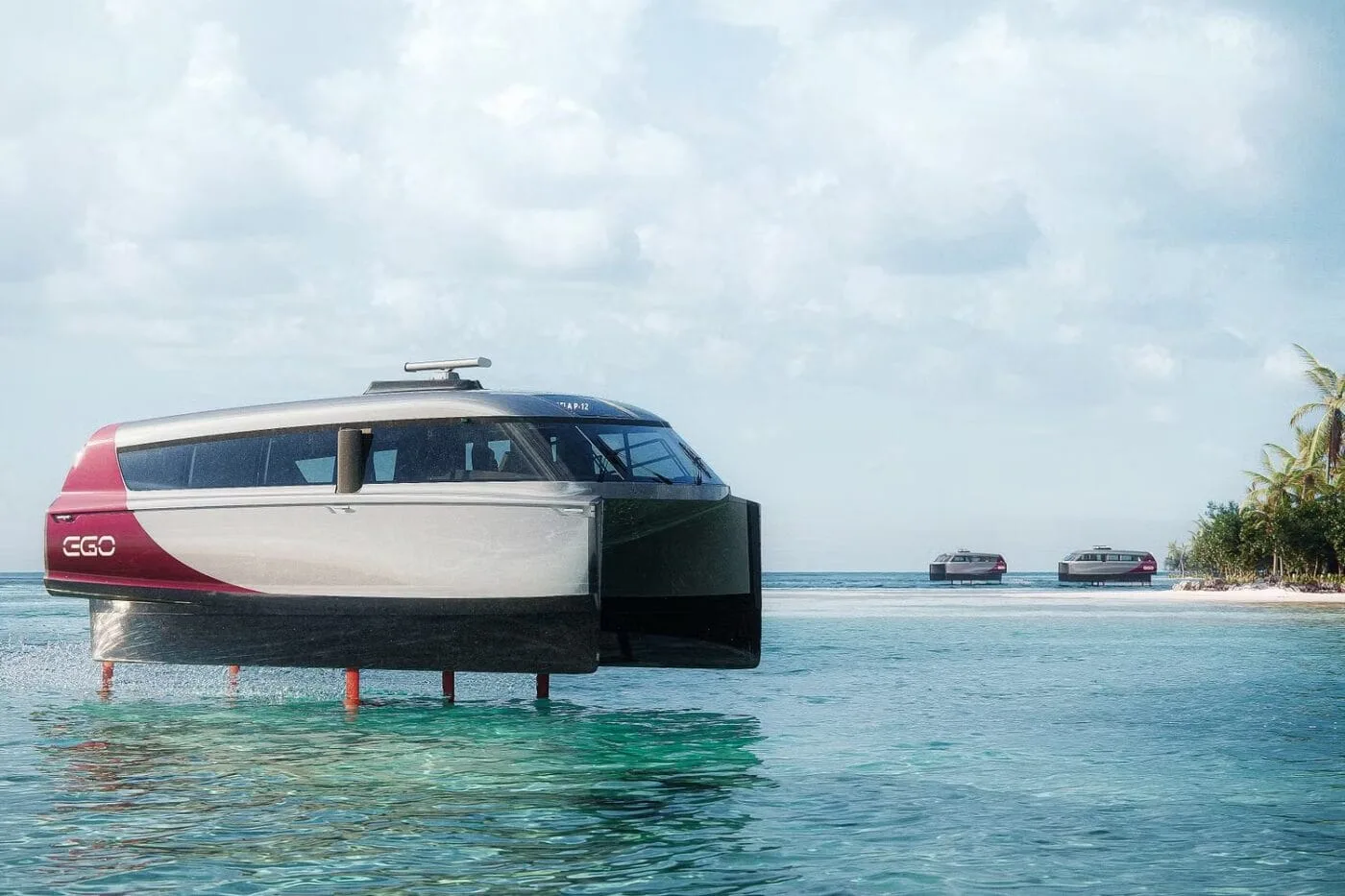
Unlike conventional speedboats, these vessels have underwater wings that lift the hull above the water as they gain speed. This reduces drag and allows for:
- Less noise and vibrations.
- A smaller wake.
- Greater energy efficiency.
The boats will offer air-conditioned cabins, lounge-style seating, and onboard internet via Starlink, along with an electric range of 75 nautical miles, extendable to 150 in hybrid mode.
Impact on tourism and sustainability
Tourism represents more than 70% of the Maldivian economy, and in 2025 the country received over 2.2 million visitors. Currently, about 3,000 fuel-powered vessels operate, making maritime transport a central factor in the national carbon footprint.
With this new fleet, the Maldives aim to:
- Reduce emissions and move towards the goal of net zero emissions by 2030.
- Modernize the tourist experience with faster and more comfortable transfers.
- Protect fragile ecosystems like coral reefs.
Pillars of technological innovation in the Maldives
The hydrofoil project is part of a broader sustainability strategy:
- Renewable energies: solar panels and wave energy to reduce fossil dependency.
- Water management: efficient desalination technologies to ensure potable water.
- Waste treatment: zero waste systems and advanced recycling to prevent plastics in the ocean.
- Ecosystem protection: coral regeneration programs through biomimicry.
- Ecological mobility: transition to electric and hybrid speedboats to reduce underwater noise.
The introduction of electric hydrofoil boats in the Maldives marks a milestone in sustainable maritime mobility.
This project not only modernizes the tourist experience but also strengthens the country’s resilience to climate change, offering a replicable model for other island nations and coastal cities worldwide.


