



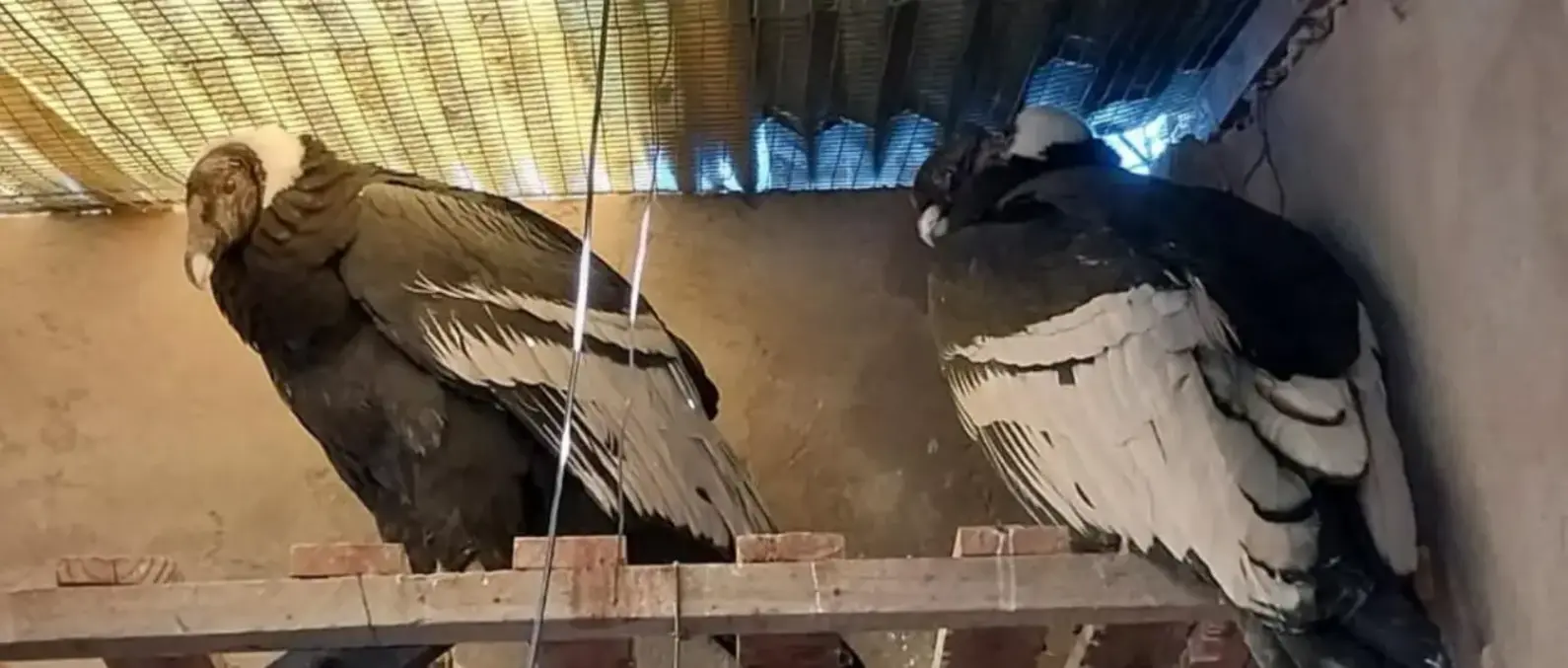
A pair of Andean condors, rescued in the municipality of Toro Toro (Cochabamba, Bolivia) after ingesting poisoned carrion, is in the process of recovery at the Bioparque Agroflori.
According to veterinarian Marión Elorriaga, the birds are out of danger and could return to their natural habitat in about three weeks.
The specialized treatment allowed their health condition to stabilize. Currently, the condors are eating on their own and responding positively to rehabilitation, indicating that they will soon be able to rejoin wildlife.
The rescue and treatment
- They were found intoxicated by park rangers in Toro Toro.
- They are a male and a female approximately eight years old.
- The intoxication occurred after consuming carrion contaminated with poison.
- The team at Bioparque Agroflori applied intensive care to reverse the critical condition.
The specialist emphasized that the release should occur as soon as possible to prevent the birds from becoming accustomed to human presence and to allow them to fully reintegrate into their natural environment.
Ecological importance of the Andean condor
The Andean condor plays a vital role in ecosystems:
- Cleaning bird: by feeding on carrion, it prevents the proliferation of bacteria and diseases.
- Natural balance: it helps keep fields free of dead animals, promoting the health of other living beings.
- Environmental indicator: its health status reflects the condition of mountain ecosystems and Andean forests.
Cultural and spiritual value
The Andean condor is the national bird of Bolivia, represented on the country’s Coat of Arms and declared a cultural and natural heritage.
For indigenous cultures, it is a sacred being and a messenger that connects the human world with the spiritual world. Its presence symbolizes strength, freedom, and transcendence.
Threats and legal protection
The species faces risks such as:
- Use of poisons in the field.
- Poaching.
- Habitat loss due to human activities.
To ensure their care, Bolivia has the Comprehensive Law for the Protection and Conservation of the Andean Condor, which establishes protection measures and sanctions against those who harm the species.
Environmental education and community support
The case of intoxication highlights the need to strengthen environmental education. Elorriaga emphasized that it is essential to raise awareness about the consequences of using poisons on wildlife. Agroflori has requested citizen support to cover the costs of rehabilitation and feeding of the condors, with the aim of returning them healthy to their natural habitat.
The recovery of this pair of Andean condors is encouraging news for the conservation of the species in Bolivia.
Their prompt release reaffirms the commitment of institutions and communities to the protection of an emblematic bird, vital for ecological balance and deeply rooted in the cultural identity of the country.


