



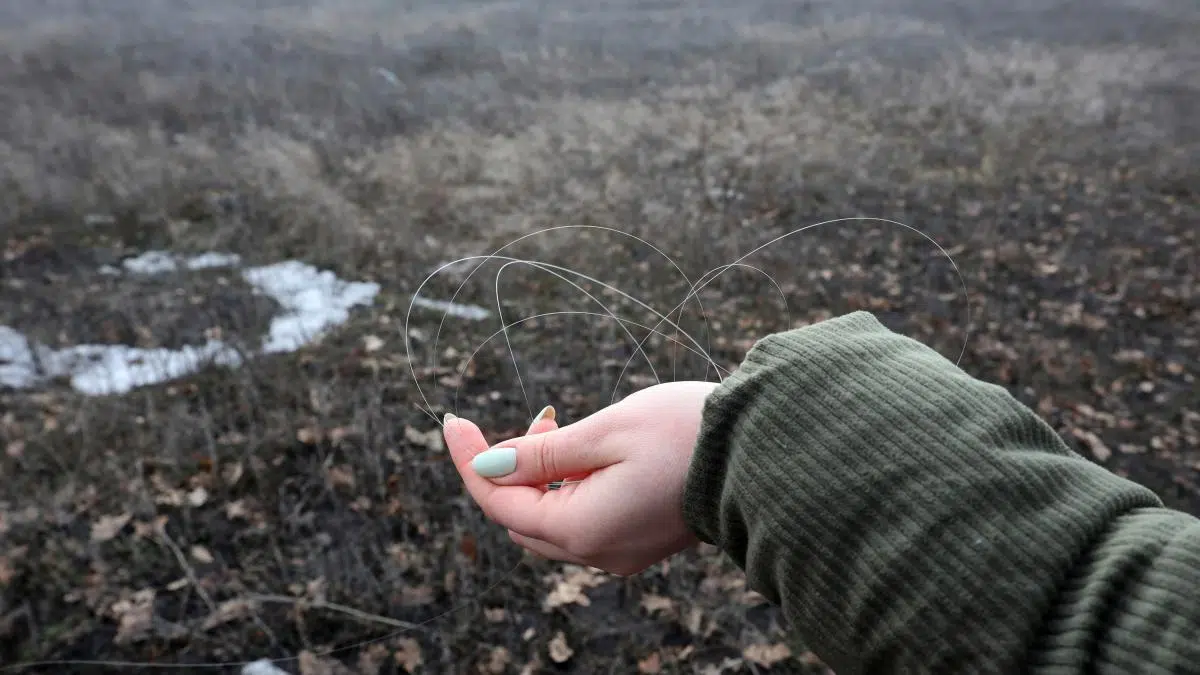
The war in Ukraine not only affects people but also nature. Scientists have discovered that local birds have started to reuse discarded fiber optic cables from the battlefield to build their nests.
These ultra-thin cables are used by both sides to guide military drones and avoid electronic interference, but they end up abandoned in the field.
Researcher Yana Hrynko, from the Kyiv War Museum, examined two nests sent directly from the combat line. One of them will remain in the museum’s war collection, while the other will be studied in the Netherlands before returning to Ukraine.
Biodiversity at risk
Dutch biologist Auke-Florian Hiemstra highlighted that Ukraine has a rich avian diversity, meaning that several species could be using this material. “I had never seen nests like this,” he noted, and announced that DNA traces will be sought to identify which species actually built the nest.
This finding is clear evidence of how armed conflicts alter ecosystems and force wildlife to adapt to extreme conditions.
Environmental impacts of the war in Ukraine
The war has caused massive environmental damage:
- Poisoned soils: bombings release heavy metals and chemicals that destroy agriculture.
- Habitat destruction: forests and protected areas suffer from fires and indiscriminate logging.
- Water pollution: damaged industrial plants leak toxic substances into rivers and seas; the destruction of dams causes devastating floods.
- Altered wildlife: explosions and noise change the habits of species like deer and foxes, which modify their activity schedules to avoid human contact.
- Landmine danger: animals face abandoned munitions, threatening protected species like the Przewalski’s horse.
- Secondary plagues: the absence of human control favors the proliferation of insects like locusts, which further damage ecosystems.
Protected areas under threat
It is estimated that the war directly affects 30% of Ukraine’s protected areas. The main impacts include:
- Massive forest fires that destroy millions of hectares.
- Wildlife alteration in areas like Chernobyl, where animals have changed their movement and hunting patterns.
- Water disasters such as the flood caused by the destruction of the Nova Kakhovka dam in 2023.
- Chemical contamination from attacks on industrial plants and ports.
The discovery of nests woven with military fiber optics is a symbol of how war penetrates all levels of life, even in the behavior of birds.
At the same time, it reflects the resilience of nature, which reuses human materials in extreme contexts. However, the environmental damage and alteration of ecosystems in Ukraine are profound and long-lasting, and their recovery will require decades of work.


