



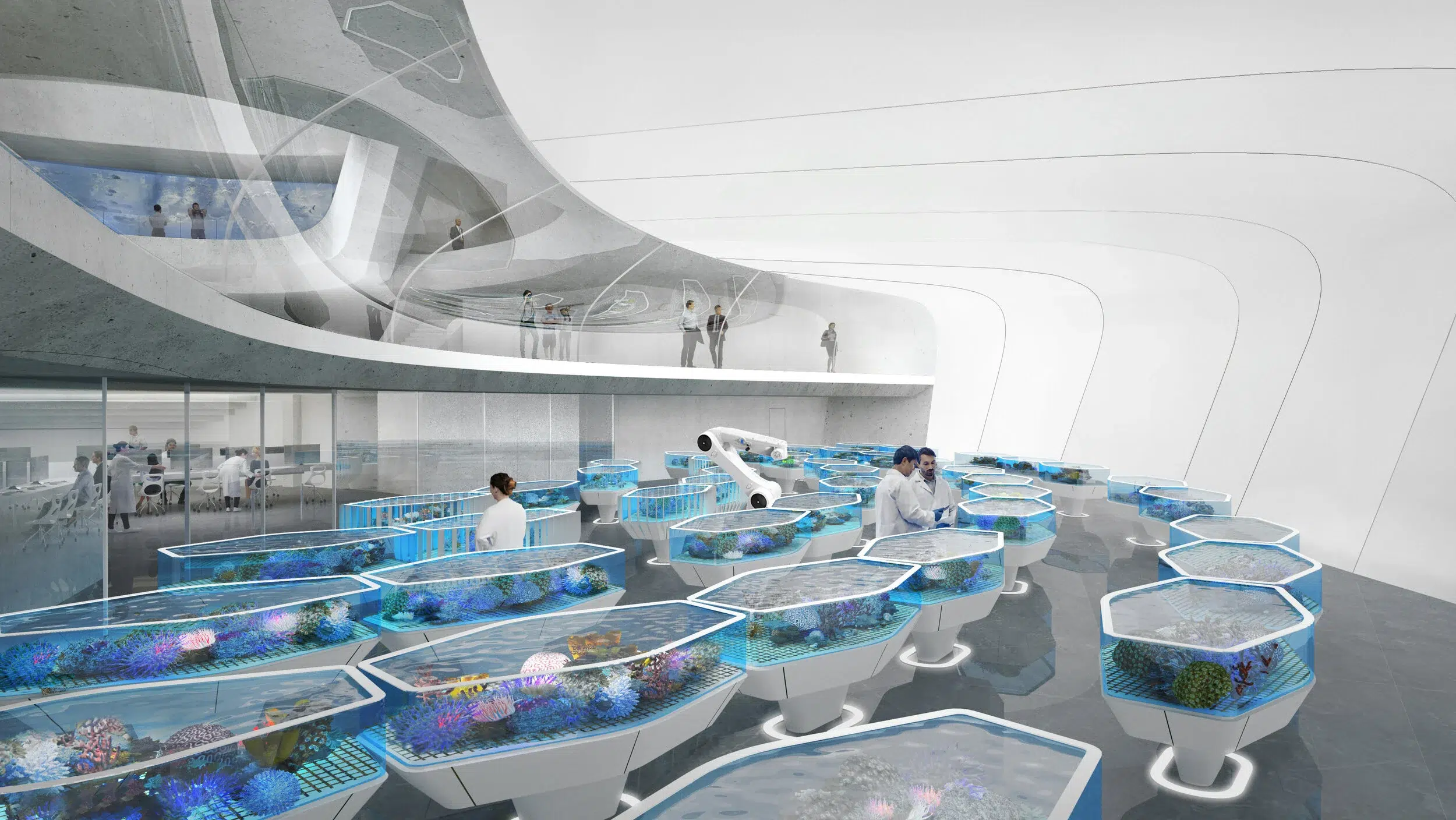
Los marine biobanks are becoming a key tool for preserving living organisms and genetic material under cryopreservation conditions. Their goal is to conserve species as they were collected, avoiding the changes that occur in cultures maintained in the laboratory.
Nicolas Pade, director of the European Marine Biological Resource Centre (EMBRC), explained that cryopreservation allows to “stop time,” maintaining the original characteristics of organisms. He warned that many species could disappear before being studied: “We are probably losing without knowing what we are losing”.
Scientific and Technological Potential
Biological collections represent a source for the development of:
- Medicines.
- Cosmetics.
- New materials.
- Industrial technologies.
Among the organisms of interest are the diatoms, microalgae with glass-like structures that inspire engineering research due to their strength and lightness.
The Challenge of Conserving Ecosystems
Pade emphasized that preserving individual organisms is not enough: most microorganisms live in symbiosis and depend on complete communities. Freezing these interactions is a much greater scientific challenge.
International Experiences
- Australia: the Australian Institute of Marine Science uses biobanks to support the recovery of coral reefs. Since 2012, it has been storing eggs, sperm, and young corals, as well as seaweed forests, oyster reefs, and seagrass beds. The Great Barrier Reef has suffered six mass bleaching events since 2016.
- Caribbean: cryopreserved coral sperm is used to fertilize specimens in degraded reefs. More heat-resistant microscopic algae are also preserved to strengthen the adaptation of corals.
Randall, a researcher in the Caribbean, stated that incorporating corals with greater thermal resistance could increase the chances of maintaining the health of the Great Barrier in the coming decades.
Debate on Ownership and Custody
The growth of biobanks raises questions about the ownership of biological samples. In 2022, the Australian Institute of Marine Science developed a protocol with the Woppaburra people to ensure that indigenous communities maintain cultural custody of corals extracted from their traditional territories.
This approach seeks to balance scientific research with respect for the rights of local communities.
Marine biobanks represent a strategy to preserve part of the ocean’s biodiversity while ecosystems face increasing pressures from climate change.
Although they do not replace the conservation of natural habitats, they offer a valuable resource for research, restoration, and technological innovation, while raising ethical debates about ownership and custody of marine life.



