



A discussion about the supposed uncontrolled proliferation of the guanaco in Patagonia and the threat that this species may pose to sheep production has become a classic.
Now, there has been a claim driven by rural entities from other regions of the country regarding species competing with livestock that are not native.
In response, a CONICET specialist expressed herself emphatically: “Thinking that the guanaco now, after 10,000 years, will eat up Patagonia is a bit ridiculous.”
Andrea Marino, a Ph.D. in Biology, spoke in a radio interview with the program Mañana G, from Cadena Tiempo, in Trelew.
The Guanaco in Patagonia: A Problem for Production?
“Thinking that the guanaco now, after 10,000 years, will eat up Patagonia is a bit ridiculous,” Marino stated. “If they didn’t eat up Patagonia when they numbered over 22 million, before the introduction of sheep, it’s difficult to imagine them doing it now when there are far fewer,” she added.
According to the expert, guanacos are far from being a threat; they are actually a key element in maintaining environmental balance.
In fact, it has been reported that in Chubut there are already over a million specimens, and in Santa Cruz, there are more guanacos than inhabitants.
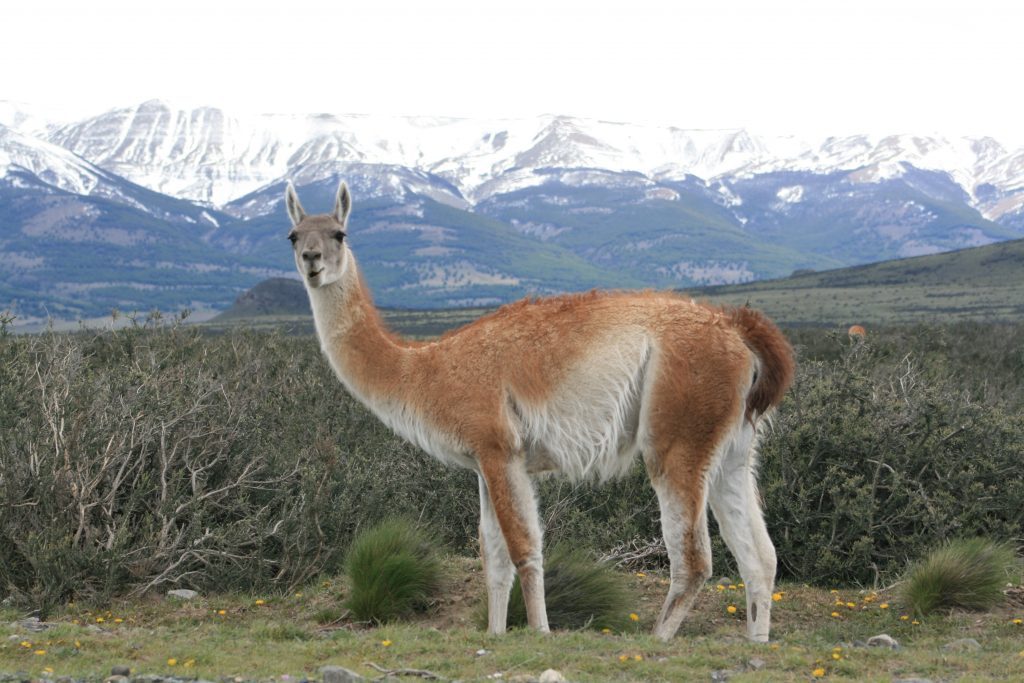 Guanacos in Patagonia and an ancient discussion.[/caption>
Marino questioned these data and emphasized that current population estimates are inadequate and outdated. “The last estimate for Chubut mentions 600,000 animals,” she noted. Additionally, she clarified that “there is no indication of a significant growth.”
What is Density Dependence?
In this context, the doctor explained a phenomenon studied by biologists related to the regulation of guanaco population growth: the concept of density dependence.
“When density is low, the population grows rapidly, but as it increases, the growth slows until it reaches a point where it becomes zero,” Marino stated.
For this reason, she considered that referring to “exponential” or “uncontrolled” growth as “a fallacy” is baseless, as there is no evidence to support it.
Another common criticism is that guanacos could compete with sheep for food. “There is no evidence of overgrazing by guanacos,” as guanacos and sheep often occupy different areas in the fields.
She explained that the availability of water greatly influences sheep distribution, as they cannot stray far from water sources, whereas guanacos tend to move more freely in the terrain, efficiently utilizing forage.
Have you checked out our YouTube channel yet? Subscribe now!


