



In an operation carried out in the Albardón department, the Rural Police Unit No. 2 rescued 41 protected wild birds that were being held in illegal captivity inside a home. The intervention followed intelligence work that alerted to a possible violation of the wildlife protection law.
The search, authorized by the San Martín Peace Court, was carried out in a house in the Albardón 1 neighborhood, on Ignacio de la Roza street. The owner, Carlos López, admitted to owning the birds and allowed the officers to enter.
Rescued species and seized items
During the inspection, the presence of numerous protected native species was confirmed, including:
- Red and yellow cardinals
- Reinas moras
- Benteveos
- Goldfinches
- Chamuschines
- Corbatitas
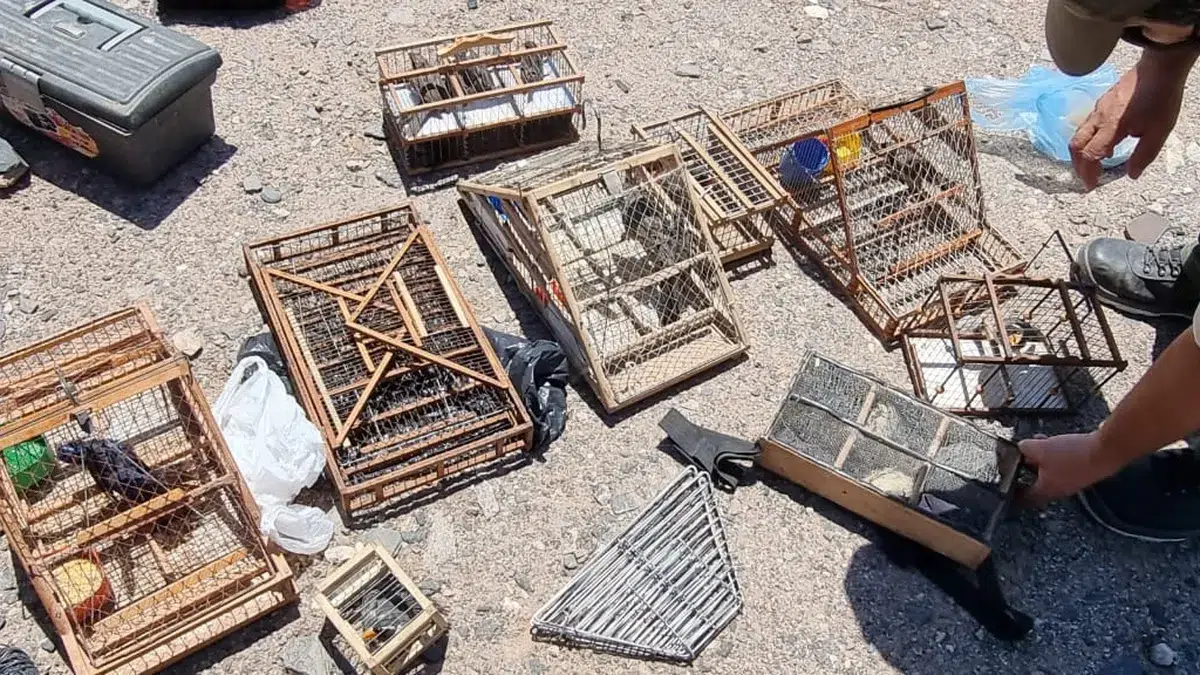
In addition to the birds, cages, traps, and other items used for the illegal capture and maintenance of wildlife were seized.
Law enforcement
By judicial order, all the birds were seized under article 206 of Law 941-R, which establishes the comprehensive protection of wildlife in the province of San Juan. The regulation prohibits the capture, possession, and commercialization of native species without authorization.
The owner was formally notified of the infraction and must appear before the Justice. The birds were placed at the disposal of environmental authorities for their evaluation, rehabilitation, and eventual return to their natural habitat.
The importance of protecting wildlife
Wildlife fulfills essential functions for the health of ecosystems and society:
- Ecological balance: maintains food chains and nutrient cycles.
- Ecosystem services: pollination, seed dispersal, water purification, and pest control.
- Resources and well-being: provides food, medicines, materials, and is a source of cultural recreation.
- Human health: reduces the risk of zoonotic diseases by maintaining healthy ecosystems.
- Environmental resilience: diverse ecosystems are more resistant to natural disasters and climate change.
Risks of their loss
The disappearance of wild species generates severe impacts:
- Imbalance of ecosystems with unpredictable consequences.
- Loss of environmental services, such as reduced pollination and less fertile soils.
- Economic and social impact, affecting agriculture, fishing, and food security.
The rescue of the 41 birds in San Juan not only represents the enforcement of the law but also serves as a reminder that protecting wildlife is an investment in our future. Its conservation ensures healthy ecosystems, strengthens resilience to climate change, and sustains human quality of life.


