



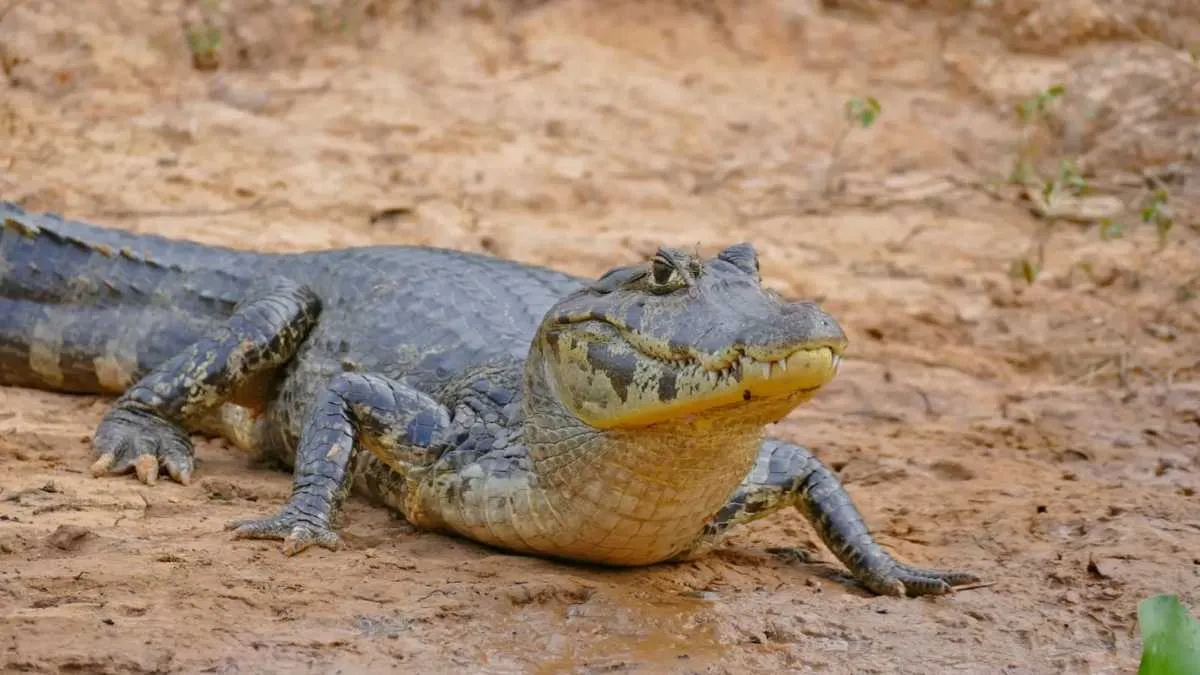
In one of the most urbanized corners of Rio de Janeiro, a handful of caimans survive among highways, empty Olympic buildings, and polluted waters. Jacarepaguá, formerly known as the “valley of the caimans,” is now a scenario where the concrete jungle has buried almost all of the original vegetation. However, about 5,000 specimens of Caiman latirostris persist in its lagoons, clinging to a crumbling ecosystem.
Camorim Lagoon is one of the last refuges of this species. Despite pollution and urban expansion, a few families of fishermen continue there using traditional methods. Among them, committed scientists conduct nighttime patrols to monitor the caimans and try to preserve their delicate population.
The water emits foul odors due to the accumulation of organic matter, while the empty towers of the Olympic Village loom as a reminder of a development model that ignores the environment. However, from a boat, wildlife resists, camouflaged among the reeds and mangroves.
An Imbalanced Population
The situation is critical for these caimans. Pollution not only alters their environment: it also affects their reproductive capacity. The temperature of the eggs determines the sex of the offspring, and excessive warming is causing an alarming imbalance, with a majority of males. The direct consequence is a collapse in the reproductive cycle and an increasing aggressiveness among individuals.
Inbreeding becomes another challenge: with so few viable specimens, the genetic risk increases. Added to this is the contact with humans: some caimans are fed garbage in neighboring neighborhoods, becoming semi-domesticated. Poaching is another looming threat, although without strong commercial incentive, as the use of their skin has been restricted due to legal difficulties.
Despite the risks, these animals represent a vital indicator: if the caimans are there, the lagoon still beats. The biodiversity surviving in this degraded environment could be key to designing ecological restoration policies. But without resources or institutional will, the future of the ecosystem remains uncertain.
Hope Among the Waste
Some signs of change are emerging. Works are being carried out to improve drainage and reduce the load of contaminants. If the surrounding neighborhoods manage to effectively connect to the sanitation system, a new possibility of environmental recovery will open up.
Local fishermen, with decades of knowledge about the wetland, become natural allies for monitoring and environmental education. Educational visits with schools and the emerging ecotourism show that the area not only has ecological value, but also social and economic value.
The presence of the caiman is more than a vestige of the past: it is a living warning. While the towers rise towards the sky, beneath the surface of the lagoons, an ecosystem that can still be reborn survives, if protected in time.
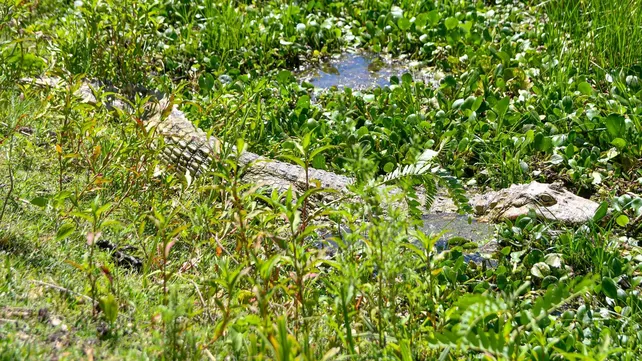 Yacaré overo returned to its natural habitat. Photo: La Capital.
The Status of the Broad-Snouted Caiman
The Caiman latirostris, also known as broad-snouted caiman, is a native species of South America that inhabits wetlands, rivers, and lagoons in Argentina, Brazil, Paraguay, Bolivia, and Uruguay. Although it was intensively hunted in the past for its valuable skin, currently its conservation status is considered “least concern” by the International Union for Conservation of Nature (IUCN).
This improvement in its status is mainly due to sustainable management programs and captive breeding, such as those developed in Argentine provinces like Santa Fe and Formosa. These initiatives not only allowed the recovery of populations but also raised awareness about the ecological importance of the caiman in aquatic ecosystems.
Despite these advances, the species still faces threats such as habitat loss due to agricultural expansion, water body pollution, and climate change. Therefore, its long-term conservation requires maintaining and strengthening environmental policies that protect wetlands and promote harmonious coexistence with local communities.


