



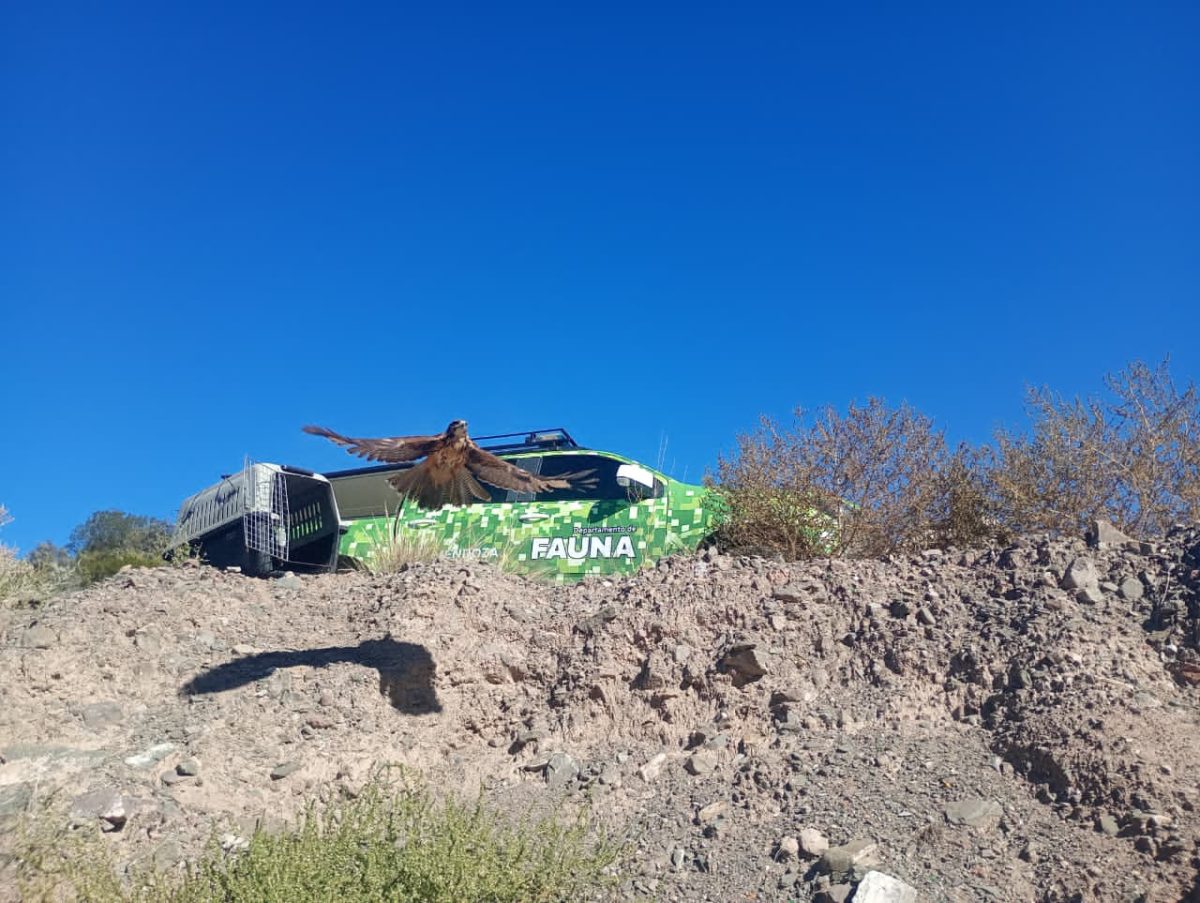
The Government of Mendoza released six species of native fauna that had been kept as pets, after a rehabilitation process at the Ecoparque Mendoza.
The measure, carried out in May by the Ministry of Energy and Environment, constitutes a fundamental step to preserve biodiversity and discourage illegal wildlife trafficking.
The released specimens were:
- Mixed hawk
- Coral snake
- Chimango
- Southern flamingo
- Gray fox
- Caracaras
Each species fulfills essential ecological functions, from biological control of urban pests to the elimination of organic waste that could become sources of disease.
Problems affecting native fauna
The release is framed in a context of multiple threats:
- Deforestation and irrational clearing.
- Field fires.
- Poaching and illegal trade.
- Pet keeping: the keeping of wild animals in homes, a practice rooted in rural areas.
Thanks to the work of park rangers and biodiversity defenders, this custom is beginning to decrease, although it still persists in the province.
Specialized rehabilitation
The animals were cared for by staff at the Ecopark, which operates in the facilities of the old zoo. In the case of the coral snake, as it is a venomous specimen, the Serpentarium of Mendoza Centro Anaconda also intervened.
In addition, the release of caged wild birds in Godoy Cruz is planned, with the participation of the Center for Rescue, Rehabilitation, and Conservation of Wild Birds of YPF, within the Ecological Reserve of the Luján de Cuyo Refinery.
Key functions of native birds
The released birds play vital roles for environmental balance:
- Pest control: they consume insects and rodents, preventing crop damage.
- Seed dispersal: they regenerate forests and native vegetation.
- Pollination: they transport pollen, favoring plant reproduction.
- Nutrient cycling: they fertilize ecosystems with their droppings.
- Bioindicators: they warn about pollution and climate change.
- Ecological resilience: they ensure the survival of native flora and fauna against invasive species.
Contradictions and challenges
Although the operation was important, it represents just a fraction of the animals that still remain in captivity. Spreading these cases is essential to raise public awareness and discourage practices that harm the health of ecosystems.
The contradiction is evident: Mendoza is promoted as a nature and wildlife watching destination, yet it still faces the pressure of illegal trafficking and pet keeping. Reversing this situation requires sustained public policies, environmental education, and community participation.
The release of native animals in Mendoza is a gesture of environmental restoration and a reminder that biodiversity is a collective heritage. Each released species restores balance to ecosystems and strengthens resilience against threats such as climate change and habitat loss.
The challenge now is to expand these actions, reinforce surveillance, and promote a culture of respect for wildlife, so that the freedom of these animals is not an isolated event, but part of a comprehensive conservation policy.



