



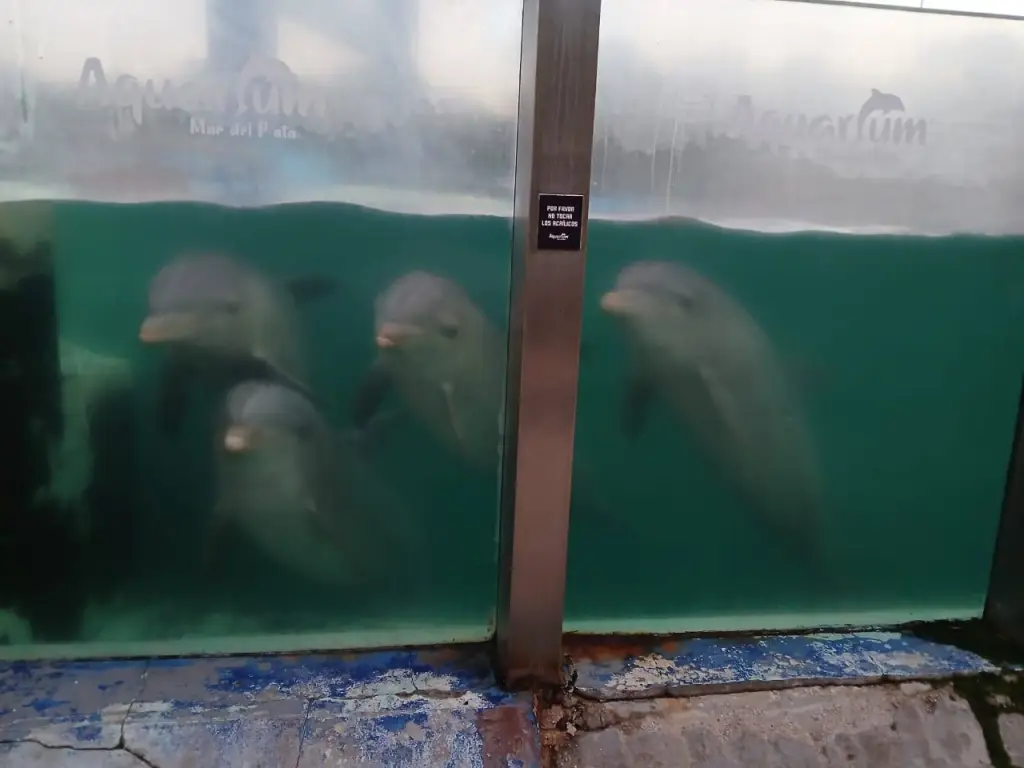
The end of the Aquarium Mar del Plata left its ten dolphins homeless, animals born and raised under human care. The closure in March opened a complex process to find them a destination that would guarantee their welfare.
With that definition, a carefully coordinated operation began to move them to a Hurghada oceanarium in Egypt. The procedure was carried out with strict confidentiality to ensure that nothing interfered with the logistics.
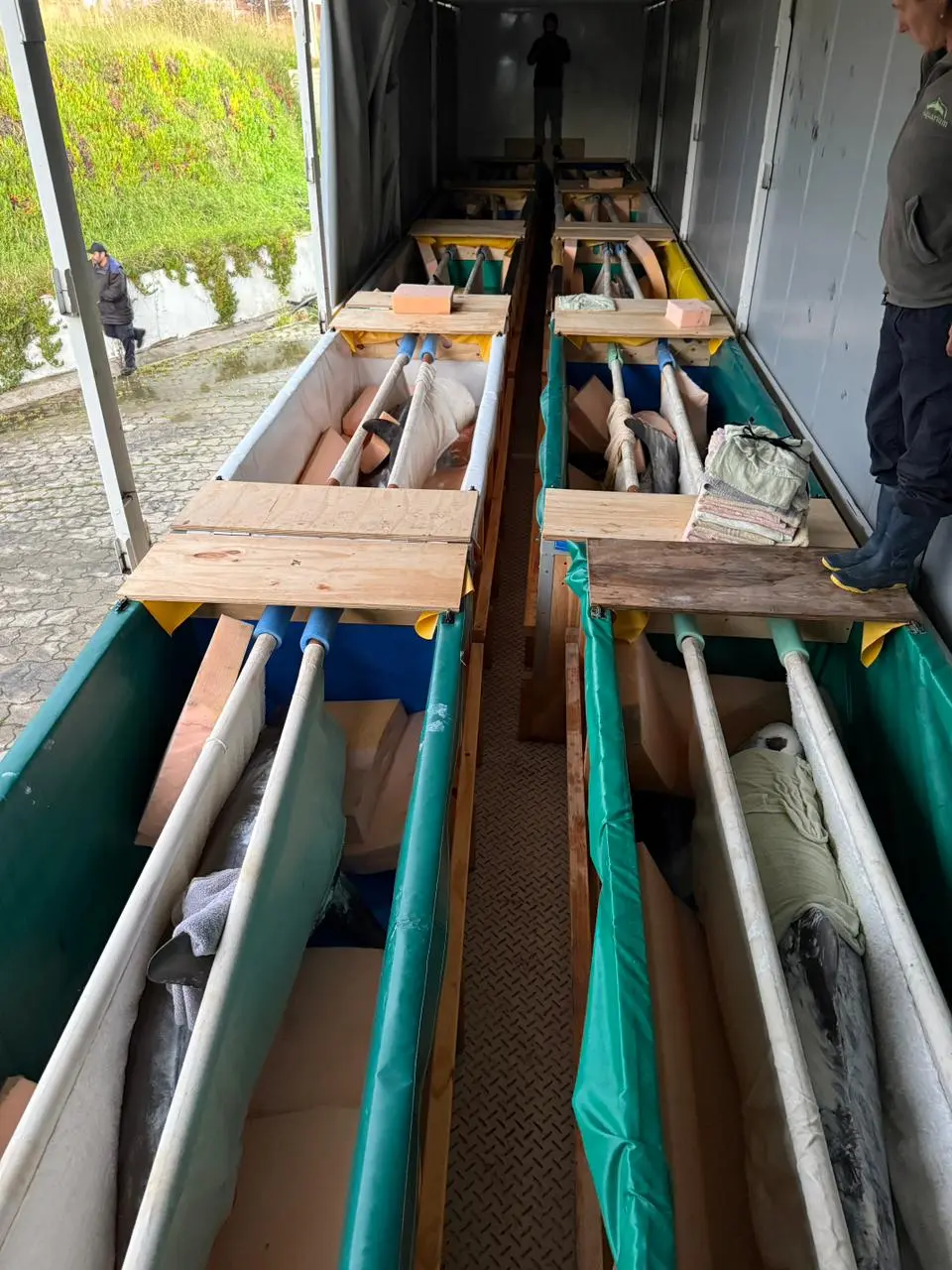
The dolphins were transported in specially prepared containers and accompanied by veterinarians, biologists, and caretakers. After the land transfer to Ezeiza, they flew on a Qatar Airways aircraft with adequate conditions for marine species.
The ten dolphins were born in captivity and did not develop the necessary skills to feed or survive on their own. This condition makes any attempt to reintegrate them into a natural environment impossible. Their transfer to another oceanarium ensures continuous care and a controlled environment compatible with their origin.
A new home in the Red Sea
The technical team from the former Aquarium traveled with the animals to monitor their health and behavior. The transfer was successfully completed and the dolphins arrived in optimal conditions at the Hurghada facility, where three caretakers will remain for three months to assist in their adaptation.
Additionally, this place has a marine complex that houses more than a thousand animals of various species. This makes it one of the most relevant attractions of this tourist destination in the Red Sea.
At the same time, the facilities replicate controlled environments that allow maintaining routines similar to those the dolphins had in Mar del Plata.
Meanwhile, other specimens born in captivity remain at the former Aquarium. All are under the care of specialists while new suitable destinations are managed. Each transfer is carried out under strict protocols to ensure their welfare and the continuity of professional management.
Ecological impact and debate on captivity
The closure of aquariums and oceanariums in different parts of the world drives discussions on alternative models. The international trend is towards facilities with conservation and rescue purposes. The case of Mar del Plata adds to the rethinking of traditional entertainment spaces.
The transfer seeks to avoid the abandonment of animals that rely entirely on human care. Decisions are based on veterinary evaluations, adaptability, and infrastructure conditions.
This type of action highlights the importance of developing policies for animals born in captivity. In this sense, the future of marine fauna management requires clear legal frameworks and adequate structures.
The transition to more ethical models demands resources, planning, and international cooperation. Each relocation provides key information to improve these processes.
Environmental benefits of this initiative
The closure of the aquarium reduces the use of resources such as energy and water associated with maintaining large facilities. It also reduces the pressure on coastal infrastructure, where the management of marine animals requires specific conditions.
The orderly relocation prevents the specimens from ending up in situations of abandonment or deterioration. The transfer promotes a more responsible view on the management of fauna born under human care.
It reinforces the need for new facilities to prioritize education, rehabilitation, and research. It favors the transition to models less focused on entertainment and more aligned with environmental protection.
This operation sets a precedent for the treatment of animals dependent on human care. It allows for the design of safer protocols for international transfers of marine fauna. It contributes to strengthening standards of welfare and sustainability in conservation centers.



