



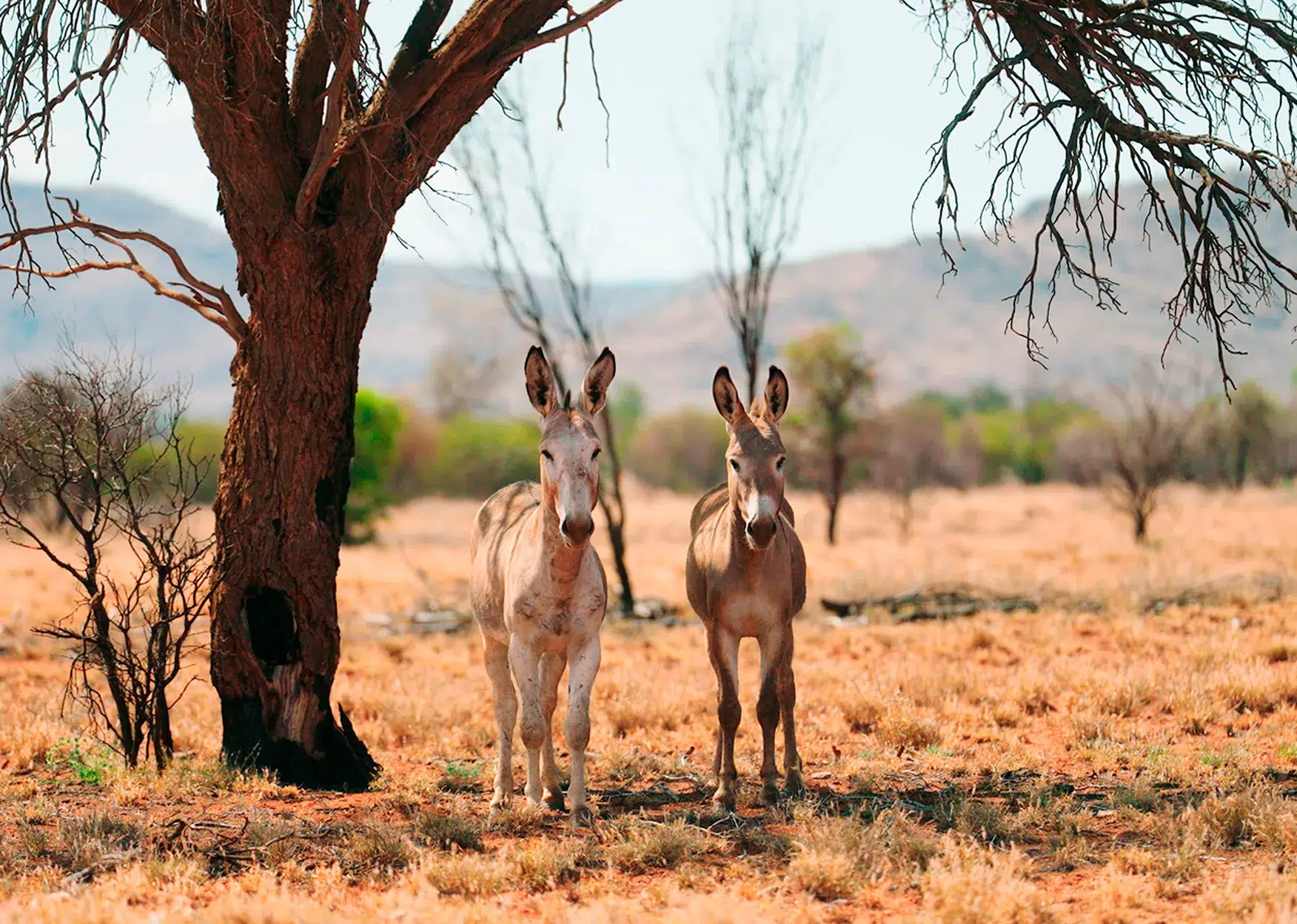
For years, wild donkeys were considered a pest in the arid regions of Australia. They were accused of competing with livestock for water, destroying fences, and degrading sensitive areas.
This led to mass culling campaigns to reduce their populations. However, a new scientific study has shown that these animals play a key ecological role in the resilience of the desert, prompting the Australian government to suspend indiscriminate hunting.
Discovered Ecological Benefits
Researchers observed that donkeys have behaviors that favor the restoration of arid ecosystems:
- Creation of water wells: by digging in dry beds, they reach underground moisture and generate accessible water sources for other species.
- Natural micro-tilling: their hooves break the hard crust of dry soils, facilitating rain infiltration and seed germination.
- Increase in biodiversity: the new hydration points allow local fauna to survive in extreme conditions.
Risks and Warnings
Scientists clarify that the benefits depend on controlled management. An excess of animals in vulnerable areas could lead to erosion and degradation.
Therefore, they insist that the positive impact is linked to constant monitoring and strategic management of populations.
New Management Policy
The current model replaces indiscriminate culling with a scientific approach:
- Remove donkeys from ecologically fragile areas.
- Concentrate them in zones where they can improve the soil.
- Establish population thresholds according to each season of the year.
In this way, the species is no longer seen solely as an invasive pest and is considered a natural restoration tool in extreme ecosystems.
Broader Implications
This paradigm shift opens a debate on how to leverage the behavior of species considered problematic to sustain ecosystems in a changing global climate. Wild donkeys become an example of how science can transform the perception of fauna and offer innovative solutions for conservation.
The suspension of donkey hunting in Australia marks a milestone in environmental management. What was once seen as a threat is now recognized as an opportunity to restore arid soils and sustain biodiversity.
The challenge will be to maintain a balance between ecological benefits and the risks of overpopulation, demonstrating that even species considered pests can become unexpected allies of nature.



