



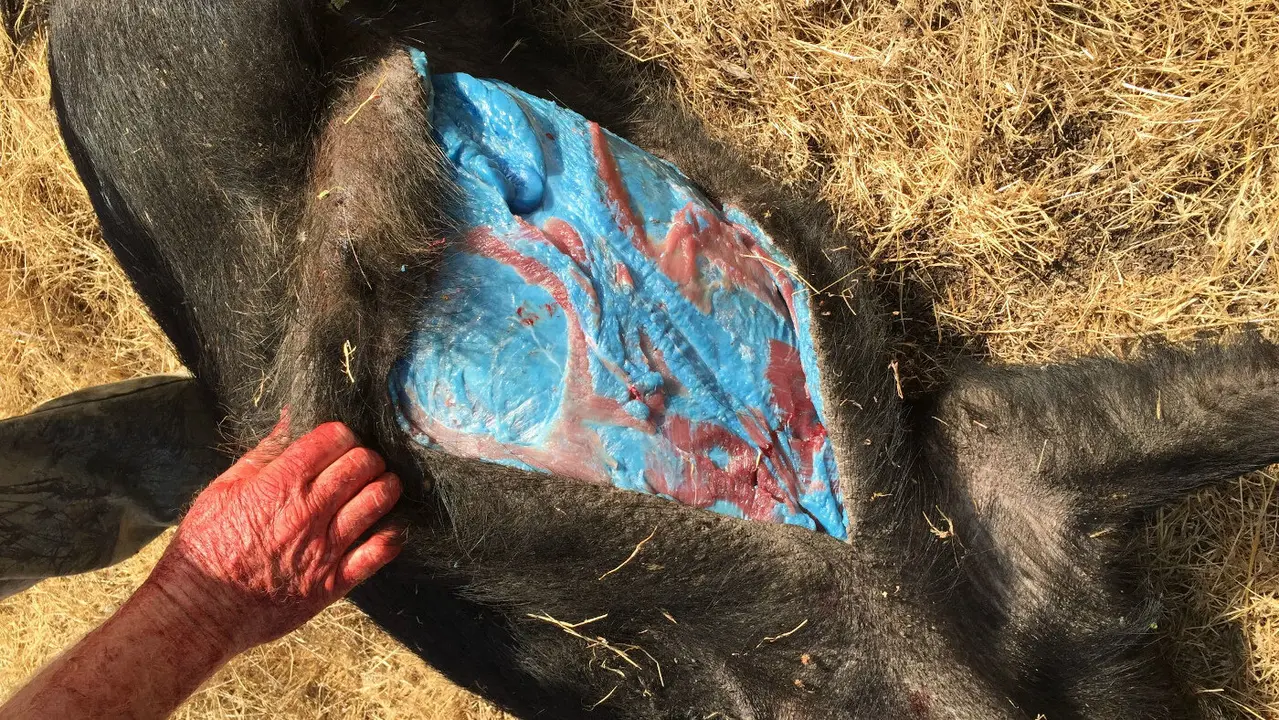
The California Department of Fish and Wildlife (CDFW) issued an official warning after finding wild boars with bright blue meat in Monterey County.
The cause: accidental ingestion of rodenticides, a type of rat poison that prevents blood clotting and causes internal bleeding.
Neon blue meat: a sign of chemical contamination
Preliminary analysis revealed that the animals had ingested difethialone, a anticoagulant pesticide used for rodent control in agricultural environments. This substance prevents blood clotting, causing internal bleeding and a discoloration of muscle and fat tissues.
According to researchers, the boars may have consumed the poison through contaminated baits or by feeding on infected prey. The result was an extreme discoloration in the tissues, described by Dan Burton, a wildlife control expert, as “neon blue, blueberry blue”.
This phenomenon, observed for the first time in March, represents a direct consequence of indiscriminate use of pesticides in natural environments.
Risk for hunters and consumers of wild meat
The warning is not limited to boars. The CDFW points out that species such as deer, bears, and geese may have been exposed to rodenticides, making their meat potentially dangerous for human consumption.
“Hunters should be cautious: the presence of blueish muscle or fat tissue may indicate chemical contamination, although this discoloration is not always visible,” explained Ryan Bourbour, CDFW’s pesticide research coordinator.
Rodenticides: a silent threat to biodiversity
Anticoagulant rodenticides, commonly used for urban and rural pest control, can enter the food chain and affect predators, scavengers, and game species.
Their uncontrolled use poses a growing ecological risk, with effects ranging from indirect mortality to toxin bioaccumulation.
Recommendations for hunters and local authorities
Monitoring, caution, and reviewing pest control practices.
- Avoid consuming meat with abnormal coloration
- Report suspicious cases to CDFW or local authorities
- Implement toxicological monitoring in hunting areas
- Review the use of pesticides in rural and natural areas
This case highlights the side effects of rodenticide use in rural and natural areas. The indirect exposure of wild and domestic species poses challenges for environmental management, food safety, and public health.


