



A strong controversy erupted on the other side of the world because hunters refused to kill a bear in Lithuania.
The animal appeared in residential areas of Vilnius, the capital, sparking an intense debate on how to proceed.
While the local government issued an order to shoot it for public safety reasons, the hunters refused to carry it out and proposed an alternative more respectful to wildlife.
A bear in Lithuania sparks controversy and rekindles the debate on coexistence with wild fauna
The animal was sighted on several occasions near residential neighborhoods and roads, causing concern among the population.
Although no attacks were reported, the Environmental Protection Agency of Lithuania determined that the bear could pose a risk. Therefore, they authorized its hunting under the category of a “dangerous animal”.
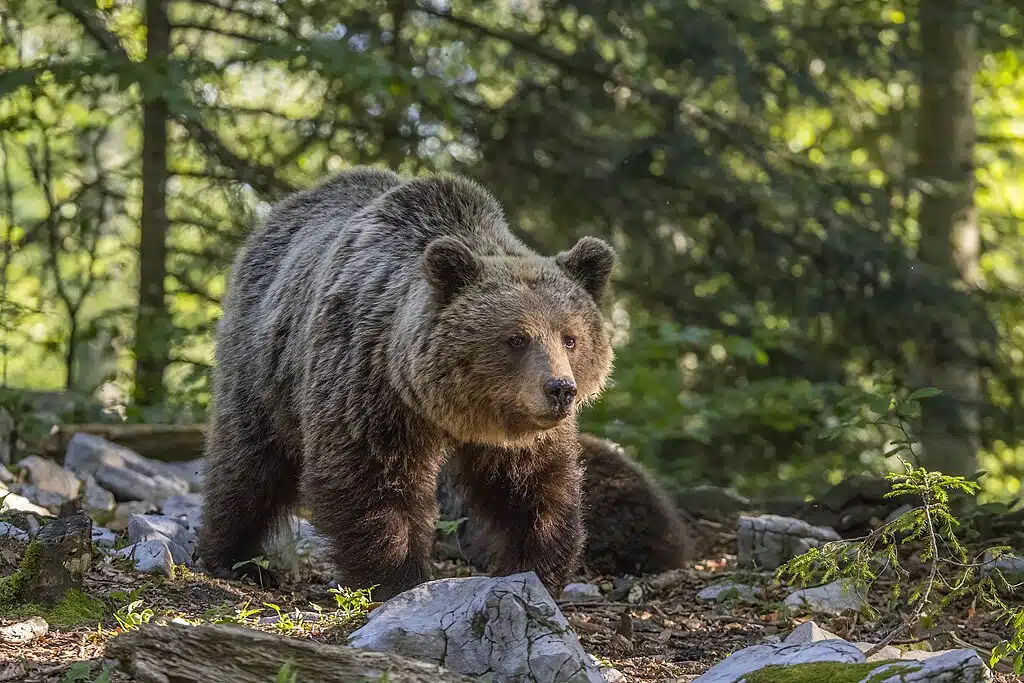 The local government ordered the hunters to shoot.
However, the Union of Hunters and Fishermen of Lithuania strongly opposed this measure.
In a statement, they expressed that the situation does not justify the use of lethal force, and proposed using tranquilizer darts to capture it and relocate it to a safe area.
Rejection of the animal’s sacrifice: a surprising stance
The most striking aspect of the case is that the hunters themselves, traditionally associated with the use of weapons, have spoken out in defense of the bear’s life.
“This is not about hunting for sport or population control. It is about making ethical and responsible decisions,” stated the group.
Their stance was supported by environmental organizations and animal rights advocates, who called for exhausting all non-lethal options to protect both the bear and the city’s inhabitants.
The possible relocation of the bear: a new model for managing urban wildlife?
Experts believe the bear accidentally wandered into the city after straying from its natural habitat.
Authorities are now considering capturing it using non-lethal methods and relocating it to a natural reserve in the northern part of the country.
This incident reopens the debate on the management of wildlife in urban environments, especially in a context of loss of natural habitat and climate change, phenomena that force many animals to increasingly approach human-inhabited areas.



