



The Environmental Police of Córdoba, under the Ministry of Environment and Circular Economy, carried out a new release of wild fauna specimens that had obtained health and behavioral clearance after being rescued from captivity in various control procedures.
The event took place in a rural area of Colanchanga, in the Sierras Chicas of Córdoba, an environment with suitable vegetation for the animals to have a second opportunity in the wild.
Released Animals
In total, the following were released:
- 25 birds.
- 2 birds of prey.
- 4 scavenger birds.
- 2 opossums.
- 1 wildcat.
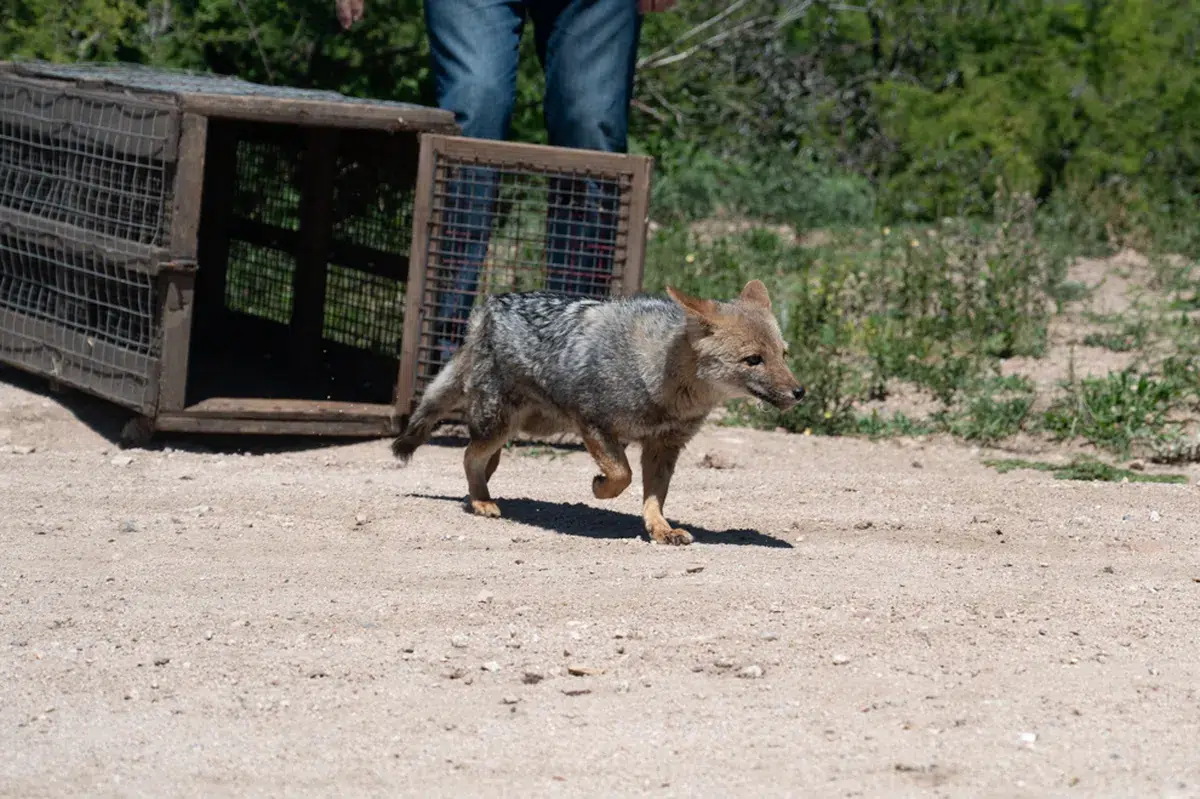
- 1 gray fox.
Some of these specimens had entered the Park of Biodiversity in the city of Córdoba, while others were attended to at the rescue center Tatú Carreta, in Casa Grande (Punilla department).
Rescue Centers and Rehabilitation Processes
“These two centers are the main ones we work with due to their capacity to receive rescued animals. Of course, they are not the only ones, but they are where we send the largest volume of wild fauna,” explained Adrián Rinaudo, secretary of Environmental Police.
The official detailed that each animal goes through a different process before being reintroduced into nature: some require only quarantine, while others need assisted rearing, physical or behavioral rehabilitation. “Not all can return, which is why we insist that the place for wild fauna is nature,” he emphasized.
Specimens Released by Each Center
From Tatú Carreta, the following were cleared:
- 5 golden-billed saltators.
- 6 blue-and-yellow tanagers.
- 2 black-collared seedeaters.
- 1 orange-headed tanager.
- 1 firewood-gatherer.
- 5 goldfinches.
- 2 chimangos.
Meanwhile, the Park of Biodiversity reported the release of:
- 3 red-crested cardinals.
- 1 black-collared seedeater.
- 1 common diuca finch.
- 4 black vultures.
- 1 wildcat.
- 1 gray fox.
- 2 opossums.
Recovery Stories
Among the most notable cases is that of a wildcat admitted in May at just a month and a half old. The team of veterinarians and biologists worked with it through indirect interactions to avoid imprinting and preserve its wild behavior. X-rays, blood tests, locomotion evaluations, and constant monitoring through cameras were conducted, especially at night when the species is more active.
Another case was that of a gray fox five months old that entered with a complex case of mange and dehydration. After months of treatment and care, it was released as a fully recovered adult.
The four black vultures also required a special process: they entered as juveniles, some still with down feathers. The team worked on their enclosure adaptation and flight training, ensuring they now feed and fly correctly.
A Collective Effort for Conservation
“They all entered very young, and some required assisted rearing, constant monitoring, and enclosure adaptation. The goal was always to preserve their wild behavior,” explained Melody Bayro, biologist and head of the Animal Welfare area at the Park of Biodiversity.
The operation reflects Córdoba’s commitment to the conservation of wild fauna and the importance of rescue centers as spaces for rehabilitation and environmental education.
The release of more than 35 specimens in Colanchanga demonstrates that the rehabilitation and reintegration of wild fauna is possible thanks to the joint work of specialists and authorities. Each animal that returns to its habitat is a reminder that nature is its place and that society must redouble efforts to avoid captivity and protect biodiversity.



