



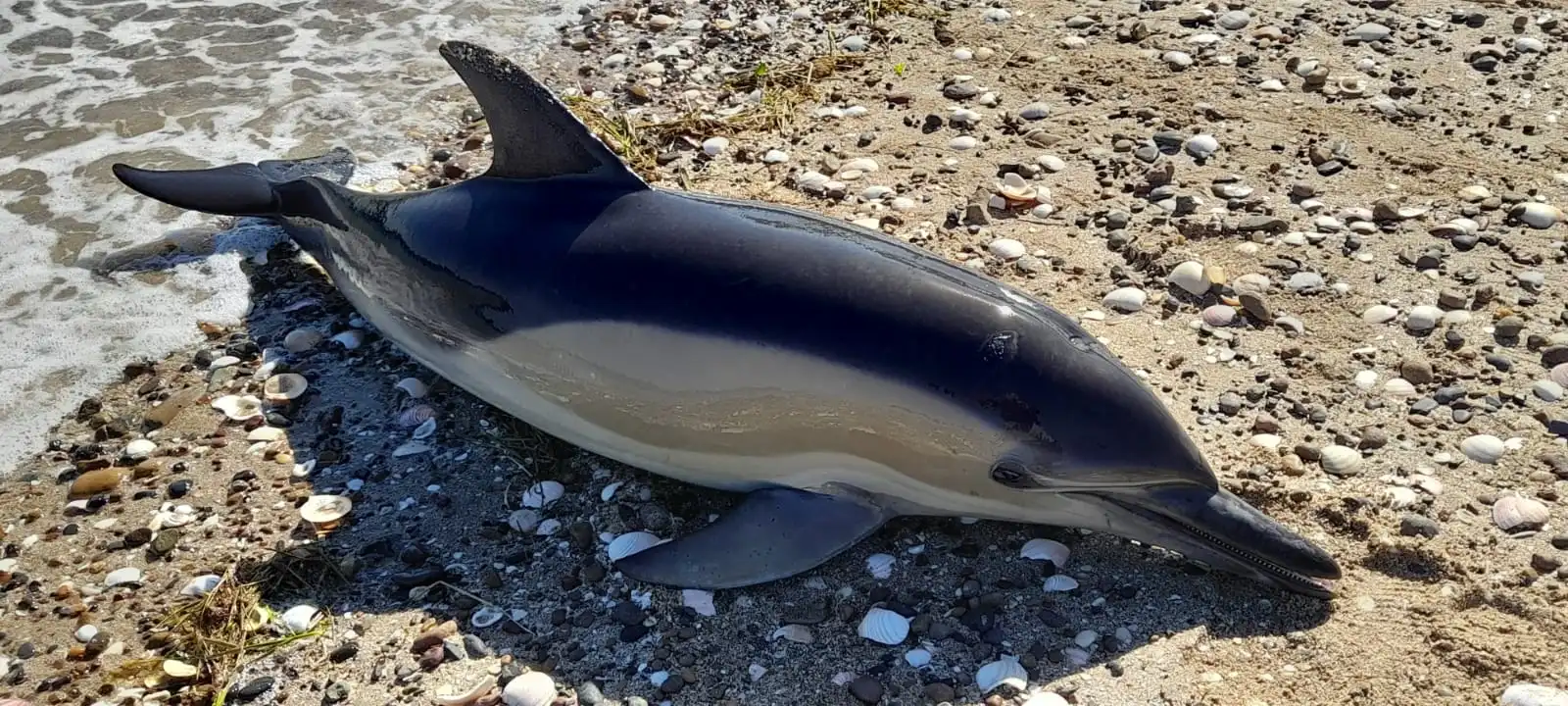
In different areas of the San Antonio Bay, on the coast of Río Negro, strandings of common dolphins (Delphinus delphis) have been recorded in recent days. The situation prompted the intervention of provincial agencies, security forces, and personnel specialized in wildlife.
According to Sebastián Ortega, a member of the Environmental Guards area, seven specimens have been counted so far in areas such as Península Villarino, El Sótano, and beaches near Bahía Creek. It is not ruled out that new animals may appear, so preventive patrols and monitoring tasks have been intensified.
Chronology of the findings
- January 21: first alert in Península Villarino. The found dolphin was exhausted and was returned to the sea after protocol application.
- January 22: two dead specimens, one in Puerto del Este and another in El Sótano.
- January 23: another lifeless dolphin in Playa Acantilados, a highly frequented tourist area.
- January 24: a new finding in Punta Villarino raised the total of dead specimens to six.
The animals were transferred to the Marine Mammal Research Center (CIMAS) for analysis, as the carcasses may carry parasites and diseases, including smallpox and skin conditions.
Relevant data of the specimens
The analyzed dolphins turned out to be females, and in two of them, the presence of milk in the mammary glands was detected, suggesting they might have had calves in the lactation period.
Regarding the species, Ortega explained that it is a pelagic marine mammal, living in the open sea, traveling long distances, and feeding mainly on fish and squid.
Background in the province
These types of episodes are not isolated. In the past five years, at least eight similar events have been recorded, mainly in San Antonio Oeste and in areas of the Caleta de los Loros–Pozo Salado–Punta Mejillón Protected Natural Area.
Since 2021, strandings have been repeated annually, including the massive episode of almost 400 dolphins in April 2023 in Puerto del Este.
Possible causes
Hypotheses point to natural factors:
- Orca attacks, causing panic and disorientation among dolphins.
- Groundings on sandbanks or significant tidal drops.
These phenomena can cause the animals to lose orientation and end up stranded in coastal areas.
Recommendations to the community
The Environmental Guards area has asked the population to not intervene directly. Ortega warned:
“A good intention is not always a good action.”
It is recommended not to touch or handle the animals and to immediately notify authorities through the available channels:
- 911 Emergencies
- 101 Río Negro Police
- 106 Argentine Naval Prefecture
- Subsecretariat of Wildlife (2920 612000)
The stranding of dolphins in Río Negro reflects a complex phenomenon that combines natural factors and possible vulnerabilities of the species.
The rapid intervention of specialists and citizen collaboration are key to minimizing health risks and obtaining scientific information that helps better understand these episodes.



